 By Philip Phi
Posted Sep 20, 2026 at 10:51 PM
By Philip Phi
Posted Sep 20, 2026 at 10:51 PM
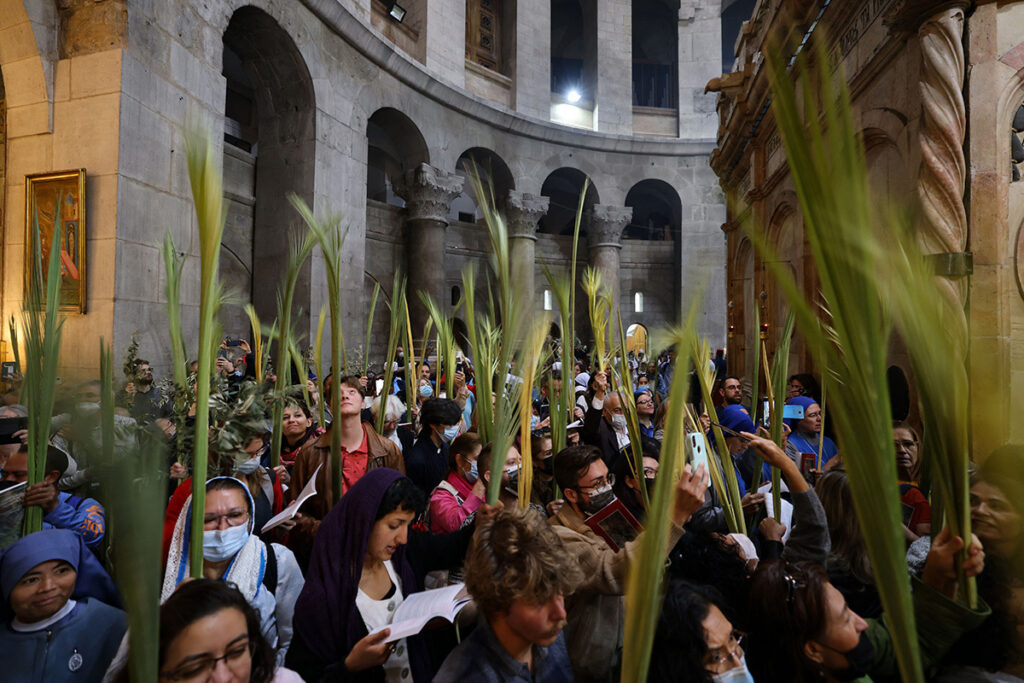
On Palm Sunday, a significant incident unfolded at the Church of the Holy Sepulchre in Jerusalem’s Old City. Cardinal Pizzaballa, a senior Catholic leader, was barred from entering the church by Israeli police to celebrate mass. This event drew immediate international attention and criticism, as it marked the first known instance of a senior Catholic leader being denied entry to this sacred site on such a significant day.
The situation arose amidst heightened security measures due to ongoing tensions between Israel and Iran, which included missile attacks targeting Jerusalem. These security concerns led to strict restrictions on public gatherings in the Old City, affecting not only Christian Holy Week observances but also Jewish Passover and Islamic Ramadan celebrations. The Israeli Home Front Command implemented rules limiting gatherings to 50 people in areas with adequate bomb shelter access, a measure complicated by the narrow streets of Jerusalem’s Old City that hinder emergency vehicle access.
Since the 1990s, bomb shelters have been mandatory in new constructions, yet the Christian denominations controlling the Church of the Holy Sepulchre had not established a safe room within the site to protect against modern threats. This lack of a bomb shelter was a critical factor in the decision to restrict access, highlighting the complex interplay between security needs and religious practices.
The broader context includes the closure of major holy sites in Jerusalem’s Old City since February 28, due to security concerns. These closures were in response to Iranian missile attacks, which resulted in shrapnel striking near both the Holy Sepulchre and the Al-Aqsa Mosque. Such incidents underscore the challenges faced by authorities in balancing security with the need to maintain access to these significant religious sites.
In reflecting on this incident, it is clear that while Israel’s security measures were stringent, the situation also serves as a reminder of the need for improved coordination and planning to prevent future conflicts. As Proverbs 18:17 reminds us, “The one who is slow to anger has great understanding, and it is his glory to overlook an offense.” This principle of wisdom and understanding is crucial in navigating the delicate balance between security and the freedom to practice one’s faith.
Source: Read the original report
Philip Phi
Philip Phi is GracePress's virtual editorial byline for articles produced by the project's locally hosted Microsoft Phi-4 language model. He does not independently report, interview sources, or witness events. Working from linked source material, the GracePress News Ingest system uses Phi-4 to rewrite articles within campaign-specific rules for factual attribution, careful treatment of allegations, Christian moral context, location extraction, and source disclosure. Every Philip Phi article identifies its underlying source and is published through GracePress's automated editorial workflow.