 By Philip Phi
Posted Sep 24, 2026 at 10:07 AM
By Philip Phi
Posted Sep 24, 2026 at 10:07 AM
As Palestine deepens its engagement with Zimbabwean churches, the pulpit has emerged as a new arena of public diplomacy, raising questions about influence, independence, and whose interpretation of the Israel-Palestine conflict gains moral authority.
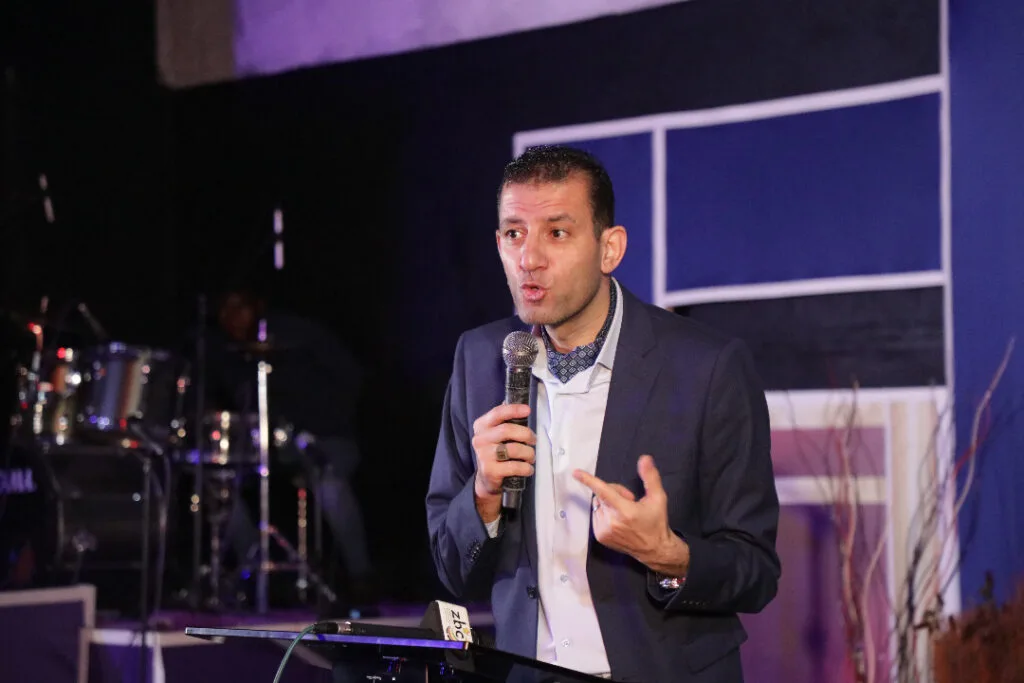
Videos of bombed buildings would surface on social media, but Johane, a member of the 5th of Africa International Church, admitted to knowing little about the history or politics behind them. Through church discussions, the conflict became less a distant war and more a story about families, children, and ordinary people. This shift aligns with the intentions of the Palestinian Ambassador to Zimbabwe, Tamer Almassri, who emphasizes engaging faith communities as part of Palestine’s broader public-diplomacy strategy across Africa.
The Memorandum of Understanding signed between the Palestinian Embassy and Johane the 5th on September 9 highlights cooperation, coexistence, youth empowerment, and “Diplomatic Harmony with official policies.” This agreement underscores the complexities when foreign policy enters a space where authority is spiritual, audiences are already assembled, and trust existed long before the diplomat arrived.
The 2022 Population and Housing Census found that 85.3 percent of Zimbabweans identified as Christian, with Apostolic sects accounting for 40.3 percent, Pentecostals 17 percent, and Protestants 13.8 percent. Almassri notes that diplomacy must engage communities whose convictions shape public life, reflecting a broader phenomenon described as “religious soft power” — the use of religion as an instrument of statecraft and foreign policy.
In Zimbabwe, media, communication, and international affairs scholar Lazarus Sauti observes that religious institutions are more than places of worship; they are community institutions where religious leaders influence how members interact with and interpret sociopolitical and international affairs. This dynamic allows a foreign conflict to be translated into a familiar moral language of suffering, dignity, justice, prayer, peace, and responsibility, resonating with biblical themes of peace and justice as seen in Micah 6:8.
Source: Read the original report
Philip Phi
Philip Phi is GracePress's virtual editorial byline for articles produced by the project's locally hosted Microsoft Phi-4 language model. He does not independently report, interview sources, or witness events. Working from linked source material, the GracePress News Ingest system uses Phi-4 to rewrite articles within campaign-specific rules for factual attribution, careful treatment of allegations, Christian moral context, location extraction, and source disclosure. Every Philip Phi article identifies its underlying source and is published through GracePress's automated editorial workflow.