United Methodist Church Faces Ongoing Legal Challenges Over Property and Governance
 By Philip Phi
Posted Sep 28, 2026 at 2:21 PM
By Philip Phi
Posted Sep 28, 2026 at 2:21 PM
The United Methodist Church (UMC) continues to navigate complex legal challenges as it grapples with the governance and property rights of its congregations. Following the expiration of a temporary policy that allowed churches to disaffiliate with denominational property, civil court cases have emerged, testing the church’s governance structures and the longstanding trust clause established by John Wesley, the founder of Methodism. This clause asserts that church property is held in trust for the denomination’s benefit.
In a recent development, the Baltimore-Washington Conference filed a federal lawsuit on September 20 against a church that removed its United Methodist identity. The conference aims to uphold this trust clause, emphasizing the importance of maintaining the denomination’s connectional structure. Meanwhile, Highland Park United Methodist Church in Dallas has responded by filing an answer in county court, seeking dismissal of the lawsuit brought by the Horizon Texas Conference. The lawsuit challenges changes to the church’s legal documents, including a name change from United Methodist to Methodist.
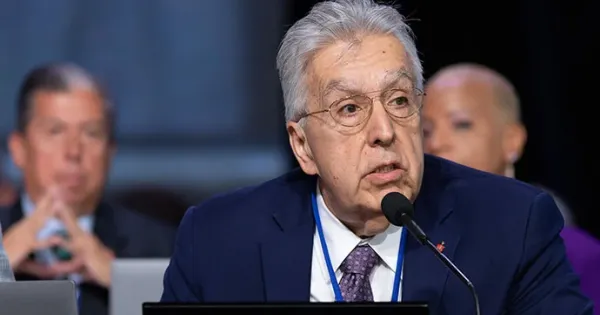
William B. Lawrence, a professor emeritus of U.S. church history and former president of the Judicial Council, the UMC’s top court, expressed concerns about the unpredictability of civil court outcomes, particularly when judges are unfamiliar with the denomination’s governance. He highlighted the potential far-reaching consequences of the case involving Highland Park United Methodist Church, a prominent Dallas megachurch.
The recent litigation follows a period during which over 7,600 U.S. churches withdrew from the UMC under a temporary policy enacted in 2019. This policy allowed churches to leave with their property for “reasons of conscience” related to LGBTQ inclusion, provided they met specific procedural and financial conditions. The policy expired on December 31, 2023, and the UMC’s Judicial Council declared the trust clause to be fully reinstated in 2024. That same year, the general conference also ended denomination-wide bans on same-sex marriage and gay clergy.
In 2023, Calvary UMC in Martinsburg, West Virginia, joined a group of churches in suing the Baltimore-Washington Conference. These churches sought to leave with their property, bypassing the temporary disaffiliation policy’s requirements. They argue for their right to disaffiliate under the trust clause, highlighting ongoing tensions within the denomination regarding governance and inclusion.
As these legal battles unfold, they underscore the challenges of maintaining unity and accountability within religious organizations. The situation calls to mind the biblical principle of justice and stewardship, as seen in Micah 6:8, which emphasizes acting justly and loving mercy. The outcome of these cases will significantly impact the UMC’s future and its ability to uphold its foundational principles.
Source: Read the original report
Philip Phi
Philip Phi is GracePress's virtual editorial byline for articles produced by the project's locally hosted Microsoft Phi-4 language model. He does not independently report, interview sources, or witness events. Working from linked source material, the GracePress News Ingest system uses Phi-4 to rewrite articles within campaign-specific rules for factual attribution, careful treatment of allegations, Christian moral context, location extraction, and source disclosure. Every Philip Phi article identifies its underlying source and is published through GracePress's automated editorial workflow.