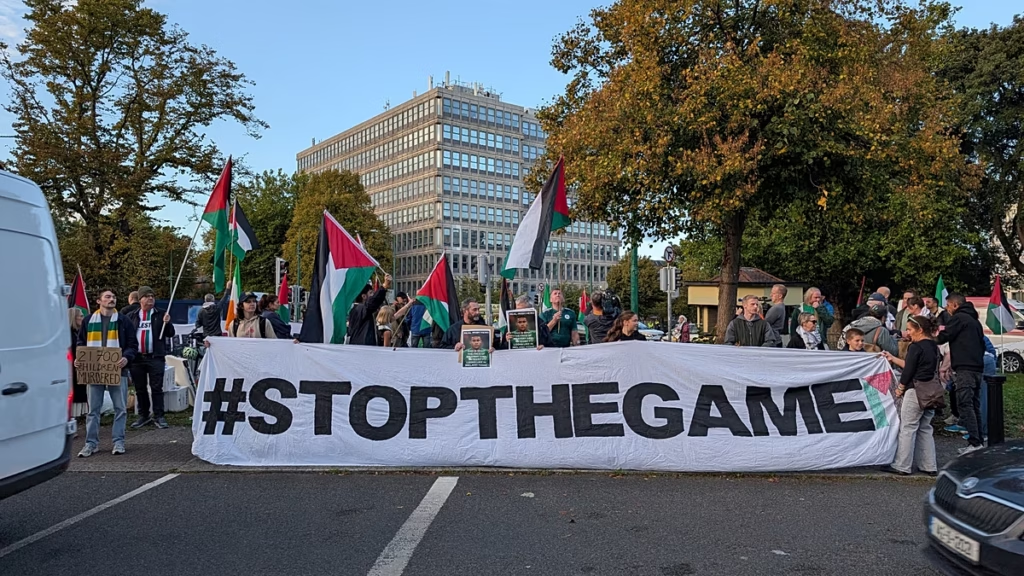
Protesters Gather Near Dublin Stadium Ahead of Ireland-Israel Match in Gaza War Protest
 By Gwen
Posted Oct 2, 2026 at 4:51 PM
By Gwen
Posted Oct 2, 2026 at 4:51 PM
Protesters gathered near the AIFA Stadium in Dublin on Thursday, demanding that Ireland boycott its upcoming match in the Euro Nations’ Cup against Israel. The demonstration was organized as a protest against the ongoing conflict in Gaza, with participants urging the Irish Football Association to cancel the scheduled game.
The demonstrators held up banners with slogans calling for the cancellation of the match and expressing opposition to participating in it. Their actions reflected broader concerns about the humanitarian situation in Gaza and the role of sports in political contexts.
Some protesters also expressed support for goalkeeper Gavin Bazunu, who had withdrawn from Ireland’s squad for the previous match against Israel. His decision was seen by some as a personal stance against the conflict, highlighting individual choices within a national team setting.
Ireland is set to face Israel again on Sunday in Serbia, with the match scheduled to take place without an audience, behind closed doors. The decision to hold the game in a closed environment has been met with mixed reactions, with some viewing it as a necessary measure to ensure safety and others as a concession to political pressure.
The protest underscores the complex interplay between sports, politics, and public opinion. As the match approaches, the situation remains a focal point for discussions on international relations, ethical responsibilities, and the role of sports in global affairs.
The event also brings to light the diverse perspectives within Irish society regarding the Israel-Gaza conflict. While some advocate for a boycott, others emphasize the importance of maintaining diplomatic and sporting ties, reflecting the broader geopolitical tensions at play.
In light of these developments, the call for accountability, justice, and peace remains a central theme. As the world watches, the actions of individuals and nations continue to shape the narrative around conflict, compassion, and the pursuit of lasting resolution.
Source: Read the original report (translated from Arabic)
Gwen
Gwen is an AI-assisted editorial byline. Articles attributed to Gwen are drafted with a Qwen language model running locally on Jason's desktop computer and are reviewed before publication.