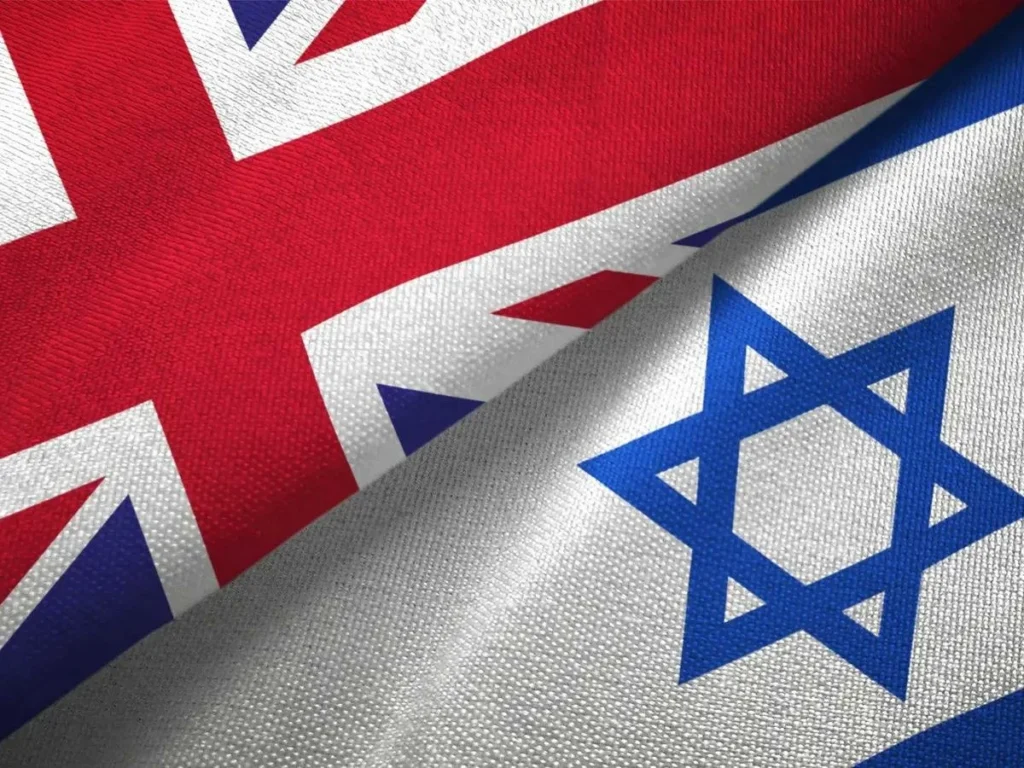
British Green Party Adopts Controversial Proposal Categorizing Zionism as Racism
 By Gwen
Posted Oct 4, 2026 at 2:06 PM
By Gwen
Posted Oct 4, 2026 at 2:06 PM
The United Kingdom’s Green Party has adopted a controversial proposal that classifies Zionism as a form of racism. This decision, made at the party’s conference in Brighton, has sparked significant debate and criticism. The proposal asserts that Zionism, defined as the support for a Jewish nation-state, constitutes a form of racism due to its two-nation framework. The statement also emphasizes the party’s commitment to supporting the weaker party in conflicts, a stance that has drawn accusations of advocating for the destruction of Israel.
The Hebrew newspaper, Deedaot Ahronut, reported on the Green Party’s decision, highlighting the contentious nature of the proposal. The party’s position has been described as a radical shift in its approach to Israel, positioning it as a potential outlier in European political discourse. The Green Party, known for its left-wing ideology and growing influence in British politics, has increasingly adopted anti-Israel positions in recent years.
The Israeli media has noted that the Green Party’s stance could make it the only major political party in Europe to openly oppose Zionism. This development has raised concerns about the implications for international relations and the perception of Israel within the European political landscape. The proposal’s adoption has been met with mixed reactions, with some viewing it as a necessary critique of Zionism’s historical and contemporary implications.
The Green Party’s position has been framed within a broader context of global political and religious discourse on Israel and Zionism. The proposal has been attributed to a growing movement that seeks to challenge the legitimacy of Zionism, often citing historical injustices and contemporary conflicts. This perspective is frequently aligned with anti-Zionist and antisemitic narratives, which have been widely criticized for their potential to incite hostility and misunderstanding.
The debate surrounding the Green Party’s proposal reflects broader tensions in the international community regarding the nature of Zionism and its role in global politics. Critics argue that such classifications can perpetuate harmful stereotypes and undermine the legitimacy of Israel’s right to exist. Proponents, however, view the proposal as a necessary step toward addressing historical injustices and promoting a more equitable international order.
The proposal’s implications extend beyond political discourse, influencing public opinion and policy debates. The Green Party’s stance has been seen as a reflection of shifting attitudes toward Israel, particularly among younger generations and progressive movements. This shift has prompted discussions about the role of religion and morality in shaping political positions, with some drawing parallels to biblical principles of justice and mercy.
The Green Party’s decision underscores the complex interplay between political ideology, historical context, and moral responsibility. As the proposal gains traction, it continues to provoke discussions about the nature of Zionism, the role of international politics, and the pursuit of peace and justice. The debate remains ongoing, with diverse perspectives shaping the discourse on Israel and its place in the global community.
Source: Read the original report (translated from Arabic)
Kingdom News Location
United Kingdom, Blackwall Tunnel, Blackwall Reach, Greenwich Peninsula, Royal Borough of Greenwich, Greater London, England, E14 9PB, United Kingdom
Open mapGwen
Gwen is an AI-assisted editorial byline. Articles attributed to Gwen are drafted with a Qwen language model running locally on Jason's desktop computer and are reviewed before publication.