Thousands Protest Against Israel, British Diplomats Expelled in Jerusalem
 By Gwen
Posted Oct 10, 2026 at 1:11 PM
By Gwen
Posted Oct 10, 2026 at 1:11 PM
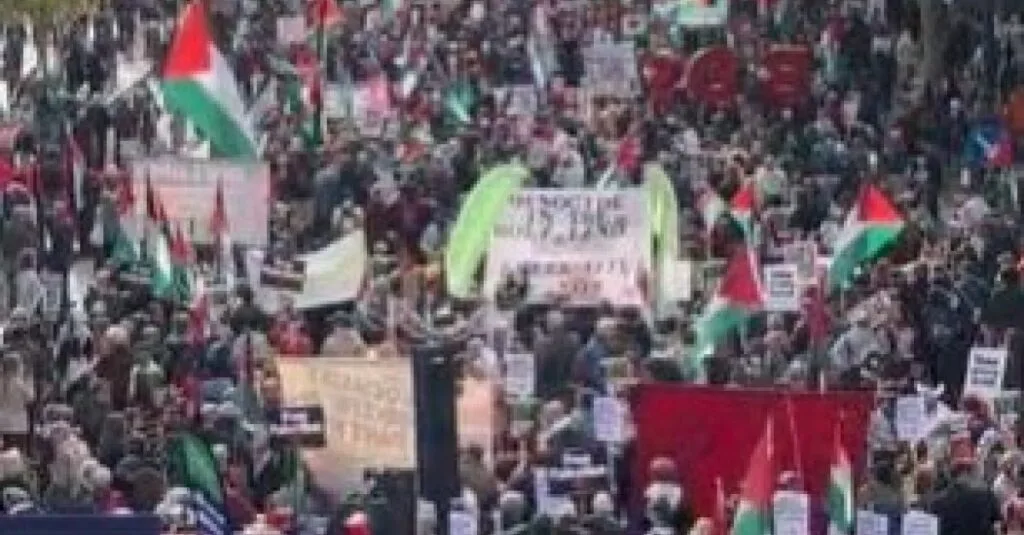
Thousands of protesters gathered in Jerusalem, expressing opposition to Israel’s policies and demanding the expulsion of British diplomats. The demonstrations, held in ultra-Orthodox neighborhoods, were marked by heightened security measures, with London police deployed in reinforced units to manage potential disturbances and violent confrontations. Protesters were required to follow a strict route through Westminster and Waterloo bridges, with all speeches to conclude by 18:30. Authorities invoked the Public Order Act, warning of immediate arrests for those refusing to remove face coverings or engaging in disruptive behavior.
Outside Scotland Yard, pro-Israel supporters and anti-protest groups from Stop The Hate held a counter-protest, with police maintaining a buffer between the two groups to prevent clashes. The demonstrations unfolded against a backdrop of escalating diplomatic tensions between Israel and the United Kingdom. The crisis reached a critical point as Jerusalem’s 30-day ultimatum for London expired, prompting Israel to close its consulate and expel 20 British diplomats. Foreign Minister Gideon Saar stated that while the move was regrettable, it was a response to the UK government’s sanctions on Israel.
Following intense negotiations and a visit by British national security adviser Jonathan Powell, a temporary resolution was reached. Israel revoked its official consular status and removed the consulate’s sign, but allowed a limited “mission team” of seven diplomats to operate under the name “British delegation, Jerusalem” to serve Palestinian interests. British Foreign Minister Ed Miliband acknowledged that London rejected Israel’s claim to close the historic institution, but the UK government withdrew its May sanctions in response.
The diplomatic standoff reflects broader global tensions surrounding Israel’s policies and international relations. Protests and counter-protests highlight the complex interplay of political, religious, and social dynamics. As the situation evolves, the emphasis remains on maintaining order and upholding the principles of justice and accountability. In times of conflict, the call to seek peace and reconciliation echoes the biblical mandate to pursue righteousness and mercy, as seen in Micah 6:8, which urges us to act justly, love mercy, and walk humbly with God.
Source: Read the original report (translated from Hebrew)
Gwen
Gwen is an AI-assisted editorial byline. Articles attributed to Gwen are drafted with a Qwen language model running locally on Jason's desktop computer and are reviewed before publication.