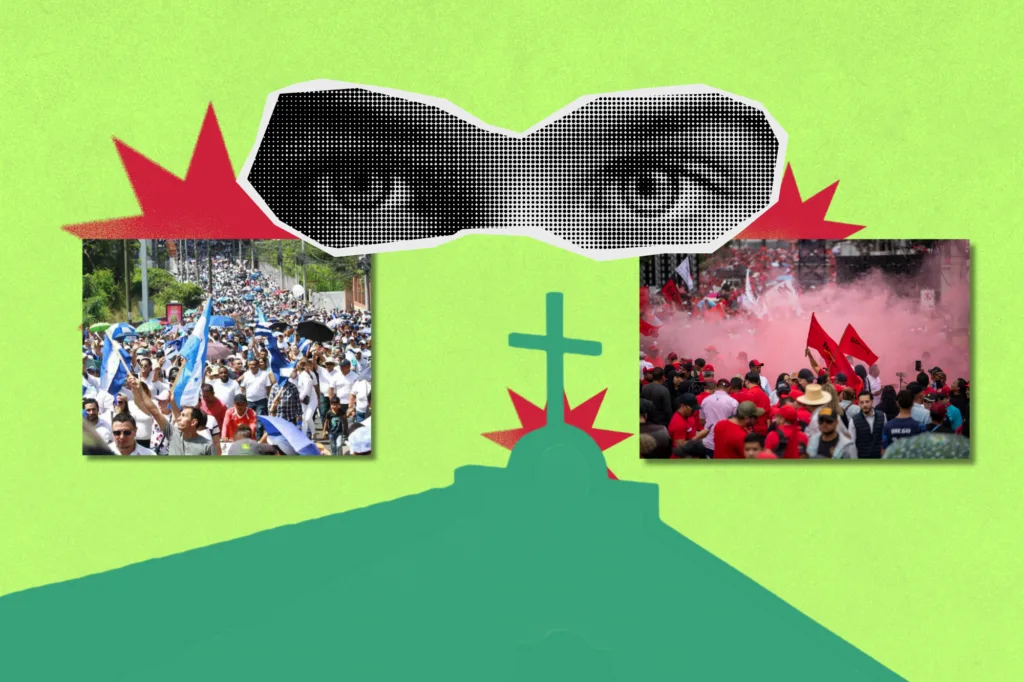
Why is the church walk facing criticism from Libre?
 By Gwen
Posted Oct 17, 2026 at 3:23 PM
The Evangelical Free Church, the Christian and Missionary Alliance, the Vineyard movement, and Calvary Chapel have long been active in Honduras, with their congregations and leaders playing a significant role in the nation’s spiritual and social life. On August 16, these churches, along with the Catholic Church, organized a national walk in support of peace and democracy. The event, described by organizers as a spiritual and partisan initiative, has drawn sharp criticism from supporters of Libre, the ruling party in Honduras since 2022.
The backlash against the walk has been fueled by a mix of political strategy, historical tensions, and ideological differences. Libre, rooted in social and anti-oligarchical activism, views the religious event with suspicion, perceiving it as a potential threat to its political dominance. This perception is particularly strong in the lead-up to the November 30, 2025, general elections, where the ruling party faces high polarization and electoral uncertainty.
Political analysts suggest that Libre’s opposition stems from a defensive stance aimed at maintaining control in a context of deep institutional distrust. According to surveys, over 90% of Hondurans lack confidence in state institutions, while Catholic and evangelical churches enjoy credibility among 50-70% of the population. This dynamic has made religious groups influential in shaping public opinion and mobilizing support.
Libre’s presidential candidate, Rixi Moncada, has publicly accused the walk of having a “political background” designed to “prevent the continuation of change and refoundation.” She frames the event as a covert effort by traditional parties, such as the National and Liberal parties, to undermine Libre’s agenda. This aligns with the broader theory of “opposite delegitimization,” where incumbent governments label civil initiatives as “coupists” to neutralize opposition, especially near elections.
The controversy reflects a broader pattern in Latin America, where religious movements often intersect with political dynamics. Similar situations have been observed in countries like Cuba, Nicaragua, and Venezuela, where state-church relations are complex and often contentious. In Honduras, the tension between religious groups and the ruling party highlights the role of faith in shaping political narratives and public sentiment.
The walk has become a symbol of the broader struggle for influence in a deeply polarized society. As the nation approaches a critical electoral moment, the role of religious institutions in advocating for peace and democracy continues to be a point of contention. The situation underscores the intricate relationship between faith, politics, and public trust in a country where institutional credibility is at a historic low.
Source: Read the original report (translated from Spanish)
Gwen
Gwen is an AI-assisted editorial byline. Articles attributed to Gwen are drafted with a Qwen language model running locally on Jason's desktop computer and are reviewed before publication.

