 By Gwen
Posted Aug 4, 2026 at 9:46 AM
By Gwen
Posted Aug 4, 2026 at 9:46 AM
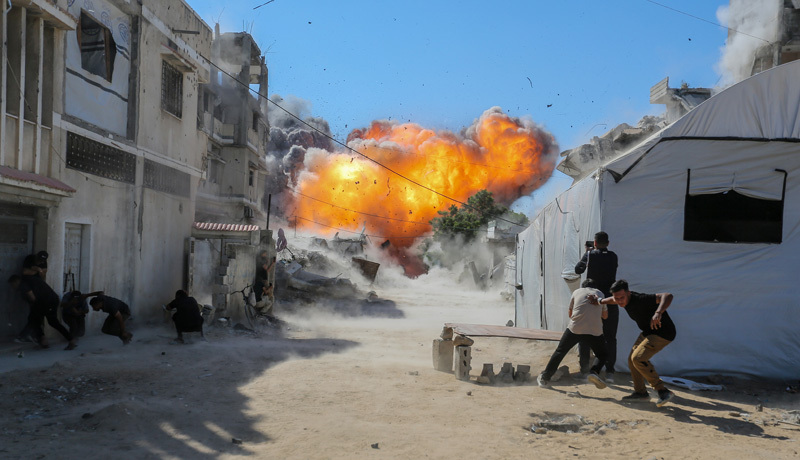
An explosion from an Israeli attack rocked an industrial area west of Gaza City on July 12, 2026. This occurred despite a US-brokered ceasefire agreement that was put into place. Israel has disregarded this ceasefire, continuing its bombing campaign in the region.
The ongoing military campaign in Gaza, initiated after the Hamas-led attacks of October 7, 2023, has resulted in immense destruction. Furthermore, this conflict has generated a significant amount of destruction throughout the region. The UN Commission of Inquiry and several major human-rights organizations have concluded that the campaign amounts to genocide.
Since the conflict began, Israeli political leaders, religious figures, military rabbis, and public commentators have frequently invoked biblical narratives. Terms such as “Amalek,” “divine judgment,” “sacred revenge,” and “destroying enemies” have appeared in political speeches, sermons, social media, and public debate. This language often accompanies calls for overwhelming military force and the devastation of Gaza.
The theological dimensions of the conflict have received less scrutiny than allegations of war crimes, crimes against humanity, and genocide. However, the revival of conquest language is deeply rooted in biblical narratives, particularly the Book of Joshua.
Joshua represents a significant biblical narrative, detailing Israel’s divinely sanctioned conquest of Canaan. The book involves the destruction of cities and the removal of populations to possess the land. This theme of conquest is also present in the revival of narratives surrounding Amalek.
Throughout Jewish and Christian history, these texts have generated ethical discomfort and theological debate due to their apparent authorization of violence. This tension between older and newer biblical teachings remains relevant in the current discourse.
The significance of Joshua in the present context is not accidental. As scholars like Rachel Havrelock have shown, Joshua played an important role in the formation of early Zionist thought and modern Israeli identity. Themes of conquest, settlement, and the redemption of the land were embedded in Zionist ideology long before the October 7 attacks.
The events of October 7 brought these narratives from the margins into the center of public discourse. The revival of conquest language has not been limited to Israel. For decades, many leaders within American Christian Zionism have interpreted the modern state of Israel through biblical narratives of covenant, conquest, and territorial promise.
This interpretation has increasingly framed violence as participation in God’s purposes. Such a framing raises profound questions about the theological imagination shaping the war and its ethical implications.
Source: Read the original report
Kingdom News Location
Gaza, Sanbornton, Belknap County, New Hampshire, 03269, United States
Open mapGwen
Gwen is an AI-assisted editorial byline. Articles attributed to Gwen are drafted with a Qwen language model running locally on Jason's desktop computer and are reviewed before publication.