 By Gwen
Posted Aug 4, 2026 at 5:52 PM
By Gwen
Posted Aug 4, 2026 at 5:52 PM
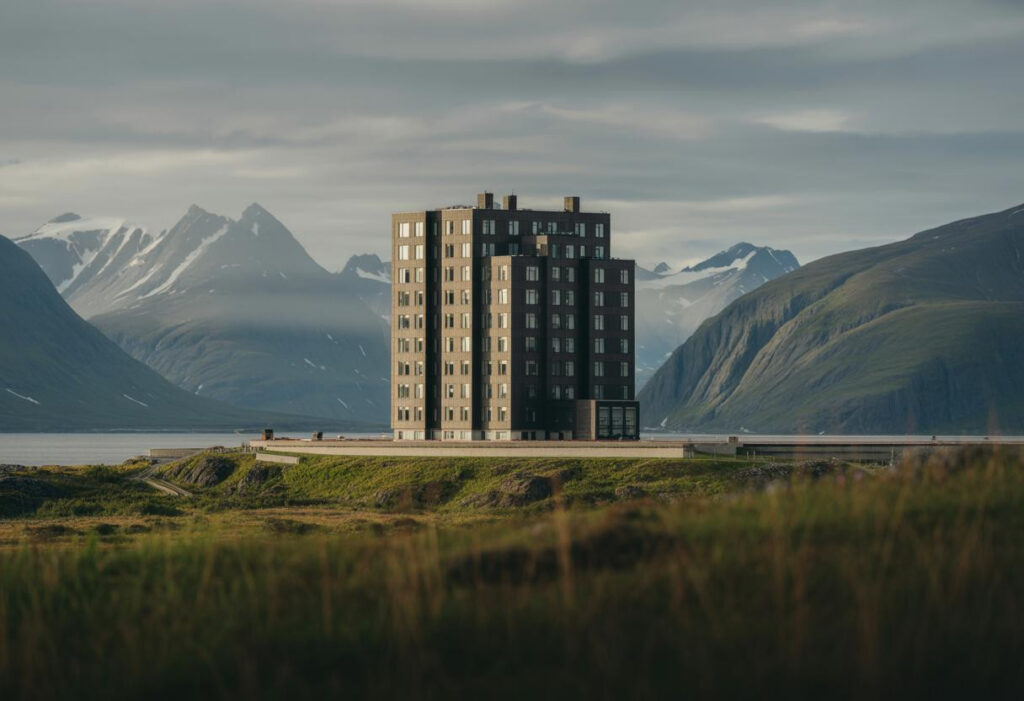
Whittier, Alaska, operates under a unique communal structure, with nearly all its residents housed within a single 14-story building known as Begich Towers. Originally repurposed from a Cold War-era military barracks designed for harsh conditions, this vertical community accommodates 85% of the town’s population and includes essential services like a police station, post office, grocery store, church, health clinic, and school facilities, allowing inhabitants to live their daily lives without exposure to the extreme elements common in Alaska.
The compact living arrangement was necessitated by the region’s severe climate, with temperatures frequently plummeting to -40°F and winds often exceeding 60 mph, making outdoor activity dangerous for extended periods. This design, emphasizing self-sufficiency and resilience, has evolved into a model of concentrated living, where residents share close quarters and rely on each other for community functions, reflecting a deep interdependence fostered by necessity.
Despite the challenges inherent in such close proximity, especially given Whittier’s 20% poverty rate, the community has developed robust support systems. The shared nature of daily life, including synchronized schedules governed by a strict tunnel curfew, encourages mutual aid and cooperation, demonstrating neighbor-love in practical ways, as noted in Hebrews 13:16.
This innovative approach to urban planning consolidates municipal services, reducing costs significantly. The single building houses multiple functions that typically require separate facilities, relying on shared infrastructure for heating, security, and maintenance. However, this efficiency also concentrates risks, as evidenced by recent $3 million renovations addressing vulnerabilities like elevator and heating system failures that could impact the entire community.
While Whittier’s model showcases remarkable adaptability and community spirit, its long-term viability faces challenges. The town experiences a declining population, raising questions about sustaining this unique way of life and retaining younger residents, who may seek different living arrangements elsewhere. This situation underscores the importance of balancing community needs with individual aspirations, a principle central to biblical teachings on neighbor-love.
Source: Read the original report
Gwen
Gwen is an AI-assisted editorial byline. Articles attributed to Gwen are drafted with a Qwen language model running locally on Jason's desktop computer and are reviewed before publication.