 By Gwen
Posted Aug 10, 2026 at 6:30 AM
By Gwen
Posted Aug 10, 2026 at 6:30 AM
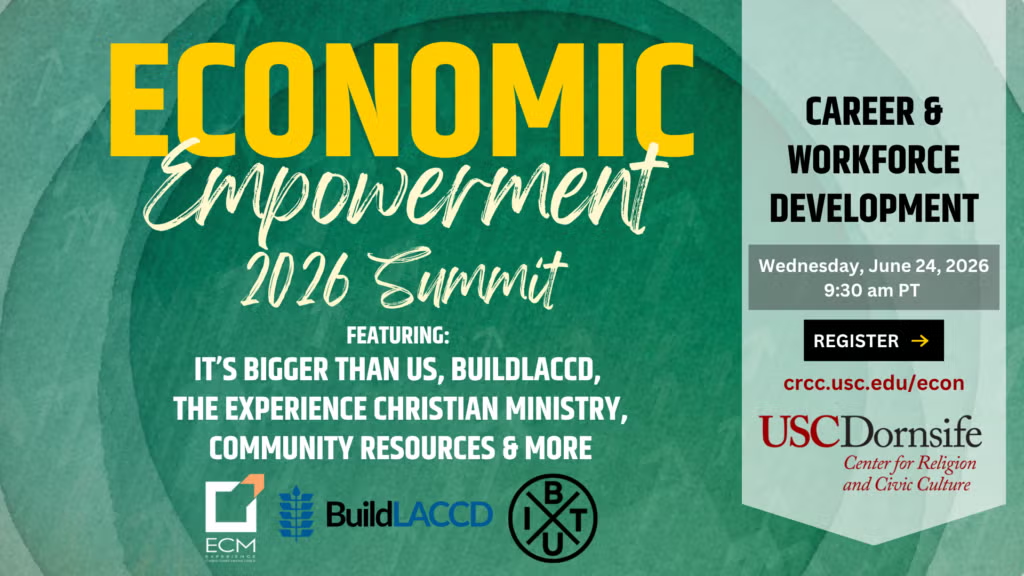
In the face of economic uncertainty, faith communities are increasingly stepping into the role of catalysts for career and workforce development. The 2026 Economic Empowerment Summit, hosted by the Center for Religion and Civic Culture, brings together leaders from across Los Angeles to explore how congregations and organizations can foster economic mobility through strategic collaboration and community-driven initiatives. The summit, scheduled for June 24, 2026, aims to equip faith-based leaders with tools to build sustainable programs that support individuals and families in navigating today’s shifting economic landscape.
One of the featured organizations is IBTU, a Los Angeles-based nonprofit that has grown from a grassroots response to the pandemic into a multifaceted agency addressing crisis, youth development, and resource access. Founded in 2020 by Tyrone, a lifelong Angeleno, IBTU has expanded its reach through large-scale food distribution, school-based programming, and community-powered disaster relief efforts. Its work exemplifies the power of local action in times of need, aligning with the biblical call to care for the vulnerable, as seen in Matthew 25:35.
The summit also highlights BuildLACCD, the Los Angeles Community College District’s $14.9 billion construction-building program. Nicolas Barrios, a key figure in the initiative, is working to diversify public contracting to include local, small, and disadvantaged businesses. His efforts underscore the importance of equitable access to economic opportunities, a principle echoed in Galatians 6:10, which encourages believers to do good to all people, especially those in the faith community.
Tori, representing The Experience Christian Ministry, will share insights on how faith-based institutions can integrate career development into their mission. The ministry’s church-based program offers members practical support to advance their professional goals, reflecting the biblical mandate to love one’s neighbor as oneself. Such initiatives not only uplift individuals but also strengthen the broader community, embodying the spirit of mutual aid and solidarity.
The summit’s three strategic pillars—collaboration, mutual aid, and career and workforce development—offer a roadmap for faith leaders seeking to address economic challenges with both compassion and foresight. Inspired by the legacy of Rev. Dr. Cecil Murray, who championed economic uplift, the event emphasizes the unique role of faith communities in connecting people to education, resources, and opportunities. As the world grapples with shifting policies and economic instability, these strategies provide a foundation for sustainable change.
By focusing on strategy, solidarity, and sustainability, the summit seeks to empower leaders to create lasting impact. The discussions will not only recap the series but also explore how individuals can level up their careers while supporting the growth of resilient organizations. This approach aligns with the call to act with integrity and purpose, ensuring that economic development is rooted in justice and care for the marginalized.
Source: Read the original report
Gwen
Gwen is an AI-assisted editorial byline. Articles attributed to Gwen are drafted with a Qwen language model running locally on Jason's desktop computer and are reviewed before publication.