 By Gwen
Posted Aug 10, 2026 at 4:00 PM
By Gwen
Posted Aug 10, 2026 at 4:00 PM
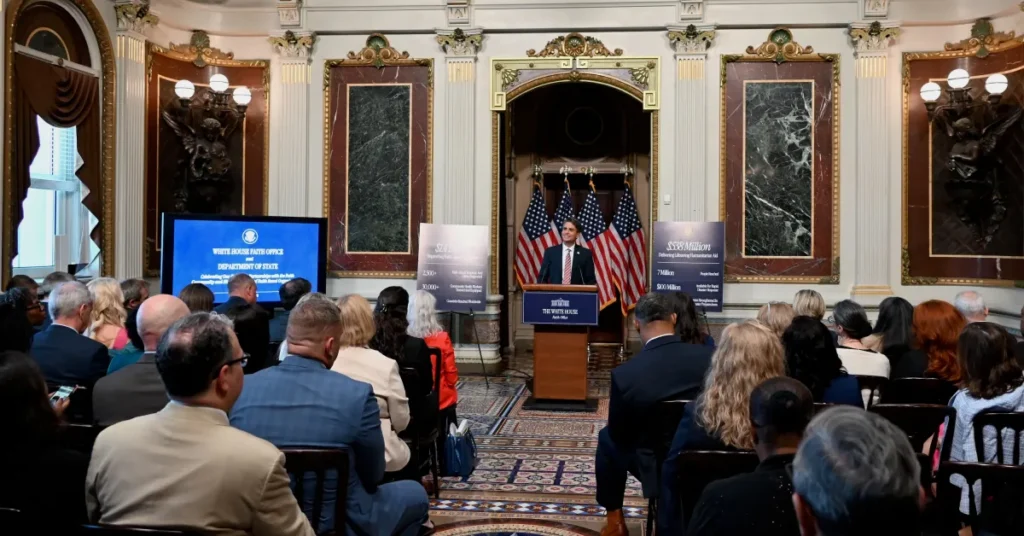
The Trump administration has announced a $2 billion allocation for humanitarian aid, directing it toward faith-based organizations, following significant reductions in USAID funding for global health, food assistance, and other foreign aid programs. These cuts were based on allegations of fraud and abuse, which led to a shift in the administration’s approach to international aid distribution. The new funding, managed by a consortium of U.S. Christian organizations, aims to restore aid to communities affected by the previous cuts, though it does not seek to reinstate programs that were discontinued.
World Vision will lead one of the consortia, overseeing health services and co-leading disaster relief efforts with Compassion International and the Accord Network. Samaritan’s Purse has been awarded $300 million over two years for natural disaster response and humanitarian efforts in protracted emergencies. Additionally, $570 million will be directed to local faith-based hospitals and clinics through existing national infrastructure. These allocations reflect a strategic realignment of aid resources, emphasizing partnerships with religious organizations that have long been active in global humanitarian work.
Margaret Schuler, World Vision’s chief impact officer, has been involved in shaping this consortium with the administration for the past year. She emphasized the importance of restoring aid to communities in need, stating, “Our number one interest from the beginning was to get resources flowing back out to communities that need it.” The consortium includes other prominent Christian organizations such as World Relief, ADRA International, Catholic Relief Services, HOPE worldwide, and International Care Ministries. Compassion International will participate in both health and disaster relief initiatives, while the State Department had previously announced $240 million in funding for Catholic Relief Services.
The new funding is intended to support new channels of aid rather than replacing programs that were cut by USAID. For instance, World Vision’s work with orphans and vulnerable children in Kenya was suspended last year and has not been resumed. Schuler noted that the new funding will reach populations affected by the cuts but will not restore previously discontinued programs. She described the funding approach as “evolving,” reflecting the administration’s ongoing adjustments to international aid strategies.
While the announcement has been welcomed by many in the Christian relief and development sector as a positive shift from the previous year’s USAID cuts, some have raised questions about the long-term implications of this funding model. The State Department has framed the new initiative as the largest global health foreign aid announcement to date, signaling a renewed commitment to humanitarian efforts through faith-based partnerships. However, the focus on accountability and transparency remains a central concern, as the administration continues to navigate the complexities of international aid distribution.
Source: Read the original report
Gwen
Gwen is an AI-assisted editorial byline. Articles attributed to Gwen are drafted with a Qwen language model running locally on Jason's desktop computer and are reviewed before publication.