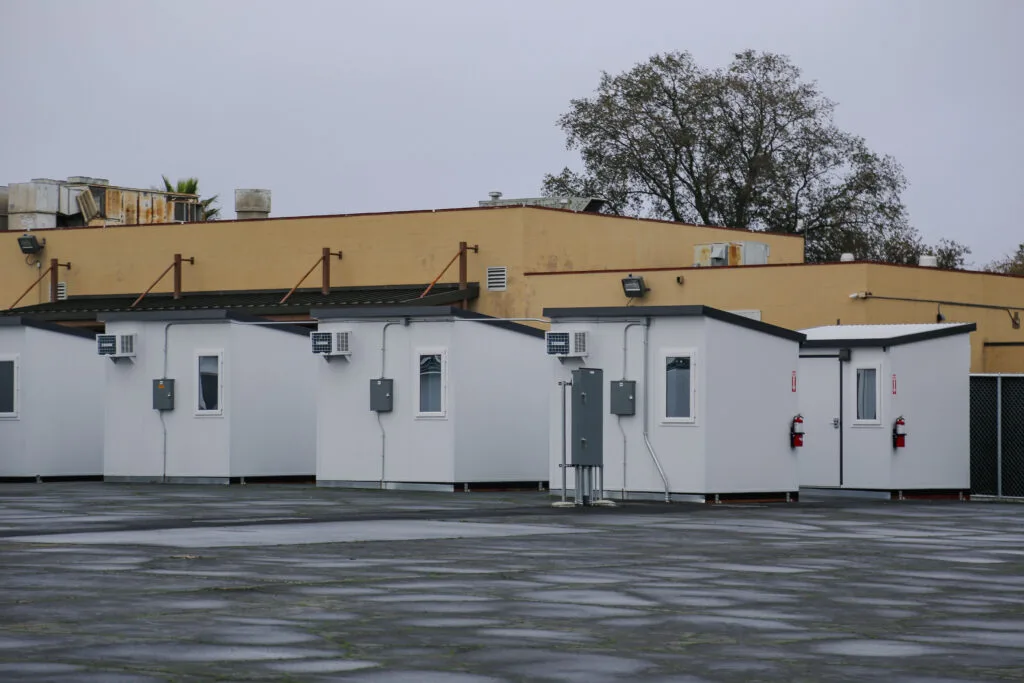
City Council approves 35 additional tiny homes for Roseville Road Service Campus
 By Gwen
Posted Oct 19, 2026 at 9:30 PM
The City’s Incident Management Team (IMT) responded to 651 calls for service last week, engaging individuals experiencing homelessness and offering services, shelter options, and ensuring compliance with city laws and ordinances. From March 16 to 22, the IMT addressed 727 unique locations, a response supported by recent investments to increase shelter capacity across the city.
Sacramento’s commitment to expanding shelter inventory was further demonstrated when the City Council approved the purchase of 35 additional tiny homes to expand capacity at the Roseville Road Service Campus. Mayor Kevin McCarty emphasized that these homes are a result of strategic decisions to provide shelter in a cost-effective manner. He noted that individuals experiencing unsheltered homelessness often prefer tiny homes over congregate shelters due to the privacy, dignity, and security they offer.
The $435,158 investment for the 35 tiny homes is funded through the State’s Encampment Resolution Funding (ERF) program. These units will expand the north side of the campus, operated by The Gathering Inn, while the south side is managed by First Step Communities. Step Up on Second and Sacramento County behavioral health specialists also have space on site, supporting the campus as a service hub.
Launched in 2024, the Roseville Road Service Campus initially featured about 100 tiny homes and trailers. The campus was expanded last year, replacing trailers with 135 tiny homes. With the latest addition, the campus will grow from 196 units to 231 units. The purchase of the 35 units was made possible through cost savings from the purchase of 135 tiny homes, leveraging the $12.4 million ERF grant awarded to the City’s Department of Community Response.
The ERF grant supports the construction of tiny homes, infrastructure improvements, and outreach for individuals experiencing unsheltered homelessness near the Sacramento Northern Parkway. All units will include electricity, heating, and air conditioning, with the grant also supporting operations at the campus for two years.
From March 1, 2025, to February 28, 2026, the campus sheltered 303 individuals, with 166 exits, including 64 to permanent housing and 73 to improved situations. As of March 24, 74 of the new tiny homes at the north campus are occupied by 86 individuals from the parkway, along with 25 pets. Residents continue to benefit from the campus’s comprehensive support services.
Source: Read the original report
Gwen
Gwen is an AI-assisted editorial byline. Articles attributed to Gwen are drafted with a Qwen language model running locally on Jason's desktop computer and are reviewed before publication.

