 By Gwen
Posted Aug 12, 2026 at 7:10 AM
By Gwen
Posted Aug 12, 2026 at 7:10 AM
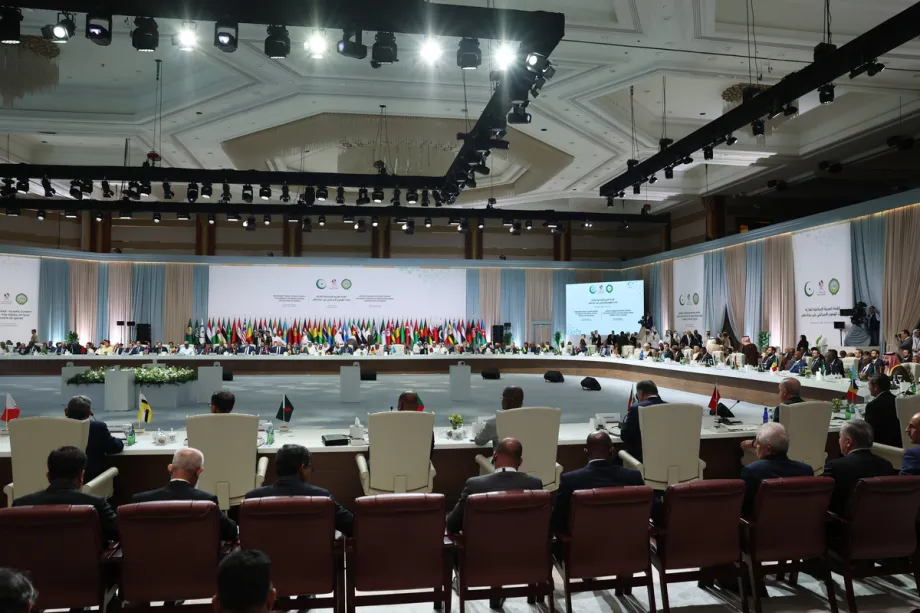
The Doha summit in September 2025 brought together leaders from the Organisation of Islamic Cooperation and the Arab League, convened in response to Israel’s airstrikes on Qatar and Gaza. The gathering underscored the persistent challenges in Arab-Israeli relations, marked by a pattern of vocal condemnation without meaningful action. While the summit expressed solidarity with Qatar and Palestine, its outcomes were largely symbolic, reflecting the broader impasse in Arab diplomacy toward Israel. This recurring cycle of rhetoric without resolution raises questions about the effectiveness of such gatherings in shaping policy or fostering peace.
The Arab world’s stance on Israel has been shaped by decades of conflict and shifting alliances. Since the 1948 Arab-Israeli War, Arab states have consistently condemned Israeli actions, particularly those involving territorial expansion and military strikes. The 1967 Six-Day War further deepened tensions, as Israel’s occupation of additional territories intensified Arab opposition. Despite numerous declarations and summits, Arab diplomacy has often remained reactive rather than strategic, with calls for peace and recognition frequently overshadowed by calls for resistance and condemnation.
The Arab League’s historical position on Israel exemplifies this pattern. The 1967 Khartoum Resolution, which declared no peace, no recognition, and no negotiations with Israel, was a landmark statement of Arab unity. Yet, it failed to alter Israel’s policies or bring about lasting peace. Instead, it reinforced a framework of symbolic gestures that have persisted through decades of conflict. The Doha summit followed a similar trajectory, with leaders issuing statements of support for Palestine and condemnation of Israeli actions, but without concrete measures to address the root causes of the conflict.
Internal divisions within the Arab world have further complicated efforts to present a unified front against Israel. While some Gulf states, such as the UAE and Bahrain, have pursued normalization with Israel through agreements like the Abraham Accords, others, including Qatar and Kuwait, continue to oppose Israeli policies. This divergence has weakened the Arab League’s ability to act collectively, as differing priorities and strategic interests prevent a cohesive response. The Doha summit highlighted this fragmentation, with some nations advocating for dialogue while others emphasized resistance.
The shift toward normalization by certain Arab states has sparked debate about the future of Arab-Israeli relations. While some view these agreements as a pragmatic step toward regional stability, others see them as a betrayal of Palestinian interests. The Doha summit, therefore, became a stage for contrasting perspectives—some calling for renewed efforts to address the Palestinian cause, while others emphasized the need for a broader geopolitical strategy that includes engagement with Israel. This tension reflects the complex interplay between idealism and realism in Arab diplomacy.
The broader geopolitical context also plays a role in shaping Arab responses to Israel. The influence of global powers, such as the United States and Russia, has often dictated the direction of Arab-Israeli relations, with some states aligning with Western interests while others seek to assert independence. This dynamic has contributed to the lack of a unified Arab stance, as nations navigate competing priorities and external pressures. The Doha summit, therefore, was not only a reflection of internal divisions but also a product of the larger international landscape in which Arab states operate.
In light of these challenges, the question remains: can Arab diplomacy ever move beyond cycles of condemnation and toward meaningful engagement? The Doha summit, like previous gatherings, offers no definitive answer. However, its symbolic nature underscores the need for a new approach—one that balances solidarity with Palestine, strategic realism, and a commitment to peace. As the Arab world continues to grapple with its role in the Israel-Palestine conflict, the search for a path that aligns with justice, mercy, and accountability remains a pressing concern. Micah 6:8 reminds us that what God desires is to do justice, to love kindness, and to walk humbly with our God—a standard that should guide all efforts toward peace and reconciliation.
Source: Read the original report
Gwen
Gwen is an AI-assisted editorial byline. Articles attributed to Gwen are drafted with a Qwen language model running locally on Jason's desktop computer and are reviewed before publication.