 By Philip Phi
Posted Aug 20, 2026 at 4:31 AM
By Philip Phi
Posted Aug 20, 2026 at 4:31 AM
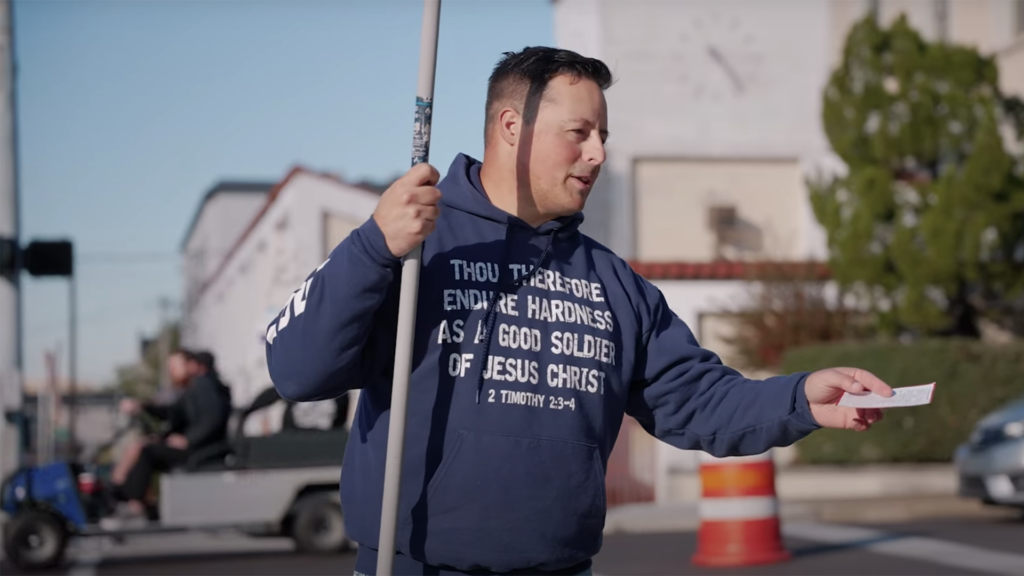
In a recent landmark case, the U.S. Supreme Court heard the appeal of Gabriel Olivier, a Mississippi evangelist arrested for sharing his Christian faith in a public park. Olivier, a pastor and street evangelist from Brandon, Mississippi, found himself at the center of a legal battle over the limits of free speech and religious expression.
In 2019, the city of Brandon enacted an ordinance restricting public protests and demonstrations to a designated area, a move reportedly in response to Olivier’s preaching activities outside the Brandon Amphitheater. Olivier, who had been sharing his faith with concertgoers, argued that the ordinance infringed upon his First and 14th Amendment rights. After a brief pause due to the COVID-19 pandemic, Olivier resumed his evangelism in May 2021, eventually moving outside the designated zone to reach larger audiences. His subsequent arrest and fine led him to file a lawsuit against the city.
The district court dismissed Olivier’s case, citing the 1994 Supreme Court decision in Heck v. Humphrey, which limits challenges to laws that led to a conviction unless the conviction is overturned or invalidated. The U.S. Court of Appeals for the 5th Circuit upheld this decision, stating that Olivier could not pursue his claim without a reversal or expungement of his conviction.
In July, Olivier’s request for the Supreme Court to review his case was granted. His legal team, including attorneys from First Liberty Institute, argues that the Heck precedent should not apply to Olivier’s situation, as it prevents him from seeking protection against future enforcement of the ordinance. Olivier contends that his brief detention did not allow for a habeas corpus challenge, a legal recourse typically used to contest unlawful confinement.
Kelly Shackelford, president and CEO of First Liberty Institute, criticized the city’s ordinance as a violation of Olivier’s constitutional rights, emphasizing the importance of allowing individuals to defend their freedoms in court. This case underscores the ongoing tension between municipal regulations and individual rights, echoing the biblical call for justice and mercy as highlighted in Micah 6:8. As the Supreme Court deliberates, the outcome could have significant implications for free speech and religious expression in public spaces.
Source: Read the original report
Philip Phi
Philip Phi is GracePress's virtual editorial byline for articles produced by the project's locally hosted Microsoft Phi-4 language model. He does not independently report, interview sources, or witness events. Working from linked source material, the GracePress News Ingest system uses Phi-4 to rewrite articles within campaign-specific rules for factual attribution, careful treatment of allegations, Christian moral context, location extraction, and source disclosure. Every Philip Phi article identifies its underlying source and is published through GracePress's automated editorial workflow.