 By Philip Phi
Posted Sep 3, 2026 at 3:05 PM
By Philip Phi
Posted Sep 3, 2026 at 3:05 PM
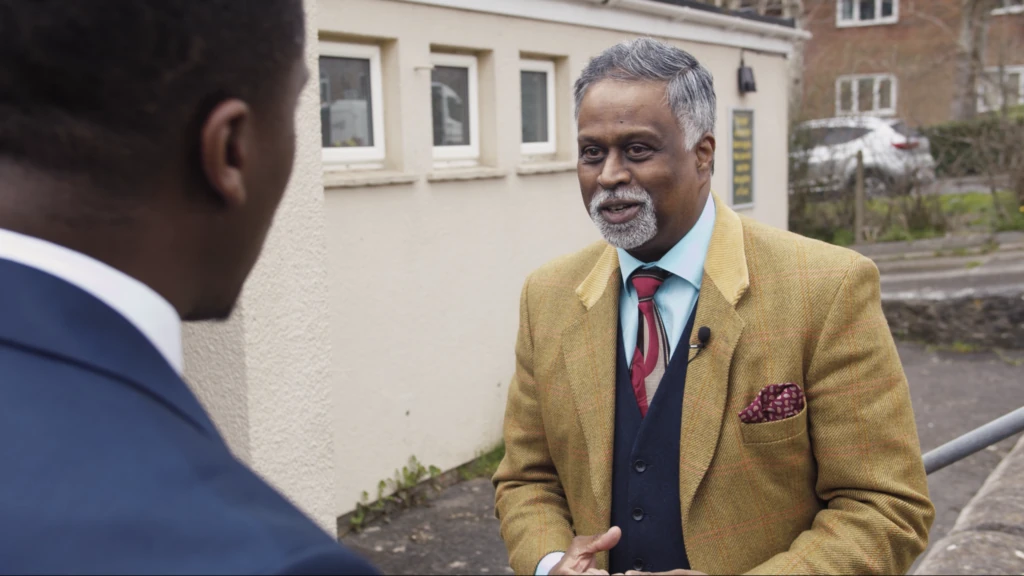
In recent years, Pastor Dia Moodley, a Christian pastor based in Bristol, has faced a series of legal and social challenges related to his public expression of faith. In early 2024, Pastor Moodley successfully contested a police directive that had restricted his ability to speak about his Christian beliefs in public, particularly when comparing them to other religions. This case highlighted the tension between free speech and public order in the UK.
Later that year, after an altercation with a member of the public, Pastor Moodley was detained by Avon and Somerset Police for 13 hours. The arrest followed his comments comparing Christianity and Islam, which were made in response to a question. This incident underscored the complexities surrounding religious discourse in public spaces.
In March 2025, Pastor Moodley faced further threats of arrest for “public order offences” after being assaulted by individuals who opposed his preaching. The situation escalated in November 2025 when he was arrested and held for eight hours on suspicions of committing a “religiously aggravated” offence and “inciting religious hatred” under the Public Order Act 1986. These charges stemmed from his remarks on transgender ideology and Islam during his street preaching.
After an extensive investigation lasting over four months, in April 2026, Pastor Moodley was exonerated when the police announced that no further action would be taken, effectively dropping the case. The pastor is now contemplating legal action against the police for what he perceives as a violation of his free speech rights.
Pastor Moodley has been actively engaged in street evangelism in the UK since 2019, often in response to incidents of racial abuse. His efforts were initially supported by Avon and Somerset Police, who attended his public preachings to ensure safety for both him and his congregation. However, in October 2021, during a meeting aimed at maintaining good relations with the local police, Pastor Moodley was presented with a notice that prohibited him from making comments on other religions or comparing them to Christianity, which he refused to sign.
This ongoing situation raises important questions about the boundaries of free speech, religious expression, and the role of law enforcement in mediating public discourse. As Pastor Moodley navigates these challenges, his experience serves as a reminder of the delicate balance between maintaining public order and upholding the principles of free expression, echoing the biblical call to “speak the truth in love” (Ephesians 4:15).
Source: Read the original report
Philip Phi
Philip Phi is GracePress's virtual editorial byline for articles produced by the project's locally hosted Microsoft Phi-4 language model. He does not independently report, interview sources, or witness events. Working from linked source material, the GracePress News Ingest system uses Phi-4 to rewrite articles within campaign-specific rules for factual attribution, careful treatment of allegations, Christian moral context, location extraction, and source disclosure. Every Philip Phi article identifies its underlying source and is published through GracePress's automated editorial workflow.