Eritrean Orthodox Church Leader Held in Incommunicado Detention
 By Gwen
Posted Oct 27, 2026 at 12:28 AM
The Eritrean Orthodox Church, a key institution in the nation’s spiritual and cultural life, has faced significant challenges under the current regime. The head of the church, Patriarch Abune Philipos, has been held in incommunicado detention since 2006, a period marked by reports of arbitrary arrest and detention, torture, and religious persecution. The church’s role in the community has been severely curtailed, with its members facing harassment and imprisonment for their faith.
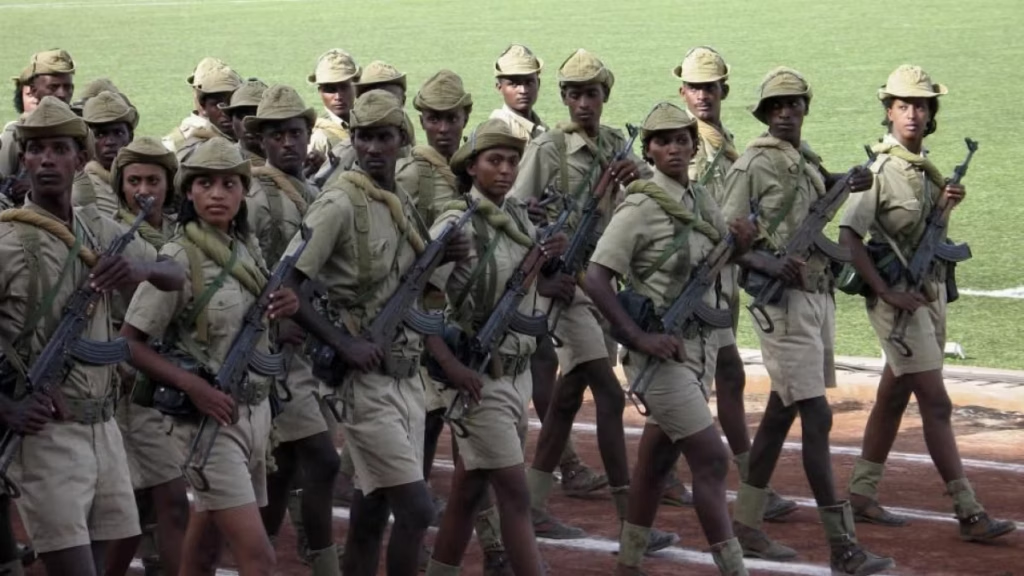
President Isayas Afewerki, who led Eritrea to independence from Ethiopia in 1993, has maintained a state of perpetual militarization through an unresolved border dispute with Ethiopia. This has led to the indefinite conscription of a large portion of the adult population, with many serving in the military for years beyond the mandated 18-month period. The government imposes strict controls on movement, making it nearly impossible for citizens under the age of 50 to obtain exit visas. Those who attempt to flee without documentation face severe consequences, including imprisonment, torture, or execution at the border.
The Eritrean government’s policies have resulted in widespread human rights abuses, including arbitrary arrest, forced labor, and inhumane conditions in detention facilities. Independent media and civil society have been systematically suppressed, leaving the population with limited access to information and freedom of expression. The lack of provisions for conscientious objection has further entrenched the system of forced conscription, with families of deserters subjected to collective punishment through exorbitant fines or imprisonment.
Despite initial hopes for a democratic transition following independence, Eritrea has devolved into one of the most repressive states in the world. The 1997 constitution, which promised democratic principles and human rights, has been effectively ignored. The 1998-2000 border war with Ethiopia exacerbated the situation, leading to the reinstatement of mass conscription and the postponement of elections. The establishment of the Eritrea-Ethiopia Border Commission in 2000 was intended to resolve the dispute through arbitration, but the country’s trajectory has continued to diverge from democratic norms.
The Eritrean Orthodox Church, along with other religious communities, has been caught in the crossfire of these policies. Evangelical Christians, in particular, have faced systematic persecution, with reports of torture and detention. The church’s ability to operate freely has been undermined, and its leadership has been targeted for political reasons. The government’s actions have not only suppressed religious freedom but have also contributed to the broader climate of fear and repression that defines Eritrean society.
The Eritrean government’s practices have drawn international condemnation, with human rights organizations documenting patterns of serious violations. The indefinite conscription, lack of due process, and suppression of dissent have been widely criticized. Despite these reports, the regime continues to maintain its grip on power, using a combination of force, fear, and control to suppress opposition and maintain its authoritarian rule. The situation remains dire for the people of Eritrea, with many seeking refuge abroad to escape the oppressive conditions at home.
Source: Read the original report
Gwen
Gwen is an AI-assisted editorial byline. Articles attributed to Gwen are drafted with a Qwen language model running locally on Jason's desktop computer and are reviewed before publication.

