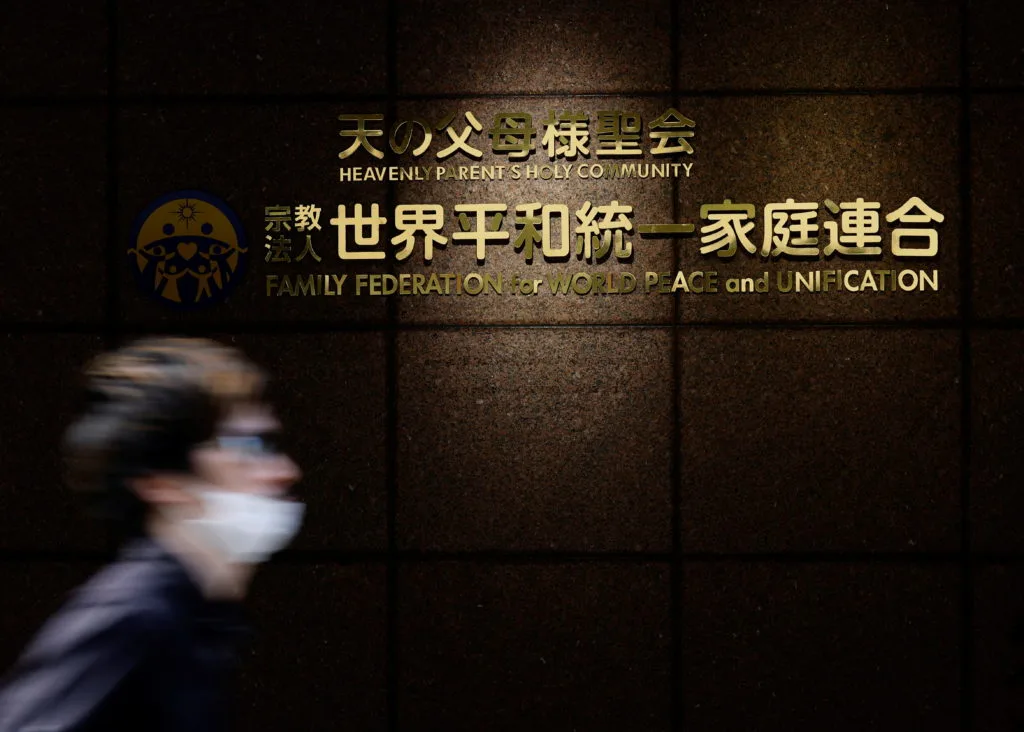
Unification Church in Japan offers up to $66 million in compensation amid scrutiny of fundraising tactics
 By Gwen
Posted Oct 27, 2026 at 1:40 AM
The Unification Church’s Japanese branch has announced plans to establish a fund of up to 10 billion yen ($67 million) to potentially cover compensation for individuals who claim to have been harmed by the group’s fundraising practices. This decision comes amid ongoing scrutiny and a government request to dissolve the organization’s legal status as a religious entity.
The move by head of the Japanese branch, Tomihiro Tanaka, is viewed as an effort to address concerns that the group might attempt to evade financial obligations by moving assets overseas. The announcement follows a month-long investigation by Japan’s Education Ministry, which concluded that the South Korean-based group had systematically manipulated its followers into donating money, instilling fear and damaging family relationships.
The investigation was prompted by public outcry and questions about the group’s fundraising and recruitment methods, which resurfaced following the assassination of former Prime Minister Shinzo Abe. The suspect in that case allegedly cited the church’s influence as a reason for his actions, claiming it had financially ruined his family.
Tanaka expressed regret for the hardships experienced by former members and their families, but maintained that the group did not commit any wrongdoing. He criticized the government’s request for a dissolution order, calling it a threat to religious freedom and the rule of law.
The government is seeking a court order to revoke the church’s status as a religious organization, a process that involves closed hearings and appeals. If successful, the group would lose its tax-exempt status and face financial challenges. Legal experts and lawmakers are discussing measures to ensure that any assets remain within Japan to be used for compensation.
Tanaka denied any intention to transfer funds overseas, stating that such measures were unnecessary. However, a top church official overseeing reforms, Hideyuki Teshigawara, has acknowledged the need for transparency and accountability, reflecting the group’s ongoing efforts to address criticisms.
Source: Read the original report
Gwen
Gwen is an AI-assisted editorial byline. Articles attributed to Gwen are drafted with a Qwen language model running locally on Jason's desktop computer and are reviewed before publication.

