Jesus Christ was not a polished religious mascot. He was a real man who entered a real world of poverty, illness, exploitation, grief, hard work, and religious power. The Gospels do not show him waiting inside a protected institution for people to come to him. They show him on roads, beside the lake, in crowded homes, in marketplaces, and in the Temple courts—where people actually lived and where the cost of telling the truth was real. Scripture: Matthew 4:23; Mark 1:21, Mark 1:39; Luke 4:43.
When his public ministry began, Jesus did not build a religious brand or seek approval from the people who already controlled the religious conversation. He gathered followers from ordinary working life: fishermen who knew boats, nets, weather, and callused hands; a tax collector whose work put him at odds with his neighbors; women who supported the ministry; and people who had no reason to believe they would be welcomed by respectable society. His life became itinerant. He travelled, depended on hospitality, and said plainly that the Son of Man had no settled place to lay his head. Scripture: Matthew 4:18–22; Matthew 9:9; Luke 8:1–3; Matthew 8:20.
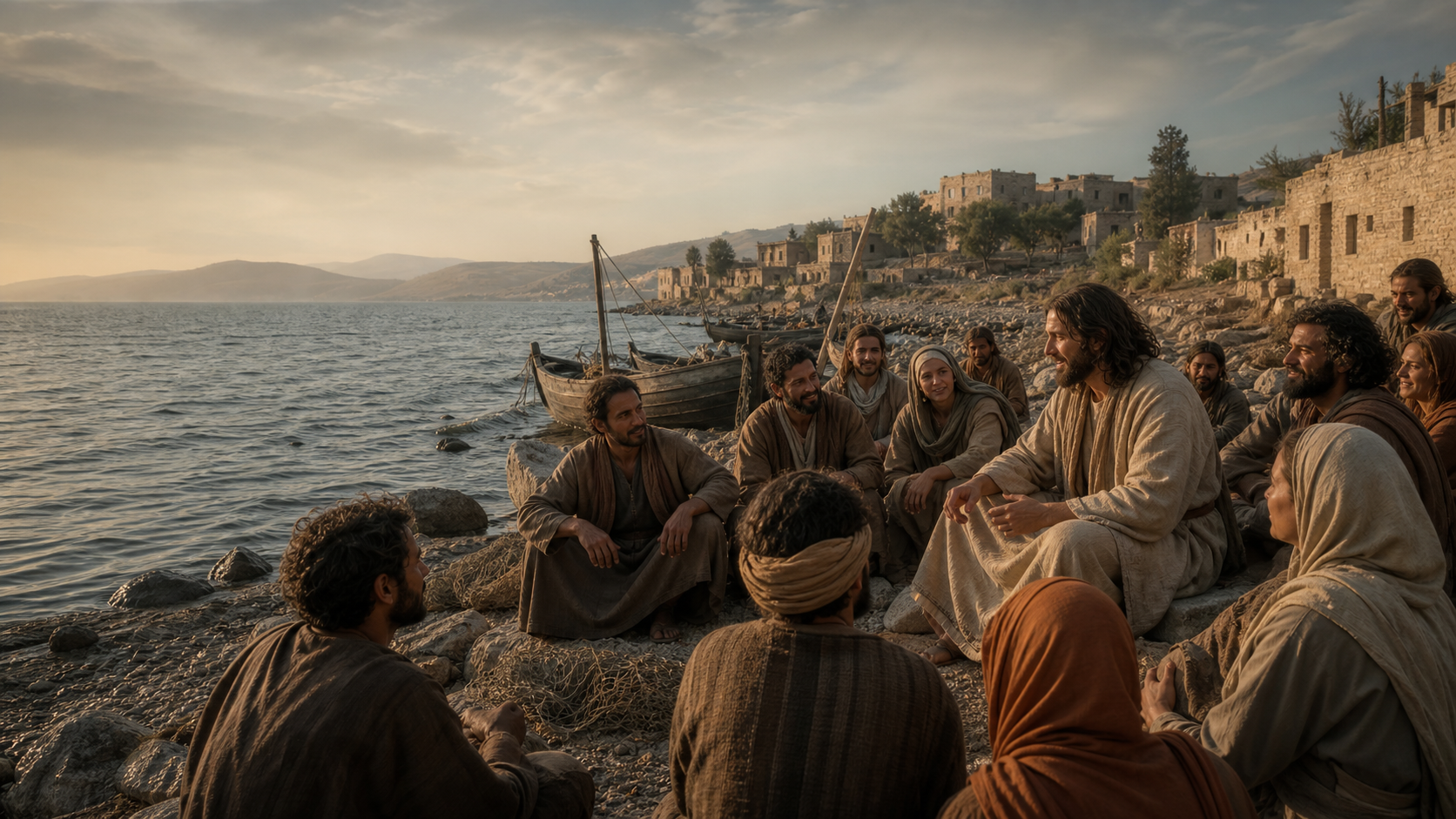
Jesus moved toward people other religious leaders preferred to keep at a distance. He ate with tax collectors and sinners. He touched the sick. He stopped for people everyone else was walking past. He welcomed women, children, the poor, foreigners, and the spiritually wounded into a life with God. That was not indifference to sin; it was a refusal to treat wounded and rejected people as disposable. His holiness did not make him inaccessible. It made him brave enough to go where mercy was needed. Scripture: Matthew 9:10–13; Mark 1:40–42; Luke 7:36–50; Luke 18:15–17; Luke 19:1–10.
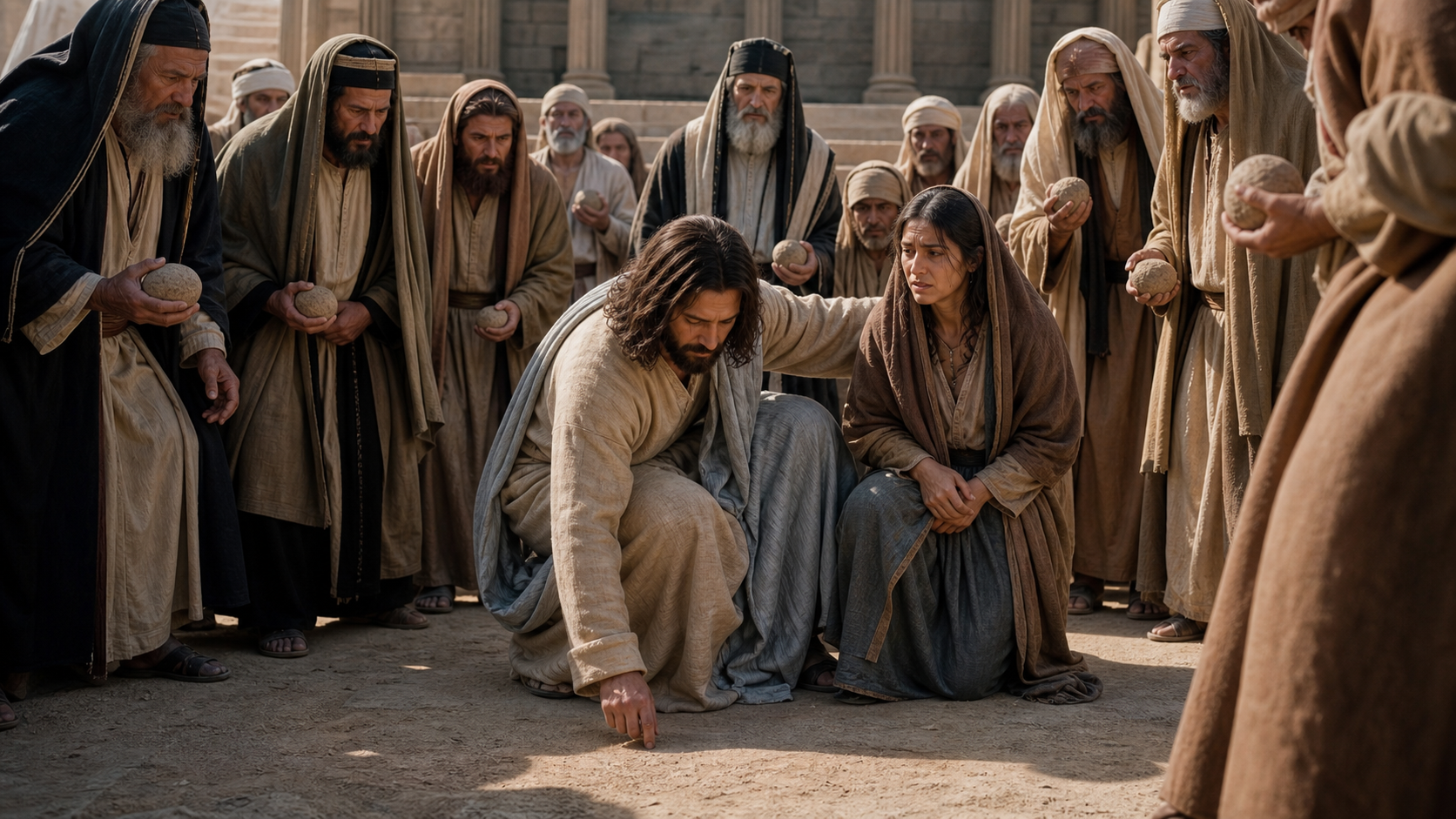
Let the one among you who is without sin be the first to throw a stone at her.John 8:7
He was just as direct with hypocrisy. Jesus taught in synagogues and came to the Temple, but he would not flatter religious authority when it distorted God’s purposes. He argued from Scripture, exposed double standards, warned people about leaders who loved status more than truth, and refused to let public piety hide cruelty. He could be tender with a wounded person and severe with a bully in the same day. His message was not built to be harmless. It called every person—poor or powerful, ashamed or self-righteous—to repentance, faith, and a changed life. Scripture: Mark 7:1–13; Matthew 23; Luke 11:37–54.
In the story of the woman brought before him, Jesus stood in the middle of a trap: religious accusers used both the law and a vulnerable human being as tools to test him. He wrote in the dust, then answered the crowd with words that turned their judgment back on themselves: let the one without sin cast the first stone. One by one they left. Jesus neither joined the mob nor pretended the woman’s life did not matter. He protected her from the people ready to destroy her and then called her to leave sin behind. Mercy and truth stayed together. Scripture: John 8:1–11.

Jesus also confronted the commercialization of God’s house. The Gospel accounts describe him overturning the tables of money changers, scattering coins, and driving the commerce out of the Temple courts; John records that he made a whip of cords and drove out the animals. This was not a quiet disagreement. It was a public, costly confrontation with a religious economy that had made access to worship harder for ordinary people. He would not let the place meant for prayer become a machine for profit and control. Scripture: Matthew 21:12–13; Mark 11:15–17; Luke 19:45–46; John 2:13–17.
That does not turn every human anger into righteousness or give anyone permission to use violence for personal grievance. It does show that faithfulness is not the same thing as passivity. Jesus stood against lies, exploitation, and spiritual abuse while still giving himself for the people who rejected him. He never sinned, yet he lived close enough to broken people to be criticized for the company he kept. He was fully human, fully faithful to God, and unwilling to abandon the vulnerable for the comfort of the powerful. Scripture: Matthew 5:38–48; Matthew 26:52; Luke 7:34.
This is the Jesus Christ we seek to remember: not distant from ordinary life, not impressed by status, not afraid of hard truth, and never careless with mercy. He called people to follow him not into a performance of religion, but into a life of courage, service, repentance, love of God, and love of neighbor. His example is demanding because it is real. His grace is real too. Scripture: Matthew 22:34–40; John 13:34–35.