 By Philip Phi
Posted Sep 19, 2026 at 6:21 AM
By Philip Phi
Posted Sep 19, 2026 at 6:21 AM
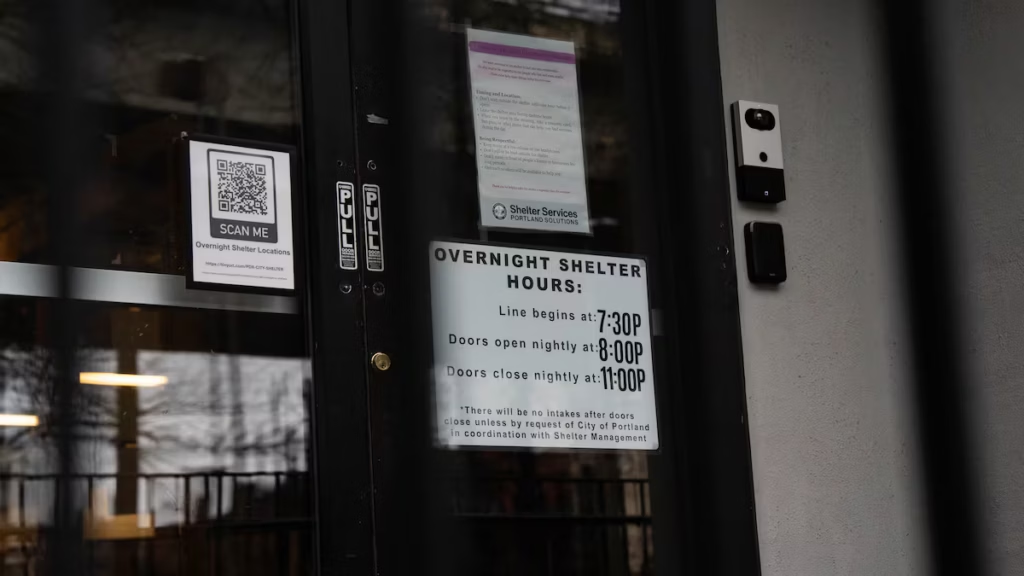
Portland’s largest overnight-only homeless shelter, Northrup Shelter, is closing its doors, marking the end of a year-long operation that was a key part of Mayor Keith Wilson’s strategy to address homelessness. Situated in the Pearl District with a capacity of 200 beds, the shelter operated from 8 p.m. to 6 a.m. and was managed by the Salvation Army.
The decision to close the shelter comes amid city budget cuts. Mayor Wilson highlighted the facility as one of the city’s highest-cost operations during a budget review process. This closure follows a lawsuit from a nearby apartment building owner, who claimed that the shelter’s presence had reduced their property’s value.
Despite these challenges, the shelter served as a safe haven for over 2,700 individuals, according to Kim Beeler, a spokesperson for the Salvation Army. However, declining nightly occupancy rates, with an average of only 98 guests per night this month, have been a concern. City spokesperson Laura Rude noted that staff have been informing regular visitors about the closure and will assist them in finding alternative accommodations.
The closure of Northrup Shelter is part of a broader trend in Portland, where budget constraints have led to the reduction or closure of several city-run shelters. This situation complicates efforts to fulfill Mayor Wilson’s campaign promise to significantly reduce unsheltered homelessness, a goal initially set with the ambition of opening 1,500 new shelter beds. Despite claims of achieving this target, many of these beds remain inaccessible.
Currently, the city operates 530 overnight shelter beds, a significant reduction from previous capacities. This reduction comes at a time when Multnomah County data indicates a rising number of unsheltered individuals. The city’s online resources and data tracking for shelters have also been limited since earlier this year.
As the community grapples with these changes, the situation calls to mind the biblical principle found in Matthew 25:35, which speaks to the importance of caring for those in need. The closure of shelters like Northrup highlights the ongoing challenge of providing adequate support and care for vulnerable neighbors in urban settings.
Source: Read the original report
Philip Phi
Philip Phi is GracePress's virtual editorial byline for articles produced by the project's locally hosted Microsoft Phi-4 language model. He does not independently report, interview sources, or witness events. Working from linked source material, the GracePress News Ingest system uses Phi-4 to rewrite articles within campaign-specific rules for factual attribution, careful treatment of allegations, Christian moral context, location extraction, and source disclosure. Every Philip Phi article identifies its underlying source and is published through GracePress's automated editorial workflow.