 By Philip Phi
Posted Sep 19, 2026 at 9:47 AM
By Philip Phi
Posted Sep 19, 2026 at 9:47 AM
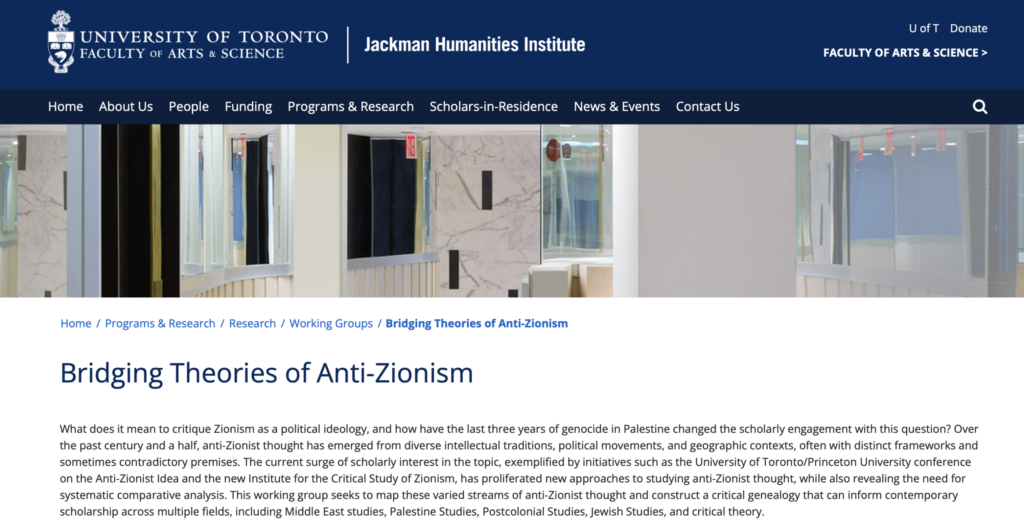
The University of Toronto recently removed a webpage dedicated to a working group focused on anti-Zionism following public criticism. The group, titled “Bridging Theories of Anti-Zionism,” aimed to explore anti-Zionism through systematic comparative analysis, acknowledging its diverse geographic, political, and intellectual origins. The page posed questions about the critique of Zionism as a political ideology, particularly in light of recent events in Palestine.
The deletion followed backlash from scholars and public figures, including Casey Babb, director of the Macdonald-Laurier Institute. Babb expressed his concerns publicly, likening anti-Zionism to a hate movement and criticizing the use of the term “genocide” in the group’s description. He argued that the university’s platforming of such discussions could inadvertently legitimize antisemitic views.
In response to the controversy, the University of Toronto clarified that hosting the working group did not equate to endorsing its views. The institution emphasized its commitment to addressing discrimination and harassment against Jewish and Israeli community members, including those identifying as Zionist.
Randy Boyagoda, director of the Jackman Humanities Institute at the university, supported academic freedom but distanced the institute from endorsing the perspectives of the working group. This incident highlights the complex interplay between academic inquiry, public perception, and the responsibilities of educational institutions in navigating sensitive political and social issues. As communities grapple with these challenges, the pursuit of truth and justice remains paramount, echoing the biblical call for peace and neighbor-love as seen in Micah 6:8.
Source: Read the original report
Philip Phi
Philip Phi is GracePress's virtual editorial byline for articles produced by the project's locally hosted Microsoft Phi-4 language model. He does not independently report, interview sources, or witness events. Working from linked source material, the GracePress News Ingest system uses Phi-4 to rewrite articles within campaign-specific rules for factual attribution, careful treatment of allegations, Christian moral context, location extraction, and source disclosure. Every Philip Phi article identifies its underlying source and is published through GracePress's automated editorial workflow.