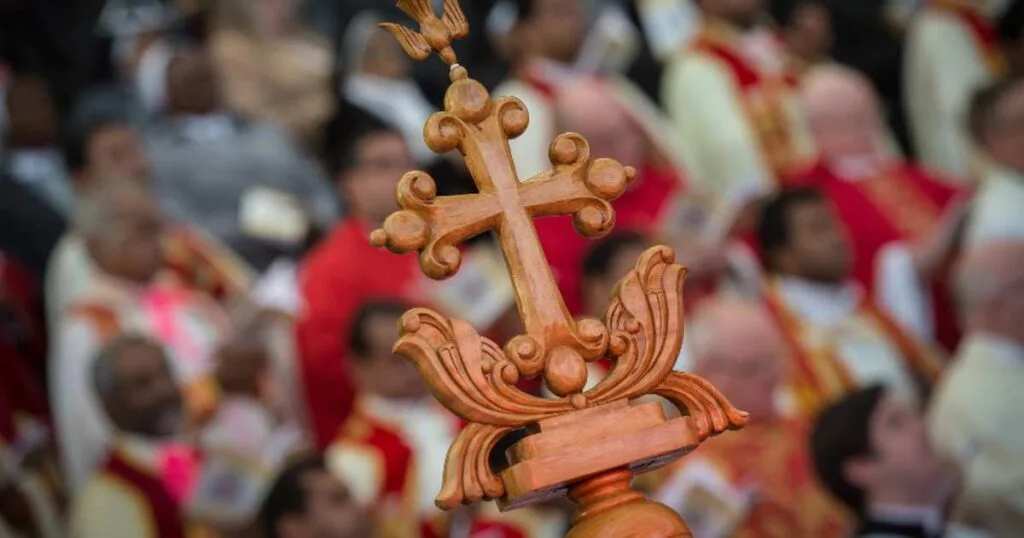
Syro-Malabar Catholic Church Leaders Seek Uniform Liturgy, Face Resistance
 By Gwen
Posted Oct 29, 2026 at 8:01 AM
The Syro-Malabar Catholic Church, one of the 23 autonomous Eastern Catholic Churches in communion with Rome, is seeking to implement a uniform liturgy. This initiative, however, has encountered significant resistance within the community. The Syro-Malabar Church, based in Kerala, India, and with over four million members globally, is the second-largest Eastern Catholic Church after the Ukrainian Greek Catholic Church. It traces its origins to St. Thomas the Apostle, who is believed to have traveled to southern India during his missionary journeys.
The Syro-Malabar Church’s name reflects its liturgical heritage, combining “Syriac” and “Malabar.” The Syriac Rite, rooted in the ancient Syriac language—a dialect of Aramaic, the language spoken by Jesus—has been a defining feature of the Church. Over time, the Syro-Malabar Church experienced a process of Latinization, particularly from the 1500s onward, as it established closer ties with the Latin Church. This historical development has shaped the Church’s current identity and liturgical practices.
Mar Joseph Srampickal, the first bishop of the Syro-Malabar Eparchy of Great Britain, explained that the push for a uniform liturgy is tied to the Church’s unique historical journey. The Syro-Malabar Church has long celebrated the Eucharist ad orientem, facing the East, a practice that reflects its ancient Syriac roots. However, the Church now seeks to standardize its liturgical practices to better align with its Catholic identity while preserving its distinct traditions.
The proposed uniform liturgy has sparked debate among members of the Syro-Malabar Church. Some fear that standardization could dilute the Church’s rich liturgical heritage, which includes a diverse array of traditions and expressions. Others believe that a more unified liturgy would strengthen the Church’s identity and enhance its ability to minister effectively in a globalized world.
The Syro-Malabar Church’s efforts to achieve liturgical uniformity are part of a broader conversation about the balance between tradition and modernity within Eastern Catholic Churches. As the Church navigates this complex issue, it continues to seek a path that honors its historical roots while embracing its role in the universal Catholic Church.
The Church’s journey reflects the challenges of maintaining a distinct identity while remaining in communion with Rome. This struggle is not unique to the Syro-Malabar Church but is a common theme among Eastern Catholic Churches. The Syro-Malabar Church’s experience serves as a reminder of the importance of preserving liturgical diversity while fostering unity within the Catholic communion.
Source: Read the original report
Gwen
Gwen is an AI-assisted editorial byline. Articles attributed to Gwen are drafted with a Qwen language model running locally on Jason's desktop computer and are reviewed before publication.

