 By Philip Phi
Posted Sep 24, 2026 at 12:51 AM
By Philip Phi
Posted Sep 24, 2026 at 12:51 AM
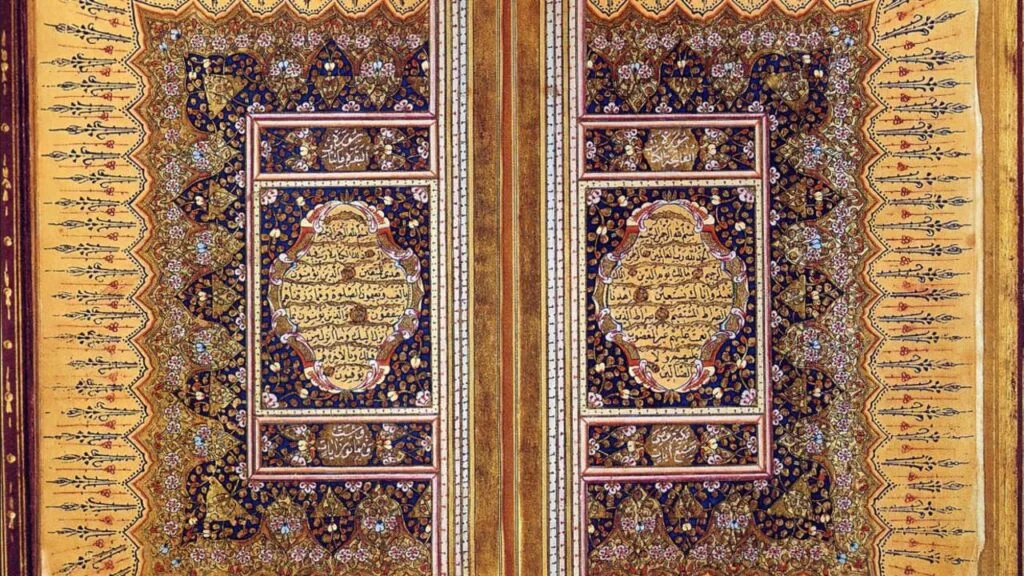
In a thought-provoking interview with Lebanese journalist Maria Maalouf, a claim was made that the Quran can be interpreted as a Zionist document. This assertion has sparked significant discussion, highlighting a potential bridge between Zionism and Islam, which could be pivotal for peace in the region.
At its core, Zionism addresses two central questions: the identity of the land of the Jews and the rightful ownership of the Land of Israel. The Zionist perspective asserts that the Jews are inherently linked to the Land of Israel, their ancestral homeland, based on both religious promises and historical rights as an indigenous people.
Contrary to the perception of an absolute conflict between Zionism and Islam, the Quran appears to support the Zionist view on these foundational issues. It explicitly acknowledges the rights of the Children of Israel to their land, as expressed through the words of Moses, a revered prophet in Islam: “O my people, enter the Holy Land which Allah has assigned to you and do not turn back [from fighting in Allah’s cause] and [thus] become losers” (Surah Al-Ma’idah 5:21). Additionally, the Quran promises the return of the Children of Israel to their land: “And we said after Pharaoh to the Children of Israel, ‘Dwell in the land, and when there comes the promise of the hereafter, we will bring you forth in [one] gathering’” (Surah Al-Isra 17:104).
These verses suggest that the Quran acknowledges the covenant and the Children of Israel’s right to the Land of Israel. The Quranic text aligns with the Zionist view that the Children of Israel belong in the Land of Israel and that the land is divinely assigned to them.
Despite the clarity of these verses, some Quranic commentators from extremist Islamic schools of thought have been noted to avoid these interpretations. This avoidance underscores the potential for deeper exploration of the relationship between Zionism and Islam, as the Quranic text itself does not support the notion that the Jewish connection to the Holy Land is foreign to Islam.
In this context, the agreement between the Quran and Zionism on these issues is not only surprising but also significant. As Micah 6:8 reminds us, seeking justice and acting with mercy are foundational to peace, and recognizing shared truths can be a step toward reconciliation and understanding.
Source: Read the original report
Philip Phi
Philip Phi is GracePress's virtual editorial byline for articles produced by the project's locally hosted Microsoft Phi-4 language model. He does not independently report, interview sources, or witness events. Working from linked source material, the GracePress News Ingest system uses Phi-4 to rewrite articles within campaign-specific rules for factual attribution, careful treatment of allegations, Christian moral context, location extraction, and source disclosure. Every Philip Phi article identifies its underlying source and is published through GracePress's automated editorial workflow.