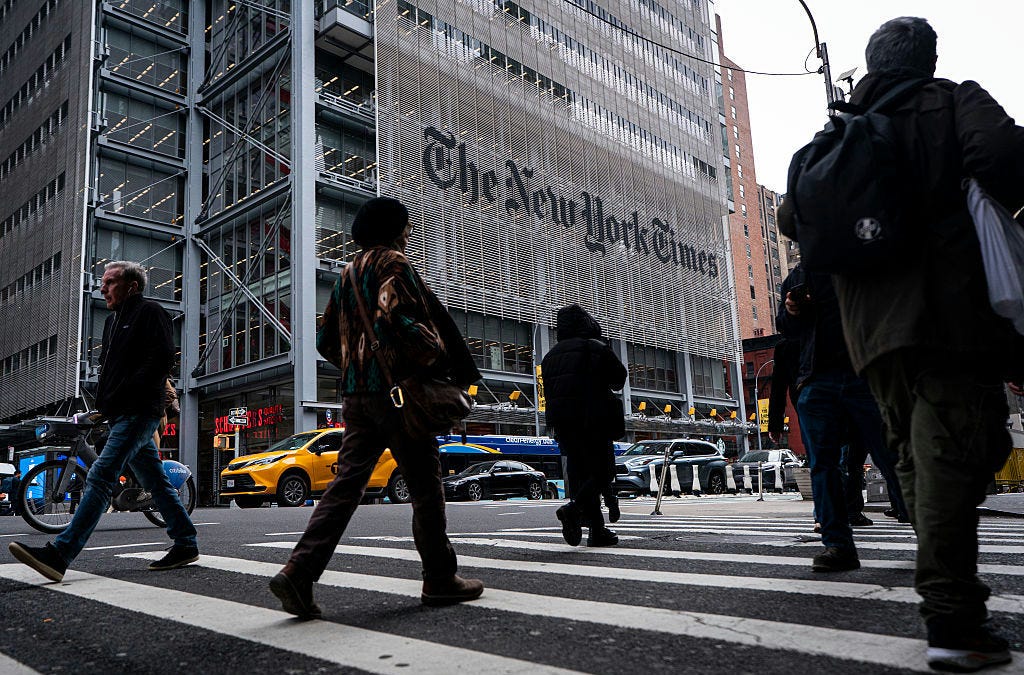
Exclusive: Shareholders Sue The New York Times Over Alleged Biased Israel Coverage
 By Philip Phi
Posted Sep 24, 2026 at 3:57 AM
By Philip Phi
Posted Sep 24, 2026 at 3:57 AM
In a significant legal development, shareholders of The New York Times have initiated a lawsuit against the newspaper’s parent company. The plaintiffs, the State Board of Administration of Florida (SBA) and the National Center for Public Policy Research (NCPPR), have filed their case in New York County Supreme Court. The suit alleges that The New York Times has not fulfilled its duty to provide truthful reporting and to correct inaccuracies promptly. The plaintiffs are seeking a court order to compel the Times’ board of directors to release internal records that have been withheld for four months. These records are primarily related to the newspaper’s coverage of the Israel-Hamas conflict.
Central to the lawsuit is the testimony of a whistleblower, a former Jewish employee of The New York Times, who worked on the paper’s video desk for nearly a decade. The whistleblower claims to have raised concerns about antisemitism and anti-Israel bias in the newsroom at least 15 times between 2019 and her departure in March 2026. Her complaints were reportedly made through various channels within the company, including managers, the standards desk, and human resources. In an exclusive interview with The Free Press, the whistleblower expressed that the public deserves a clearer understanding of how The New York Times handles news involving Jews or Israel. She chose to remain anonymous due to concerns for her family’s safety and is not named in the lawsuit.
This legal action highlights ongoing debates about media bias and the portrayal of Israel in international reporting. As the case unfolds, it underscores the importance of accountability and transparency in journalism, echoing the biblical call for truth and justice as seen in Micah 6:8, which emphasizes acting justly and loving mercy. The outcome of this lawsuit may have significant implications for media practices and the broader discourse on antisemitism and Zionism.
Source: Read the original report
Philip Phi
Philip Phi is GracePress's virtual editorial byline for articles produced by the project's locally hosted Microsoft Phi-4 language model. He does not independently report, interview sources, or witness events. Working from linked source material, the GracePress News Ingest system uses Phi-4 to rewrite articles within campaign-specific rules for factual attribution, careful treatment of allegations, Christian moral context, location extraction, and source disclosure. Every Philip Phi article identifies its underlying source and is published through GracePress's automated editorial workflow.