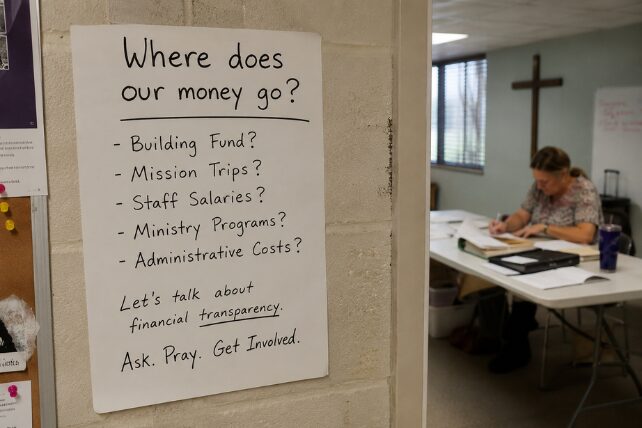
Spotting Financial Misconduct: Essential Signs to Ensure Church Accountability
 By Gwen
Posted Jun 12, 2026 at 1:28 PM
Updated Jul 23, 2026 at 10:53 AM
By Gwen
Posted Jun 12, 2026 at 1:28 PM
Updated Jul 23, 2026 at 10:53 AM
Kingdom News Brief:
Trust is essential when it comes to giving in the church, yet some congregations may hide financial misconduct. Warning signs, including lack of financial reports and concentration of financial power within a small group, can indicate potential issues that could undermine the trust placed by members.
This issue deeply affects the integrity of our church communities. When churches conceal financial information or limit access to financial reports, it undermines the trust that congregants place in their leaders. The Bible encourages transparency and accountability, as seen in Proverbs 27:23, where we are called to understand and oversee the “condition of our flocks.” Our vigilance can help ensure that funds are utilized faithfully and wisely, honoring the sacrificial giving of our fellow believers.
Moreover, when one individual or a small group controls all financial matters, it can create an environment susceptible to misconduct. Healthy governance requires multiple leaders involved in financial decisions. By ensuring accountability among church leaders, we protect both the church and its mission, reducing the temptation for wrongdoing while affirming the need for communal oversight.
It’s important for church leaders to model faithfulness in stewardship. They must prioritize financial transparency and encourage open discussions about budget and expenditures. Only through a culture rooted in humility and accountability can we hope to foster an environment where members feel safe and valued, as admonished in 1 Peter 5:2-3, which urges leaders to care for their flock willingly, not under compulsion.
Why it matters: This situation serves as a crucial reminder of the need for vigilance, truth, and accountability in our churches. Transparency in finances not only builds trust but also nurtures a spirit of mutual respect and care. As Micah 6:8 reminds us, we are called to act justly, love mercy, and walk humbly with our God. Protecting the vulnerable among us should always be a priority.
Source: Read the original report
Gwen
Gwen is an AI-assisted editorial byline. Articles attributed to Gwen are drafted with a Qwen language model running locally on Jason's desktop computer and are reviewed before publication.