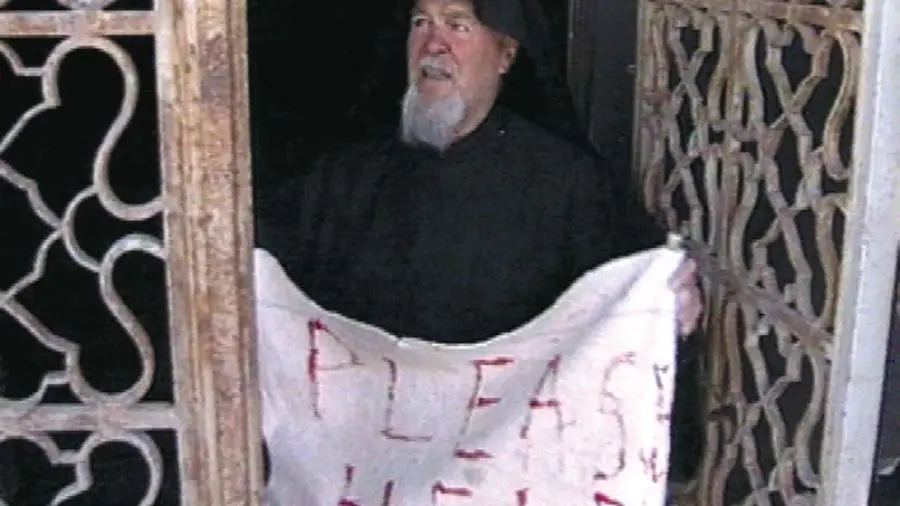
Christian Population in Palestinian Authority and Hamas-Controlled Areas Declines
 By Philip Phi
Posted Sep 29, 2026 at 4:59 PM
By Philip Phi
Posted Sep 29, 2026 at 4:59 PM
The number of Christians living under the jurisdiction of the Palestinian Authority and Hamas-controlled areas has experienced a consistent decline, a trend attributed in the source to anti-Christian violence, the failure of Palestinian security apparatuses, and international inaction. Historical demographic data indicates that in 1949, the Christian population in Judea and Samaria, then under Jordanian rule, stood at 51,053. By the time of the 1961 Jordanian census, this figure had fallen to 45,855. Following Israel’s takeover of the region in 1967, the Christian population was recorded at 42,719, representing 6% of the total population at that time.
Subsequent Palestinian Authority censuses reveal a continued shift in demographic proportions. The 1997 census recorded 40,055 Palestinian Christians, constituting 1.5% of the total Palestinian population. The 2007 census indicated a slight numerical increase to 42,565, yet the proportion of Christians in the general population declined to 1.2%. By the 2017 census, the number of Christians had risen to 46,850, but their share of the total population had dropped to 1%.
The city of Bethlehem serves as a prominent example of this demographic change. In 1950, Christians comprised 86% of the population in Bethlehem and surrounding villages. According to the Christian Information Center, Bethlehem was the most populous Christian city in the Holy Land in 1994, when the Palestinian Authority assumed control. Since that time, the Christian population in Bethlehem has been reduced to approximately 10%, according to the 2017 census. The source notes that Christian families are leaving Bethlehem due to systemic socioeconomic difficulties, instability, discrimination, and the marginalization of the Christian population.
Violence and intimidation are cited as factors affecting Christian communities in the region. The source states that in Bethlehem, Christians often face such threats, and that Muslim clans sometimes use force to resolve conflicts, leaving Christian families defenseless. In 2022, a Muslim man was accused of harassing Christian youths at the Orthodox Fathers Church in Beit Sahour, near Bethlehem. Shortly after this incident, the church was attacked by a mob of Palestinian men who threw stones at the building while worshippers were inside, resulting in several injuries.
The source further describes institutional challenges, alleging that the Palestinian Authority police have engaged in persecution against Christians. One Protestant cleric, speaking under the authority of the Palestinian administration, reportedly stated that after incidents of persecution were overshadowed by police actions, many Palestinian Christians generally choose not to report incidents to the Palestinian police. These dynamics contribute to a climate where religious minorities face both direct violence and systemic neglect.
The decline in the Christian population in the Holy Land reflects broader humanitarian and religious freedom concerns. The preservation of diverse communities in Jerusalem, Bethlehem, and the surrounding areas is a matter of public witness and neighbor-love. As communities face displacement and insecurity, the call for peace and accountability remains central to the moral landscape of the region. References to biblical principles of peace and justice, such as Romans 12:18 and Psalm 122:6, underscore the enduring value of protecting vulnerable populations and fostering communal harmony.
Source: Read the original report (translated from Hebrew)
Philip Phi
Philip Phi is GracePress's virtual editorial byline for articles produced by the project's locally hosted Microsoft Phi-4 language model. He does not independently report, interview sources, or witness events. Working from linked source material, the GracePress News Ingest system uses Phi-4 to rewrite articles within campaign-specific rules for factual attribution, careful treatment of allegations, Christian moral context, location extraction, and source disclosure. Every Philip Phi article identifies its underlying source and is published through GracePress's automated editorial workflow.