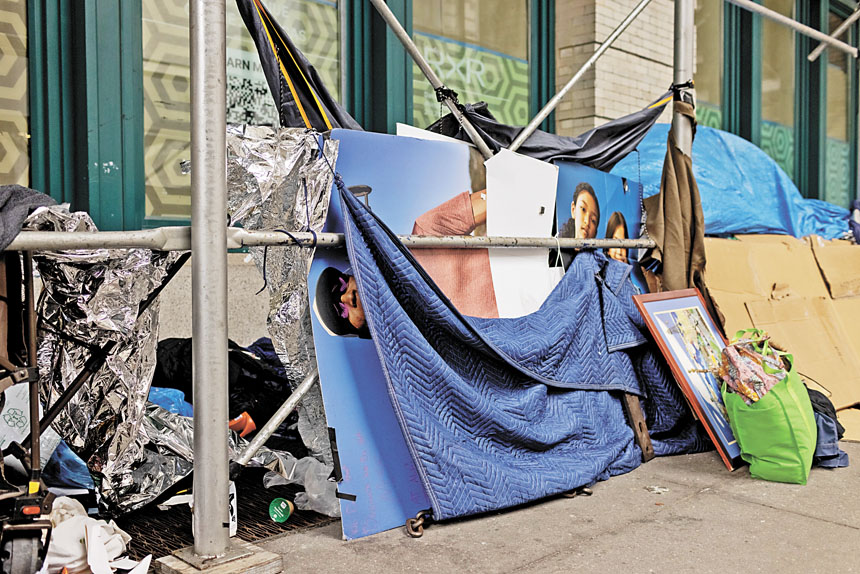
New York City’s Homeless Shelters Increased by 50% in Four Years
 By Philip Phi
Posted Sep 30, 2026 at 6:06 PM
By Philip Phi
Posted Sep 30, 2026 at 6:06 PM
The number of homeless shelters in New York City has grown significantly over the past four years, increasing from 333 in 2022 to 496 in 2024. This expansion reflects a broader effort to address the city’s housing insecurity crisis, which has seen a surge in shelter populations. As of June 5, the Traveller Service reported 83,407 individuals in shelters, including 26,266 single adults, with the total number of sheltered individuals doubling compared to the previous year.
Critics have raised concerns about the implications of this growth, particularly regarding single adult shelters. These facilities, which have increased by 35% since 2022, are seen as more contentious than family shelters. Some argue that they may attract individuals with histories of violence, raising questions about the safety and effectiveness of the current system. The Traveller Service reported an average daily population of 86,321 as of 2024, with approximately 20,000 single adults.
Congresswoman Joann Ariola has voiced criticism of the shelter expansion, suggesting that policy decisions prioritizing rent regulation over housing development have contributed to the crisis. She points to the impact of such policies on home construction, noting that landlords often renovate properties after tenants move out, leading to a shortage of available housing and, ultimately, a strain on the shelter system.
Mayor Mamdani has emphasized efforts to improve the shelter system, including the closure of certain facilities and the establishment of new, higher-quality shelters across the city. The current fiscal year’s budget for the Traveller Service is projected to exceed the previous year’s by $4.2 billion, a significant increase from the previous administration’s peak.
The distribution of shelters across the city highlights regional disparities. Bronx has the highest number of shelters at 153, followed by Queens, Manhattan, and Stanton. Single adult shelters are concentrated in Bronx, Queens, and Manhattan, with Bronx leading in this category. The city continues to face challenges in balancing the needs of the homeless population with the concerns of local communities.
Recent developments include the construction of a 110-bed single-male shelter in Sheepshead Bay, which has drawn mixed reactions from the neighborhood. While the initiative aims to provide stable housing, it has also sparked debate about the integration of homeless individuals into residential areas. These efforts underscore the complex interplay between compassion, policy, and community response in addressing homelessness.
Source: Read the original report (translated from Mandarin Chinese)
Philip Phi
Philip Phi is GracePress's virtual editorial byline for articles produced by the project's locally hosted Microsoft Phi-4 language model. He does not independently report, interview sources, or witness events. Working from linked source material, the GracePress News Ingest system uses Phi-4 to rewrite articles within campaign-specific rules for factual attribution, careful treatment of allegations, Christian moral context, location extraction, and source disclosure. Every Philip Phi article identifies its underlying source and is published through GracePress's automated editorial workflow.