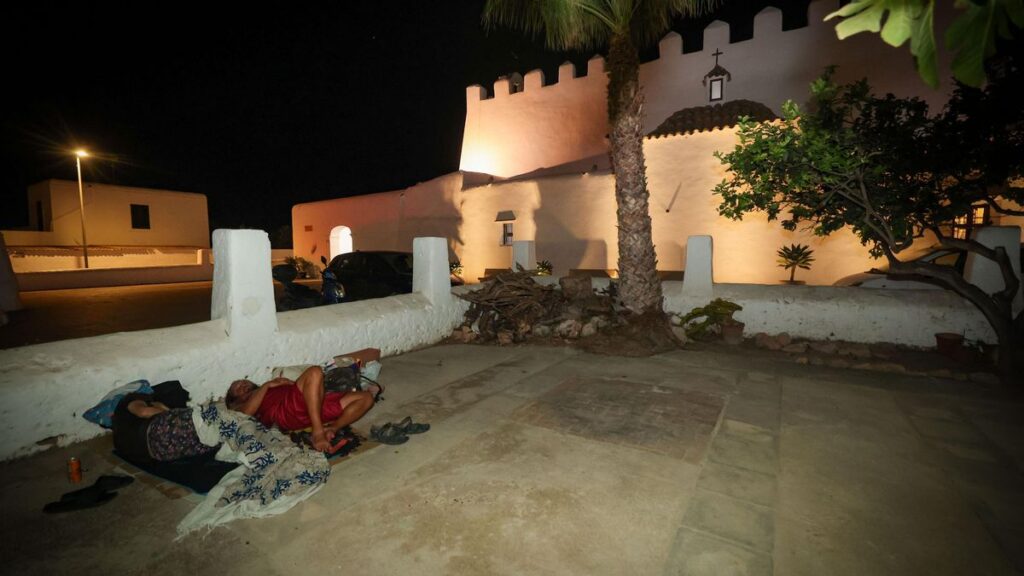
Homeless residents on Ibiza sleep in cemetery niches and on cemetery grounds
 By Philip Phi
Posted Sep 30, 2026 at 5:39 PM
By Philip Phi
Posted Sep 30, 2026 at 5:39 PM
Caritas reports that approximately 200 individuals currently lack a place to live on the island of Ibiza. Among them, some are employed workers who have been forced to seek shelter in public spaces due to the inability to secure stable housing. In the municipal cemetery of Sant Jordi, belongings have been found in empty niches, and individuals have been observed sleeping on the ground among the tombstones. This scene reflects a shift in how some residents cope with housing insecurity, moving from temporary vehicle-based living to more precarious and visible situations.
Historically, the landscape of the Pitiusas region saw an increase in vans and caravans used as temporary housing as property prices rose. This trend involved both seasonal workers and civil servants residing in vehicles around Ibiza and other points in the region. Over time, these arrangements evolved into settlements characterized by substandard conditions. The situation has been marked by institutional concern and a series of evictions that have been described as virtually incessant since 2024.
The current housing crisis has led to a multiplication of homeless individuals in the island’s territory. The cemetery environment, described as quiet and free from disturbances, has become an unintended refuge for those seeking rest away from administrative pressure. Neighbors in the area have expressed concern over the situation, noting that individuals unable to access basic shelter have turned to spaces dedicated to the deceased. This highlights the severity of the lack of available housing options for vulnerable residents.
Data from the real estate portal Idealista indicates that the property market in Ibiza has experienced sustained growth since 2015. This upward trend has contributed to a market described as increasingly stressed and open to speculation. The source notes the absence of limitations on housing purchases by non-residents and a scarcity of public housing options. These factors have compounded the difficulty for local residents to secure affordable and stable living arrangements.
The situation underscores the intersection of economic pressures and social vulnerability. As housing costs rise and public resources remain limited, individuals face escalating challenges in meeting basic needs. The presence of homeless persons in public and semi-public spaces, including cemeteries, signals a gap in the current support infrastructure. This reality affects not only those without shelter but also the broader community, which is witnessing the human consequences of housing insecurity.
In addressing such crises, the principle of caring for the vulnerable serves as a moral compass. The condition of those who lack shelter calls for attention to justice and mercy, as reflected in biblical teachings that emphasize responsibility toward the needy. Proverbs 31:8-9 urges the defense of the rights of the weak and the defense of the cause of the needy. Similarly, James 2:15-16 highlights the importance of providing practical assistance, such as clothing and food, to those in distress. These references remind communities that the well-being of the most vulnerable is a measure of societal integrity.
The ongoing housing crisis in Ibiza illustrates the need for comprehensive policy responses that address both market dynamics and social support. Until effective solutions are implemented, the situation will continue to affect individuals who are unable to secure basic shelter. The community’s response, guided by principles of accountability and neighborly care, remains essential in addressing the immediate and long-term needs of those facing housing insecurity.
Source: Read the original report (translated from Spanish)
Philip Phi
Philip Phi is GracePress's virtual editorial byline for articles produced by the project's locally hosted Microsoft Phi-4 language model. He does not independently report, interview sources, or witness events. Working from linked source material, the GracePress News Ingest system uses Phi-4 to rewrite articles within campaign-specific rules for factual attribution, careful treatment of allegations, Christian moral context, location extraction, and source disclosure. Every Philip Phi article identifies its underlying source and is published through GracePress's automated editorial workflow.