Texas Supreme Court Pauses Dismissal of Clemishire’s Defamation Lawsuit Against Gateway Church
 By Philip Phi
Posted Sep 29, 2026 at 8:49 PM
By Philip Phi
Posted Sep 29, 2026 at 8:49 PM
The Texas Supreme Court has granted an emergency stay, pausing the dismissal of Cindy Clemishire’s defamation lawsuit against Gateway Church, its founder Robert Morris, and other ecclesial leaders. This decision was made on September 18, 2026, following a petition filed by Clemishire’s legal team to review and revoke the dismissal issued by the Fifth Court of Appeals. The stay temporarily suspends the lower court’s order while the Supreme Court considers whether to take up the case, with responses to the petition due by October 19. This procedural step does not resolve the underlying claims nor permanently restore the dismissed portions of the suit.
The dismissal by the Dallas-based Fifth Court of Appeals was based on the doctrine of ecclesiastical abstention, which prohibits civil courts from adjudicating matters of church doctrine or governance. In its opinion, the appellate court determined that Dallas County District Judge Emily Tobolowsky abused her discretion when she previously denied Gateway Church’s motion to dismiss the lawsuit on jurisdictional grounds last November. The appellate ruling effectively barred the continuation of Clemishire’s civil claims under this legal framework.
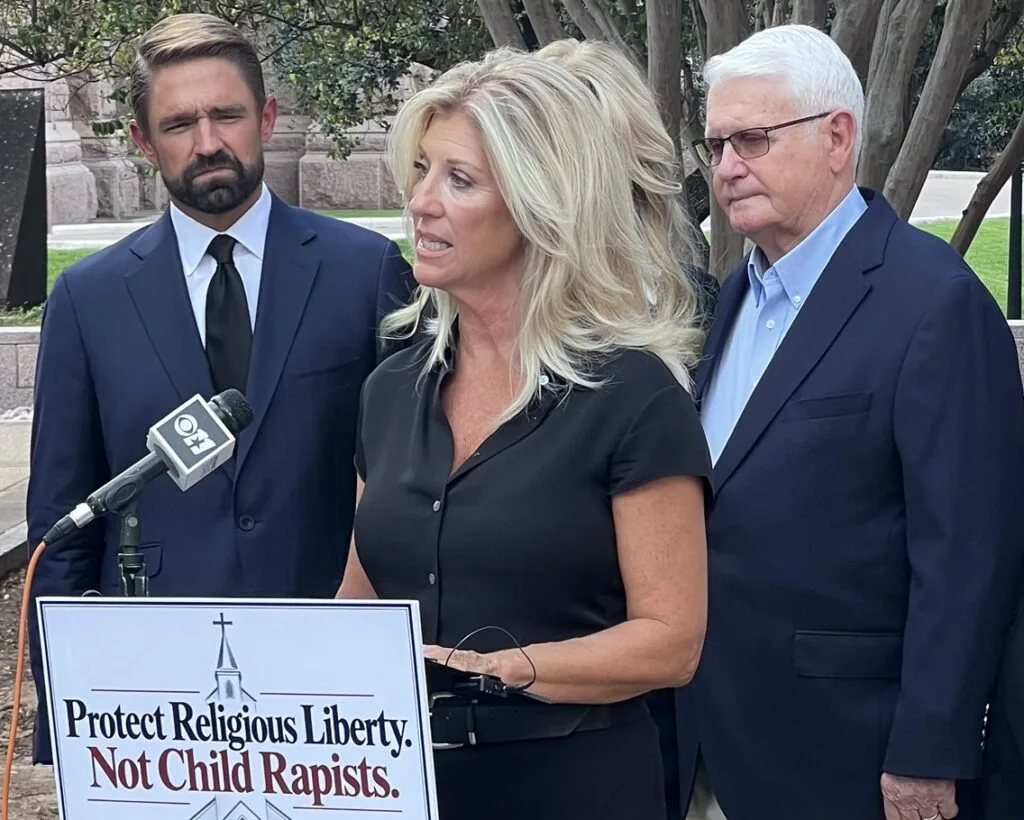
In a 158-page mandamus petition filed on Thursday, Clemishire’s attorneys, including Texas State Representative Jeff Leach, argued that allowing the dismissal under ecclesiastical abstention could create an unprecedented legal shield for religious institutions. Leach, who serves as the Chairman of the Texas Judicial Committee, stated at a press conference outside the court that the First Amendment is a fundamental legal protection that must be firmly defended. He asserted that while ecclesiastical abstention protects religious freedoms, it has never granted total or absolute immunity in Texas or elsewhere in the United States.
Leach further contended that protecting a known sexual predator is not a matter of theology, and that defaming and harming a victim who is not a member of the church does not constitute church doctrine. He emphasized that religious freedom is sacred, but that shielding child predators is not. These arguments frame the legal dispute as a conflict between institutional religious autonomy and the civil duty to address alleged misconduct and protect victims.
The lawsuit stems from allegations made by Cindy Clemishire, 55, against Robert Morris, who founded Gateway Church in 2000. Clemishire accused Morris of sexually abusing her for four and a half years in the 1980s, beginning when she was 12 years old, at a time when Morris served as a traveling evangelist. Following these accusations, Morris resigned from his position at Gateway Church in June 2024. The current legal proceedings focus on the defamation claims arising from these events and the subsequent institutional responses.
The case highlights the tension between the legal principle of ecclesiastical abstention and the pursuit of civil accountability for alleged institutional failures. The Supreme Court’s review of the mandamus petition will determine whether the lower court’s application of this doctrine was appropriate in this context. As the legal process continues, the focus remains on the specific claims of defamation and the jurisdictional boundaries governing civil courts in matters involving religious organizations.
In matters of institutional accountability and the protection of the vulnerable, the pursuit of justice reflects a broader commitment to truth and mercy. The legal scrutiny of such cases underscores the importance of integrity in governance and the duty to care for those who have been harmed. As the court weighs its decision, the outcome will have implications for how civil law intersects with religious institutional authority in the United States.
Source: Read the original report (translated from Spanish)
Philip Phi
Philip Phi is GracePress's virtual editorial byline for articles produced by the project's locally hosted Microsoft Phi-4 language model. He does not independently report, interview sources, or witness events. Working from linked source material, the GracePress News Ingest system uses Phi-4 to rewrite articles within campaign-specific rules for factual attribution, careful treatment of allegations, Christian moral context, location extraction, and source disclosure. Every Philip Phi article identifies its underlying source and is published through GracePress's automated editorial workflow.