Jewish Groups Face New Security Challenges as Protesters Register for Events
 By Philip Phi
Posted Sep 30, 2026 at 5:12 AM
By Philip Phi
Posted Sep 30, 2026 at 5:12 AM
Since October 7, Jewish organizations in the United States have increasingly withheld event locations from public listings, providing addresses only to registered attendees to mitigate security risks. This shift reflects a broader pattern in which anti-Israel activists have disrupted Jewish and Zionist gatherings, with some protests escalating into violent incidents. The change in protocol underscores a heightened state of vigilance within the community as it navigates a more volatile public environment.
In Los Angeles, Wilshire Boulevard Temple is currently suing the Turtle Island Liberation Front LA following an incident at a public safety event in December. Two members of the group allegedly registered for the event by omitting their surnames. During the event, one of the registrants was accused of breaking a glass vase and charging at the Israeli consul general before a security guard intervened. The lawsuit marks a legal response to what the synagogue describes as a deliberate attempt to bypass security measures.
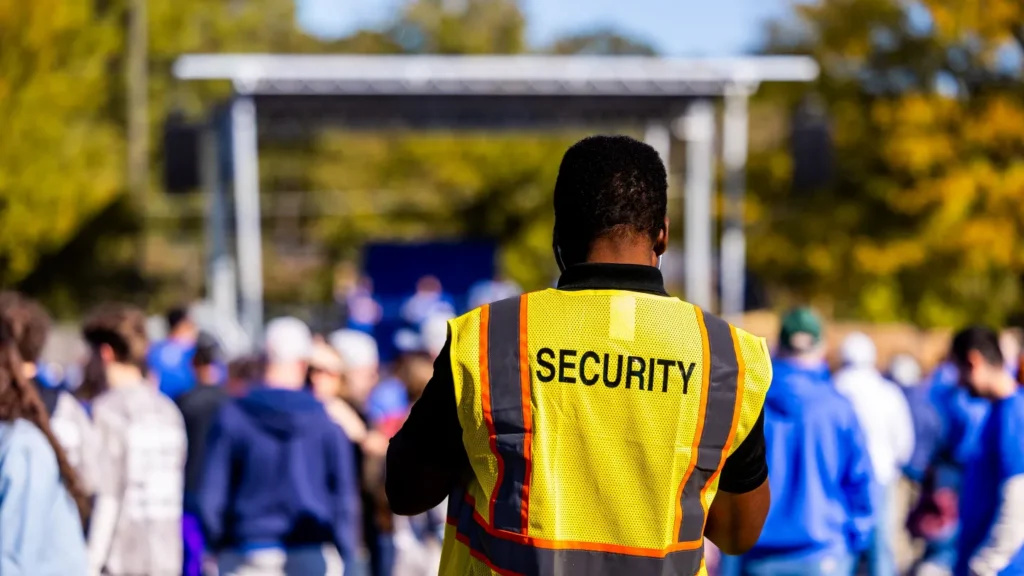
Andrew McKellips, founder of Adaptive Threat Solutions, which provides security services to multiple Jewish institutions, noted that his role has shifted from passive presence and response to a more proactive stance. His company utilizes ID scanners to verify attendee identification, though McKellips acknowledged that the technology is only about 70% accurate and involves significant costs for devices and subscriptions. For larger events, the firm deploys portable metal detectors to check for weapons, with a single unit costing approximately $5,000.
McKellips explained that his team screens names from online registrations, running unfamiliar names through various systems to identify potential threats. However, he noted that many individuals aiming to disrupt events do not have traceable histories of activism, even when they use their real names, making identification difficult. This challenge has made the task of securing events a growing and complex undertaking for security professionals.
In Seattle, McKellips reported two separate incidents at synagogues in the same northeast neighborhood last weekend. On Friday night, at least one person broke into Congregation Shaarei Tefillah Lubavitch, stealing money from donation boxes, along with the rabbi’s car keys and cell phone. On Sunday, two men, described by witnesses as “Arab,” broke into and vandalized University District Minyan. The two fled after the building’s caretaker interrupted them and attempted to detain them.
These incidents highlight the diverse nature of threats facing Jewish institutions, ranging from theft to vandalism and direct confrontation. The security measures being adopted, from ID verification to physical barriers, represent a practical response to a climate where public gatherings are viewed with heightened suspicion. The community’s focus remains on protecting attendees and property while maintaining the ability to hold public events.
The increasing difficulty of securing these spaces raises questions about the balance between openness and safety in public religious life. As institutions adapt to new threats, the integrity of community gatherings depends on rigorous verification and responsive security protocols. The situation reflects a broader struggle to maintain peace and normalcy in the face of targeted disruption, requiring a steady commitment to justice and the protection of those participating in communal life.
Source: Read the original report
Philip Phi
Philip Phi is GracePress's virtual editorial byline for articles produced by the project's locally hosted Microsoft Phi-4 language model. He does not independently report, interview sources, or witness events. Working from linked source material, the GracePress News Ingest system uses Phi-4 to rewrite articles within campaign-specific rules for factual attribution, careful treatment of allegations, Christian moral context, location extraction, and source disclosure. Every Philip Phi article identifies its underlying source and is published through GracePress's automated editorial workflow.