“Faith and Public Health Leaders Partner to Address Homelessness at Harvard Conference”
 By Philip Phi
Posted Sep 9, 2026 at 1:07 AM
By Philip Phi
Posted Sep 9, 2026 at 1:07 AM
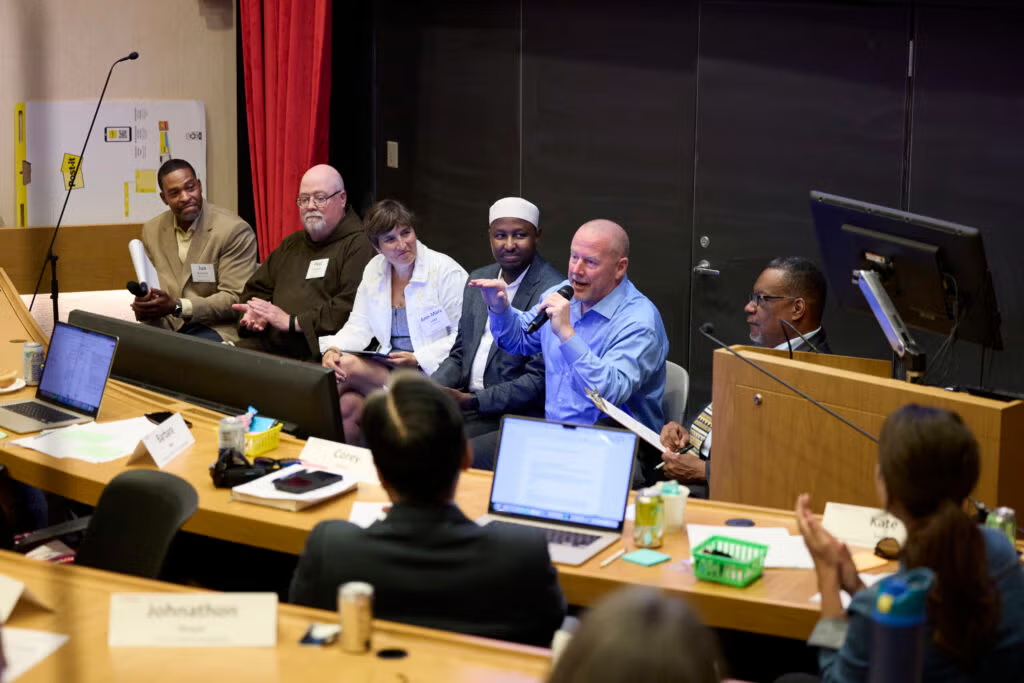
At a recent academic conference hosted by Harvard T.H. Chan School of Public Health, faith leaders and public health experts gathered to explore collaborative approaches to addressing homelessness in the United States. The event, which took place on June 25, marked what may be the first of its kind to focus on the intersection of faith, public health, and homelessness. The conference, attended by 70 participants from various sectors, aimed to foster partnerships between public health researchers, faith leaders, clinicians, policymakers, and community leaders to tackle the homelessness crisis more effectively.
Howard Koh, the Harvey V. Fineberg Professor of the Practice of Public Health Leadership and chair of the Initiative on Health and Homelessness, emphasized the importance of integrating both health care and spiritual care for unhoused populations. He highlighted that health encompasses more than just physical well-being; it also involves spiritual dimensions such as meaning, purpose, and connection to something greater. Koh noted that for many, spiritual care is fundamental and sacred, echoing the biblical sentiment found in Proverbs 31:8-9, which encourages speaking up for those who cannot speak for themselves.
Koh pointed out that people experiencing homelessness often face both visible physical suffering and less visible spiritual distress. Despite these challenges, many demonstrate remarkable resilience, rebuilding their lives and contributing to their communities. This resilience reflects the biblical principle in Isaiah 58:7, which calls for opening one’s hand to the needy and sharing with the oppressed. By recognizing and respecting the spiritual dimensions of individuals’ lives, health leaders can better address the holistic needs of unhoused populations.
The conference underscored the potential for health and faith groups to collaborate effectively. Public health experts can offer insights into clinical care, data, and policy, while faith groups can provide community, connection, and support. This partnership aligns with the biblical call in Matthew 25:35 to care for “the least of these,” emphasizing the importance of compassion and support for the most vulnerable members of society.
Through this collaborative approach, both health and faith communities can contribute to more effective systems of care and prevention. By working together, they can address the complex needs of individuals experiencing homelessness, fostering a more comprehensive and compassionate response to the crisis. This partnership not only aims to alleviate immediate suffering but also to build sustainable solutions that honor the dignity and worth of every individual, reflecting the biblical vision of justice and mercy for all.
Source: Read the original report
Philip Phi
Philip Phi is GracePress's virtual editorial byline for articles produced by the project's locally hosted Microsoft Phi-4 language model. He does not independently report, interview sources, or witness events. Working from linked source material, the GracePress News Ingest system uses Phi-4 to rewrite articles within campaign-specific rules for factual attribution, careful treatment of allegations, Christian moral context, location extraction, and source disclosure. Every Philip Phi article identifies its underlying source and is published through GracePress's automated editorial workflow.