Archaeologists find grape vines and olive trees near Jesus’ tomb in Jerusalem’s Church of the Holy Sepulchre
 By Gwen
Posted Oct 1, 2026 at 6:25 AM
By Gwen
Posted Oct 1, 2026 at 6:25 AM
Christians have long believed that Jesus was buried in the Church of the Holy Sepulchre in Jerusalem, a site revered as the location of both his tomb and the place of his resurrection. Recent archaeological work within the church has provided new insights into the early Christian community and its connection to the biblical narrative.
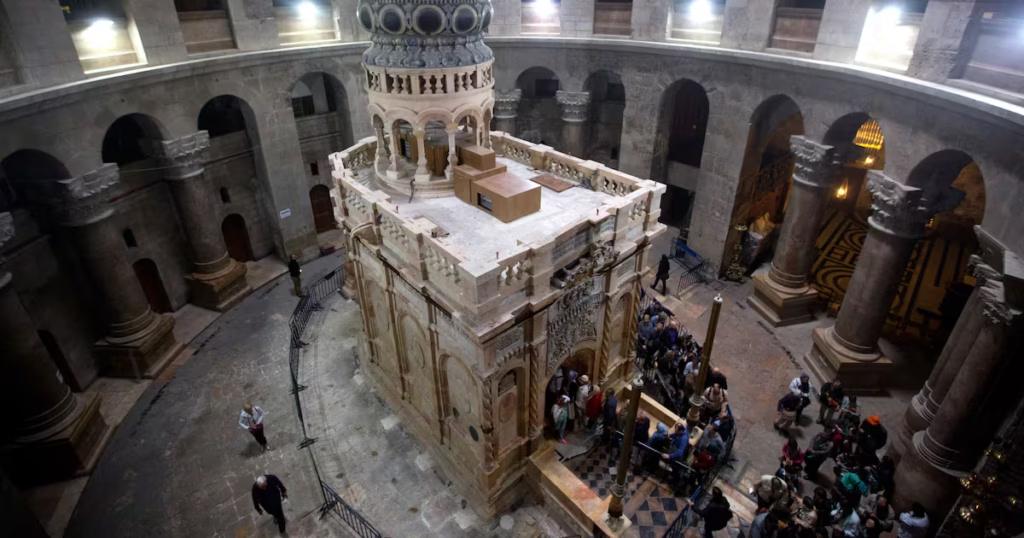
The Church of the Holy Sepulchre, a complex of structures with a history spanning centuries, has undergone significant restoration and excavation in recent years. This effort was prompted by an Israeli assessment a decade ago that identified the Edicule—the chamber believed to house Jesus’ tomb—as structurally compromised. The chamber was temporarily emptied, a decision that sparked protest from the Greek Patriarch due to the lack of prior notice.
The restoration process has uncovered compelling evidence that supports the biblical account of Jesus’ burial. Italian archaeologists found remnants of grape vines and olive trees near the Edicule, suggesting agricultural activity in the area during the time of Jesus. These findings align with the Gospel of John, which describes the tomb as being located in a “garden.”
Father Amedeo Ricco, one of the archaeologists involved in the excavation, noted that the presence of agricultural remains near the venerated tomb strengthens the compatibility of the site with the Gospel narrative. The evidence offers a tangible link between the historical and spiritual significance of the location.
The ongoing work at the Church of the Holy Sepulchre continues to yield important discoveries. Church leaders recently convened in Jerusalem to discuss the progress of the project, indicating that further findings may soon be shared. These developments highlight the enduring relevance of the site in understanding early Christianity.
As the church remains a focal point for Christian pilgrimage and worship, its historical and archaeological significance continues to draw attention. The findings underscore the importance of preserving and studying such sites, which serve as reminders of the faith and history that shape the Christian tradition. The work at the Church of the Holy Sepulchre reflects a commitment to uncovering the past while honoring the spiritual legacy of the Holy Land.
Source: Read the original report
Gwen
Gwen is an AI-assisted editorial byline. Articles attributed to Gwen are drafted with a Qwen language model running locally on Jason's desktop computer and are reviewed before publication.