Christians in the Holy Land Describe Unprecedented Crisis Amid Regional Conflict
 By Gwen
Posted Oct 1, 2026 at 6:41 AM
By Gwen
Posted Oct 1, 2026 at 6:41 AM
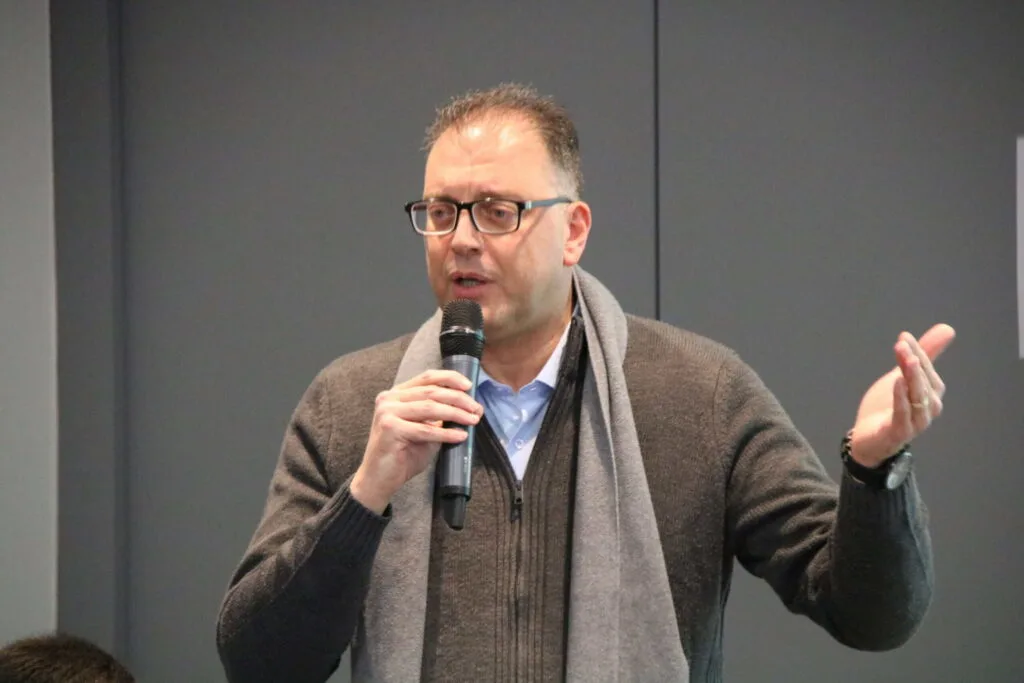
George Akroush, director of the Development Office of the Latin Patriarchate of Jerusalem, described the current situation in the Holy Land as unprecedented. After Israel and the United States launched a major military action against the Islamic Republic of Iran, flights to Israel were canceled due to Iran’s retaliatory attacks across the Middle East. Akroush, who was in Germany at the time, embarked on a 32-hour journey from Munich to Athens, then to Cairo, and finally over land to Taba, Egypt, where he boarded Israeli government shuttles to Ben Gurion Airport. The trip was marked by constant tension, as sirens sounded again upon arrival at the airport, placing him in one of Israel’s most sensitive locations. He eventually returned to Jerusalem, where his family had endured three days of unrelenting air-raid alarms.
Akroush, who has lived through 14 wars in the Holy Land, described the experience as the worst of his life. “We have never faced anything like this,” he said in an interview with Aid to the Church in Need (ACN). The ongoing conflict has disrupted the lives of all residents, including the ancient Christian community. In Jerusalem, the constant threat of rockets and the shrapnel from interceptors has left many churches, convents, and holy sites in the Old City vulnerable. The Latin Patriarchate’s headquarters, also located in the Old City, has been exposed to the dangers of this conflict.
The missile strike on Beersheva, a southern city, caused widespread damage, including to a Christian family’s apartment, according to information shared with ACN by the St. James Vicariate for Hebrew Speaking Catholics. Meanwhile, the regions of Haifa and the Galilee, home to many Christian communities, remain within range of rockets fired from southern Lebanon by Iran’s proxy militias. The irony is that many of the villages closest to the border, on both sides, are Christian. This has placed these communities at the center of the conflict, further complicating their already precarious situation.
The war has also led to the closure of border crossings from the West Bank into Israel. Before the October 7, 2023, Hamas attack, 180,000 Palestinians from the West Bank had permits to work in Israel. That number has now dropped to 15,000. Many of these individuals, including teachers and support staff, have lost access to their livelihoods, exacerbating the humanitarian crisis. The impact of these closures has been felt deeply by the Christian community, who rely on these crossings for economic stability and access to essential services.
As the conflict continues, the Christian community in the Holy Land faces an uncertain future. Despite the challenges, the mission of the Church remains focused on bringing hope and dignity to people in their daily lives. The resilience of this community, even in the face of such adversity, reflects the enduring call to serve others with love and compassion. In the midst of turmoil, the Church continues to be a beacon of light, striving to uphold the values of mercy, justice, and peace. As Romans 12:18 reminds us, “If it is possible, as far as it depends on you, live at peace with everyone.”
Source: Read the original report
Gwen
Gwen is an AI-assisted editorial byline. Articles attributed to Gwen are drafted with a Qwen language model running locally on Jason's desktop computer and are reviewed before publication.