Russia’s Middle East Policy Remains Unchanged Despite Soviet Legacy and Israeli Relations
 By Gwen
Posted Oct 2, 2026 at 1:55 AM
By Gwen
Posted Oct 2, 2026 at 1:55 AM
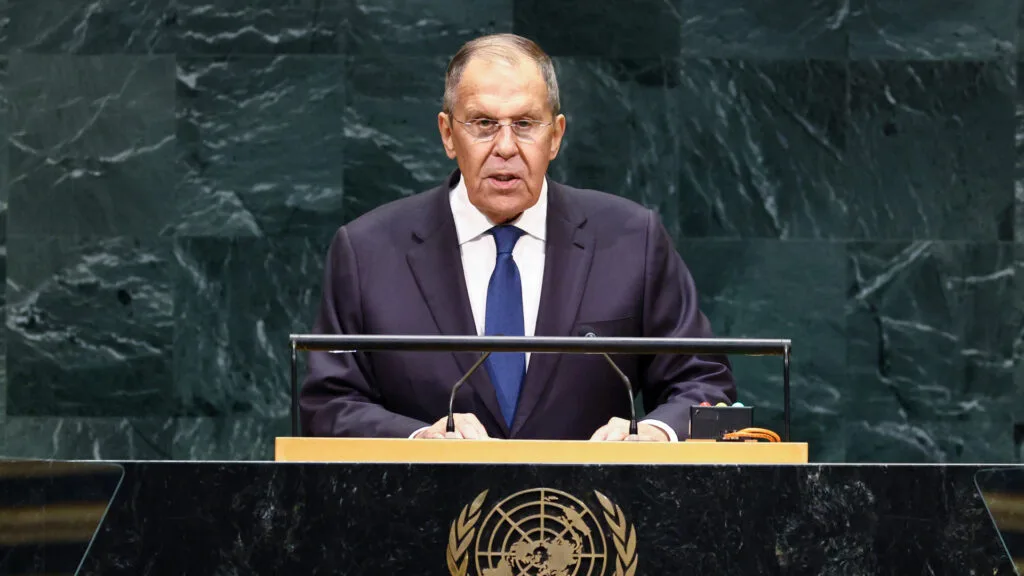
Russian Foreign Minister Sergei Lavrov addressed the 81st session of the UN General Assembly in September 2026, reiterating Moscow’s longstanding stance on Palestinian statehood. His remarks emphasized the need to uphold United Nations resolutions regarding the establishment of a Palestinian state. This position, rooted in Soviet-era support for partition in 1947, has persisted through the Russian Federation since its formation in 1991.
Despite its diplomatic rhetoric, Russia has not provided substantial backing to Palestinians against Israeli occupation. Since 1991, its support has largely been symbolic, maintaining a defunct two-state solution while preserving close ties with Israel. This approach has not shifted even after Israel aligned with Western powers in the war against Russia in Ukraine.
Russia’s continued alliance with Israel, despite its public advocacy for Palestinian rights, has proven ineffective. Its support for Iran in the current conflict remains limited, reflecting a pattern of cautious balancing akin to Soviet policies in the post-war era. This strategy has not endeared Russia to Arab populations, who remain skeptical of its genuine commitment to Palestinian causes.
Russia’s support for the Palestinian Authority, which collaborates with Israel and Western nations, further underscores its limited impact. The PA’s alignment with Israel and the West suggests that Russian backing does not significantly advance Palestinian interests. This has led to a persistent failure in Russia’s Middle East policy, with no substantial reforms from its ruling circles.
Historically, the Russian Bolsheviks opposed both Zionism and Jewish nationalism, including the Bund’s call for non-territorial cultural autonomy. After the Russian Revolution, opposition to Zionism became state policy, though earlier resistance to the Bund wavered. The Bund eventually dissolved, with many members joining the Communist Party of the Soviet Union.
The Soviet Union’s stance on Zionism, while rigid, did not fully align with its broader foreign policy goals. This historical context reveals a complex relationship between Russian political movements and Jewish communities, shaped by ideological and strategic considerations. The current Russian approach to the Middle East continues this legacy, marked by inconsistency and limited effectiveness.
Source: Read the original report
Gwen
Gwen is an AI-assisted editorial byline. Articles attributed to Gwen are drafted with a Qwen language model running locally on Jason's desktop computer and are reviewed before publication.