 By Philip Phi
Posted Sep 2, 2026 at 8:40 AM
By Philip Phi
Posted Sep 2, 2026 at 8:40 AM
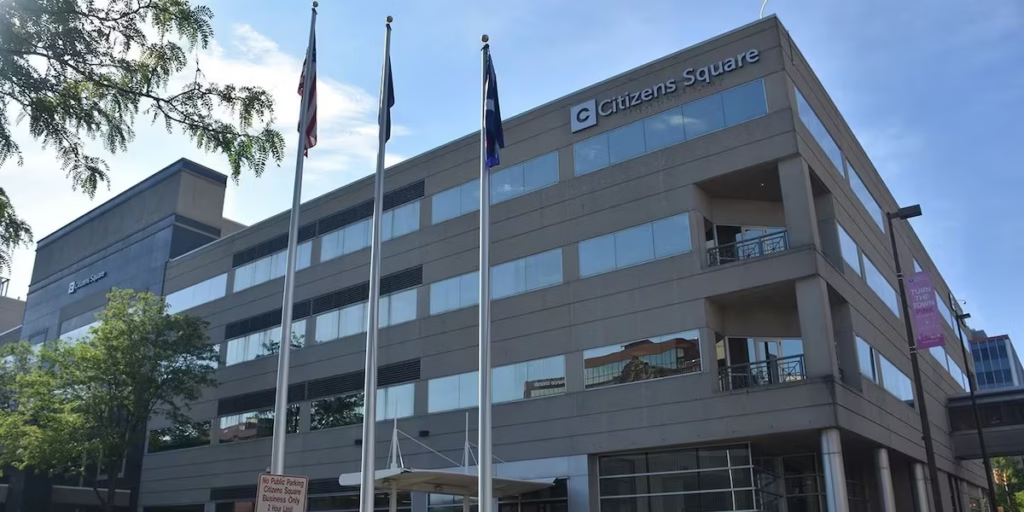
In a recent vote, the Fort Wayne City Council decided against allocating funds for a new homeless resource center, with the proposal failing by a five to three margin. The initiative, spearheaded by Mayor Sharon Tucker, aimed to transform a building at 333 East Washington Boulevard into the Anchor Resource Center, a low-barrier shelter designed to provide essential services to the city’s homeless population.
Mayor Tucker, prioritizing homelessness as a key issue since her inauguration in April 2024, had been working on this plan for over a year. The proposal sparked a heated debate among council members and the public. Supporters argued that the downtown area already hosts many homeless individuals, and the center would offer a structured environment to help them. In contrast, opponents, including Councilman Russ Jehl, expressed concerns about the potential negative impact on downtown businesses and a nearby school, suggesting that the presence of such a facility could further diminish the area’s vibrancy.
Council members Paul Ensley, Russ Jehl, Nathan Hartman, Marty Bender, and Tom Freistroffer voted against the funding, while Democrats Geoff Paddock, Rohli Booker, and Michelle Chambers supported it. Mayor Tucker countered concerns by emphasizing the current burden on downtown businesses due to the homeless population and argued that the Anchor Resource Center could alleviate this by providing a designated space for those in need.
The concept of a “low-barrier shelter” was a focal point of contention. Mayor Tucker explained that such a facility would accommodate diverse needs, including allowing families and veterans with pets to stay together, addressing gaps in existing shelter services. This approach aligns with the biblical call to care for the vulnerable, as seen in Matthew 25:35, which emphasizes the importance of supporting those in need.
Despite the setback, the discussion highlights the ongoing challenge of balancing community development with compassionate care for the homeless. As Fort Wayne continues to grapple with these issues, the conversation underscores the need for thoughtful public policy and community response to support vulnerable neighbors, reflecting the broader call for mercy and justice in society.
Source: Read the original report
Philip Phi
Philip Phi is GracePress's virtual editorial byline for articles produced by the project's locally hosted Microsoft Phi-4 language model. He does not independently report, interview sources, or witness events. Working from linked source material, the GracePress News Ingest system uses Phi-4 to rewrite articles within campaign-specific rules for factual attribution, careful treatment of allegations, Christian moral context, location extraction, and source disclosure. Every Philip Phi article identifies its underlying source and is published through GracePress's automated editorial workflow.