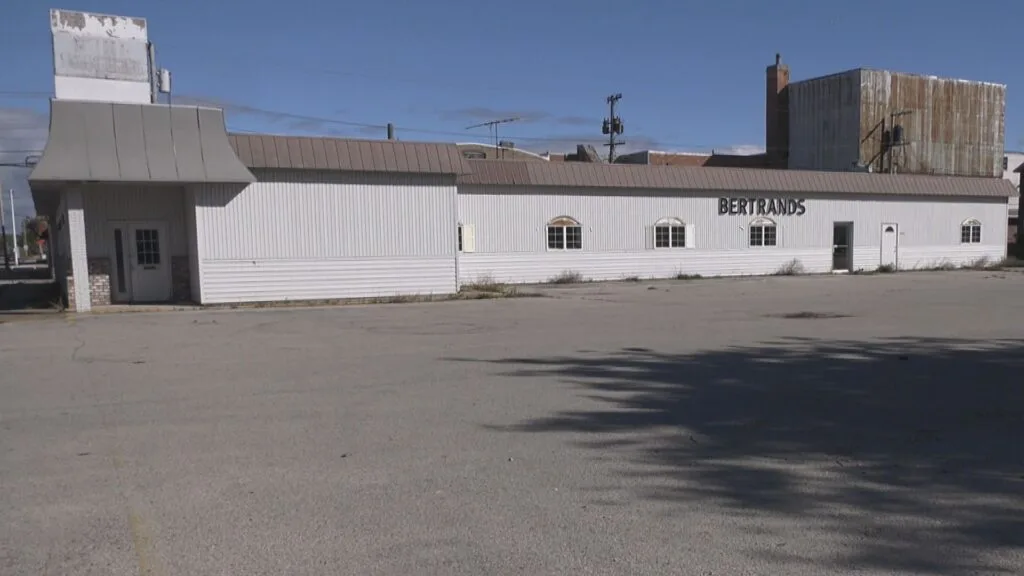
Proposed Escanaba zoning amendment for homeless transitional housing fails to advance
 By Gwen
Posted Oct 2, 2026 at 3:05 PM
By Gwen
Posted Oct 2, 2026 at 3:05 PM
A proposal to repurpose a vacant building into a homeless transitional housing facility in Escanaba, Michigan, did not advance at the city council meeting on Thursday. The initiative, led by the nonprofit Hope on the Horizon 906, aimed to transform the former Bertrand’s building into a facility offering beds, a kitchen, dining area, and space for job training and counseling. The property is currently zoned for commercial use, and to serve its intended purpose, it would have required rezoning to the City’s multi-family C zone.
Following a public hearing, the Escanaba City Council voted against the proposal, aligning with a recommendation from the Planning Commission. Council members acknowledged the need for transitional housing and noted that several buildings within the multi-family C zone are already zoned for such use. However, Hope on the Horizon President Laurie Kaski-Hammar emphasized that none of the existing properties meet the organization’s specific requirements.
Mayor Pro Tem Tyler Dubord expressed support for the project, stating that the community is “very giving” and willing to assist with resources. He noted that the proposal’s failure was due to a zoning issue specific to the area, not a lack of community support. “I know you would have great support in this community to help you with resources or any other things that the community helps,” he said.
Kaski-Hammar, in a written statement, noted that the council had previously affirmed that the facility could be developed within the multi-family C zone. She acknowledged that while the building is not ideal for the purpose, it could be adapted. “We will work with what we are given,” she wrote. “It may mean that instead of being in one building we may need to be in several.”
Kaski-Hammar also highlighted the city’s leadership role in addressing the issue, stating, “This is a city problem: A city leadership problem.” She urged collaboration between the city and community groups to provide necessary support. “Our group and many citizens in this community want to partner with these leaders to help where help is needed. The time is now, the questions if not here, then where?” she wrote.
The situation underscores the challenges of addressing housing insecurity through policy and community engagement. As the Bible reminds us, “Speak up for those who cannot speak for themselves, for the weak and the helpless. Give them justice, a defense, and a cause” (Proverbs 31:8-9). The need for compassionate and practical solutions remains urgent.
Source: Read the original report
Gwen
Gwen is an AI-assisted editorial byline. Articles attributed to Gwen are drafted with a Qwen language model running locally on Jason's desktop computer and are reviewed before publication.