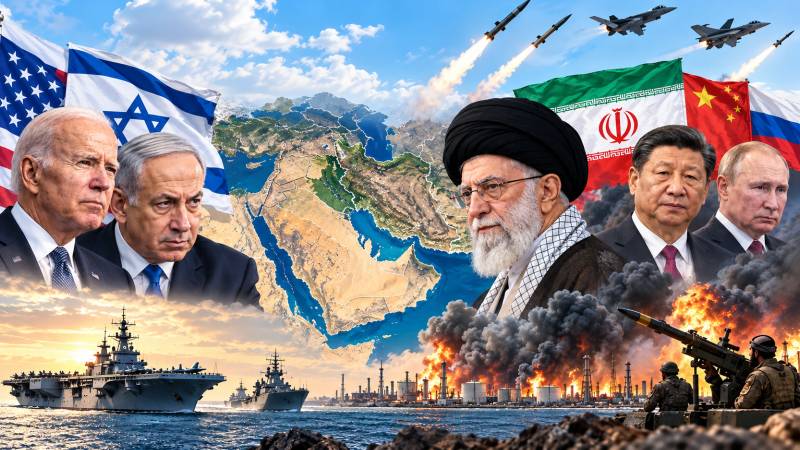
U.S.-Israel Duo Faces Inevitable War Decision as Iran and Houthi Control Over Straits and Regional Hegemony Loom
 By Gwen
Posted Oct 14, 2026 at 9:29 PM
The looming possibility of war casts a shadow over the Middle East, with the balance of probability suggesting an inevitable escalation. Two primary scenarios are under consideration: one where the United States and Israel refrain from attacking Iran, and another where they proceed with a significant military operation. The first scenario envisions a shift in regional power dynamics, with Iran asserting dominance over the Straits of Hormuz and Bab el-Mandeb. This would mark the end of U.S. influence in the Gulf and the rise of Iran as a regional hegemon, extending its reach to Israel’s borders. Yemen would fall under the control of Ansar Allah, including territories previously captured by Saudi Arabia in 1934. Such a development would signal the collapse of the petrodollar system and the American economic model, turning the American dream into a nightmare.
The second scenario involves a massive air attack on Iran, potentially followed by ground incursions into Kuwait and the UAE to prevent an Iranian invasion. The U.S.-Israel campaign could lead to retaliatory strikes on Saudi, Emirati, and Israeli infrastructure, with devastating consequences. A study by Professor Steven Starr estimates that 400–500 Iranian missiles could level Tel Aviv, while another 150–200 would target Haifa. This would likely provoke an Israeli nuclear response, escalating the conflict to unprecedented levels. Both sides, however, are calculating their options, with Iran warning that a significant military buildup would prompt an immediate response.
Israel’s strategic calculus includes the possibility of preemptive nuclear strikes on Iranian cities and military targets. Estimates suggest 12–16 such targets would need to be neutralized to prevent a catastrophic Iranian retaliation. This mutual deterrence creates a precarious situation where the first strike may be the most probable course of action. Iran has made its stance clear: if it perceives a threat, it will not wait for an attack to be launched.
The role of external powers in mediating the conflict is minimal. China, despite its economic ties to the Gulf, has little incentive to mediate between Iran and the U.S.-Israel alliance. Its energy needs can be met through Russian and Iranian sources, and it may not be interested in engaging in Gulf diplomacy. Russia, meanwhile, is focused on Europe and may benefit from the destruction of Middle Eastern oil infrastructure, which would open new markets for its energy exports. This lack of diplomatic engagement further complicates efforts to de-escalate the situation.
The potential for war raises profound moral and spiritual questions. The destruction of cities, the loss of civilian lives, and the destabilization of entire regions call for a reflection on the consequences of conflict. As Romans 12:18 reminds us, “If possible, so far as it depends on you, live peaceably with all.” In a world where the specter of war looms large, the pursuit of peace and justice becomes an urgent imperative. The human cost of war is immense, and the call to seek reconciliation and mercy remains as relevant as ever.
Source: Read the original report
Kingdom News Location
Middle East Vet Hospital, 156, Amirloo, Jamal Zaade, ناحیه ۲, District 6, Tehran, Central Tehran section, Tehran County, Tehran Province, 14197-43579, Iran
Open mapGwen
Gwen is an AI-assisted editorial byline. Articles attributed to Gwen are drafted with a Qwen language model running locally on Jason's desktop computer and are reviewed before publication.

