Interfaith coalition urges constitutional reform in Bosnia-Herzegovina to address ethnic divisions
 By Gwen
Posted Oct 14, 2026 at 10:56 PM
By Gwen
Posted Oct 14, 2026 at 10:56 PM
Thirty years after the Bosnian War ended, religious leaders from Bosnia and Herzegovina are advocating for a constitutional reform. They argue the current framework, rooted in a peace treaty from the 1990s, perpetuates divisions among religious communities and hinders the country’s progress toward peace and unity. The nation’s political structure, they say, continues to entrench ethnic and religious identities, fostering conflict rather than reconciliation.
National elections held on October 4 saw a record-low voter turnout, with nationalist leaders—some backed by Trump advisers—gaining traction in several regions. Critics suggest this outcome reflects the deepening challenges of a political system that, while once necessary for peace, is now outdated and ineffective. “I’m not sure that we are in position for any democratic election because we don’t actually have a democratic constitution,” said Emir Zlatar, general secretary of the Council of the Congress of Bosniak Intellectuals, during an interview in Sarajevo. Zlatar, a Bosniak Muslim, is part of a broad coalition of NGOs and leaders from diverse religious backgrounds, including Catholics, Orthodox Christians, Jews, and others, who are pushing for constitutional change.
This coalition, known informally as the Council of Civil Society Organizations, contends that the current system marginalizes religious minorities and fuels tensions between larger religious groups. The coalition’s goal is to promote a civic national identity that transcends ethnic and religious divisions. They believe a more inclusive constitution would foster unity and enable the country to move beyond the legacy of war.
The Bosnian War, which erupted as Yugoslavia collapsed in the early 1990s, devastated the region. Bosnia and Herzegovina, a mountainous republic, became the epicenter of the conflict. The population was divided among Bosniaks, Croats, and Serbs, none of whom had a clear majority. While these groups share similar languages, foods, and histories, their identities are largely defined by religion. At least nominally, a Croat is Catholic, a Bosniak Muslim, and a Serb Eastern Orthodox. “Religious affiliation and national affiliation are the two most important forms of identity in Bosnia and Herzegovina,” said Mile Babić, a Bosnian Franciscan friar and scholar of theology and philosophy in Sarajevo.
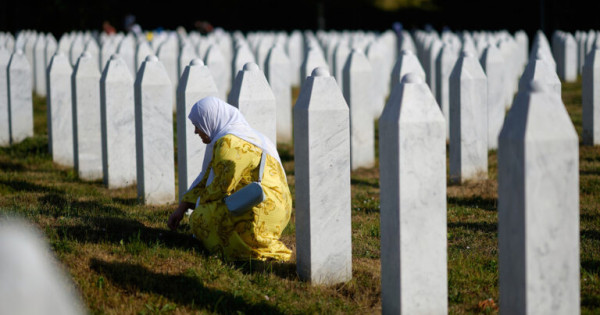
These divisions led to nearly four years of war marked by atrocities, including the Srebrenica massacre and the longest siege of a European capital in modern history. The conflict left deep scars on the nation, with many still grappling with the trauma of loss and division. The coalition’s push for constitutional reform is rooted in the belief that a more equitable and inclusive system is essential for healing and reconciliation.
The call for reform aligns with the biblical principle of seeking justice and mercy for all people. As Proverbs 31:8-9 reminds us, “Speak up for those who cannot speak for themselves, for the rights of all who are destitute. Speak up and judge fairly for the poor and the fatherless.” The coalition’s efforts reflect a commitment to this ideal, striving to create a society where all citizens, regardless of background, can live in dignity and peace.
The path forward remains uncertain, but the coalition’s work underscores the importance of addressing systemic issues that perpetuate division. As Micah 6:8 instructs, “He has shown you, O mortal, what is good. And what does the Lord require of you? To act justly and to love mercy and to walk humbly with your God.” In the spirit of these words, the coalition continues to advocate for a constitution that reflects the values of justice, mercy, and unity.
Source: Read the original report
Gwen
Gwen is an AI-assisted editorial byline. Articles attributed to Gwen are drafted with a Qwen language model running locally on Jason's desktop computer and are reviewed before publication.

