Ecumenical dialogue explores Mennonite Church USA-Church of God connections
 By Gwen
Posted Oct 15, 2026 at 1:08 AM
By Gwen
Posted Oct 15, 2026 at 1:08 AM
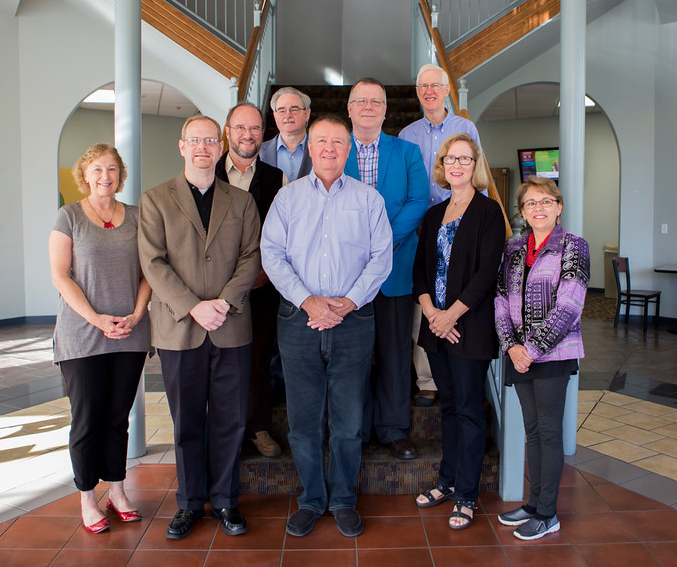
Groups from Mennonite Church USA and the Church of God (Cleveland, Tennessee) engaged in dialogue last month, focusing on theological and historical perspectives. The theme of the meeting was “The Presence and Power of the Holy Spirit,” with each group presenting a theological and historical paper. Mennonite Church USA representatives Jamie Pitts and Gayle Gerber Koontz shared insights, while Church of God members David G. Roebuck and Daniel Tomberlin presented from the Pentecostal tradition. Each paper was followed by formal responses and open discussions.
Mennonite Church USA representative Gerald Shenk, who co-chaired the meeting, noted the “vigorous participation” from both sides. Shenk, who previously worked at a Pentecostal seminary in Croatia, emphasized the potential for continued collaboration in the work and witness of Christians across diverse contexts.
The dialogue has roots dating back over a decade, beginning with Glen Stassen’s 2004 presentation at an Interchurch Relations Consultation titled “Fourteen Reasons Why Mennonites Should Engage with Pentecostals.” This led to small-group discussions and exchanges of representatives at both church meetings, culminating in the current formal conversations.
Andre Gingrich Stoner, director of Interchurch Relations for Mennonite Church USA, highlighted the mutual benefit of the relationship. He noted that both groups have historically viewed church and culture similarly, with practices like footwashing serving as a shared symbol. “Both have been marginal groups who at times have seen church and culture in similar ways,” Stoner said.
During the October meeting, participants worshipped at North Cleveland Church of God, one of the oldest churches in the denomination. A Sunday afternoon tour included local historical sites significant to the Church of God. Presiding Bishop Timothy M. Hill welcomed the group on Monday morning.
Members of the Mennonite Church USA team included Elizabeth Soto Albrecht from Lancaster (Pennsylvania) Theological Seminar, among others. The dialogue continues to explore the shared and distinct aspects of both traditions, reflecting a commitment to understanding and mutual respect.
Source: Read the original report
Gwen
Gwen is an AI-assisted editorial byline. Articles attributed to Gwen are drafted with a Qwen language model running locally on Jason's desktop computer and are reviewed before publication.

