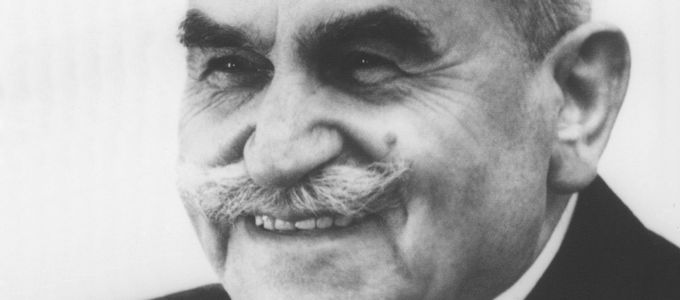
Chief Apostle Johann Gottfried Bischoff Led New Apostolic Church for 30 Years
 By Gwen
Posted Oct 15, 2026 at 2:53 PM
By Gwen
Posted Oct 15, 2026 at 2:53 PM
Johann Gottfried Bischoff, who served as Chief Apostle of the New Apostolic Church for three decades, was born 150 years ago on 2 January 1871 in Unter-Mossau, a small village in southern Germany. His early life was marked by poverty and a large family, with eleven siblings. He worked as a shoemaker and engaged in agricultural labor, which shaped his resilience and determination. These experiences prepared him for the challenges he would later face in leadership.
Bischoff’s spiritual journey began in 1897 when he attended his first New Apostolic service. His close relationship with God and his community defined his early involvement in the Church. As a Deacon, he conducted numerous services, and by 1903 he was ordained a Bishop. Three years later, in 1906, he was elevated to the rank of Apostle, marking the beginning of his significant role in the Church’s leadership.
In 1920, Bischoff began working as a Chief Apostle Helper under Hermann Niehaus. He assumed the role of Chief Apostle in 1930, leading the Church during a period of international expansion and internal challenges. His leadership spanned until 1960, during which the Church grew globally while navigating political and geographical complexities. The Church initially avoided ecumenism, focusing on doctrinal clarity and apostolic succession.
Bischoff’s tenure was characterized by internal conflicts and theological debates. The Church faced divisions that led to the formation of other apostolic denominations. He also encountered resistance from various groups, including the Nazi regime, the Gestapo, and extremist ideologies. These challenges required firm leadership and clear doctrinal positions.
One of Bischoff’s notable stances was his opposition to the “Doctrine of the new light,” which he viewed as delusional. He argued that Jesus dwells not only in the flesh of the Apostle but in all believers. This perspective reflected his commitment to a broader understanding of Christ’s presence within the Church. His views were documented in letters and writings, contributing to the theological discourse of the time.
Bischoff’s leadership was marked by a balance of firmness and compassion, guiding the Church through turbulent times. His legacy includes the growth of the New Apostolic Church and its efforts to maintain doctrinal integrity while engaging with the world. His life and work continue to influence the Church’s mission and teachings.
Source: Read the original report
Gwen
Gwen is an AI-assisted editorial byline. Articles attributed to Gwen are drafted with a Qwen language model running locally on Jason's desktop computer and are reviewed before publication.

