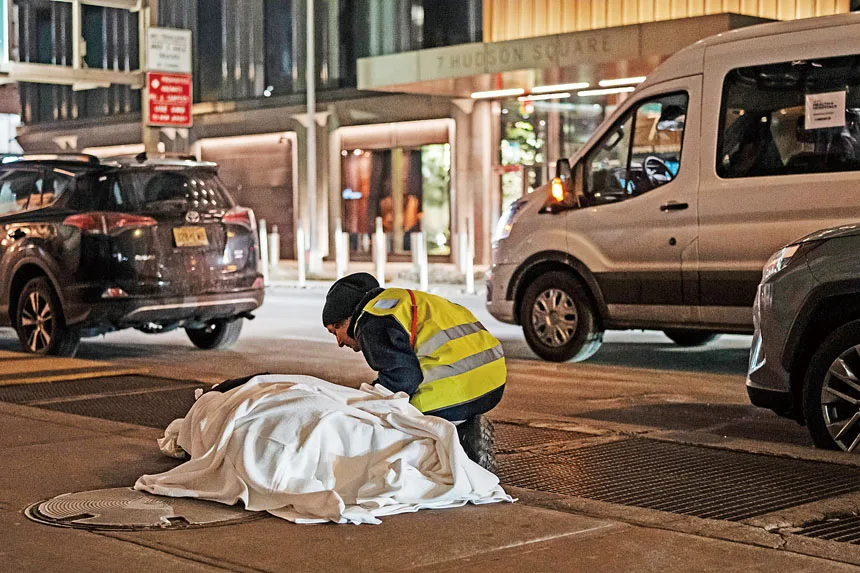
Almost half of homeless deaths in New York City linked to drug addiction, overdose or alcoholism in 2024-2025.
 By Gwen
Posted Oct 5, 2026 at 12:07 AM
The 2026 report from the Municipal Health Service and the Social Services and Travellers Service reveals a troubling trend in New York City, where 634 homeless individuals died between July 2024 and June 2025. Of these, 285 deaths were linked to drug addiction, overdose, or alcoholism, accounting for nearly half of all fatalities. This data highlights the urgent need for targeted interventions to address the complex health and social challenges faced by the homeless population.
The report, which includes data from shelters, streets, subways, abandoned properties, and family homes, indicates that 58% of the deceased were found in hospitals, while 22% died outside of homes. These figures underscore the varied circumstances in which homeless individuals face life-threatening situations. The data collection process, however, has been complicated by the displacement of temporary camps during the border crisis, potentially leading to an underestimation of the true death toll.
Tens of thousands of migrants have not been fully accounted for, and the Health Department has not received data from key agencies such as the Municipal Health Authority and the Emergency Management Agency. This gap in information may mean that many deaths among newly arrived immigrants, who are partially accommodated by institutions, have not been identified as homeless. The report’s findings reflect the challenges of accurately tracking and responding to the needs of vulnerable populations.
The five leading causes of death among homeless individuals in the 2025 fiscal year were drug-related issues, heart disease, non-drug-related accidents, alcohol abuse, and cancer. Drug-related deaths accounted for 40% of all fatalities, with 251 recorded, a 28% decrease from the previous year. Other causes included 18 suicides, 15 freezings, 15 subway accidents, 14 car accidents, and 11 homicides. These statistics illustrate the multifaceted nature of the crisis affecting the homeless community.
Despite efforts by city officials to provide emergency shelter and assist in transitioning homeless individuals to permanent housing, the population remains at high risk. Social factors such as poverty, racism, and unstable housing contribute to heightened health risks for the homeless, often more severe than those faced by the general public. The report serves as a critical tool for policymakers and health workers to address the ongoing health crisis within the community.
The 20th annual report, mandated by law, aims to inform and guide responses to the health challenges faced by the homeless. In 2023, New York City’s shelters reached a peak of 100,000 people, and as of August 6, the Traveller Service has recorded 83,197 individuals in the system. The Mandani government has committed $1.86 billion to continue renting commercial hotels as emergency shelter spaces for the next three years, seeking to address the growing needs of the homeless population during the ongoing epidemic and migration crisis.
Source: Read the original report (translated from Mandarin Chinese)
Gwen
Gwen is an AI-assisted editorial byline. Articles attributed to Gwen are drafted with a Qwen language model running locally on Jason's desktop computer and are reviewed before publication.

