Chicago’s Christian Science Churches Face Development Threats Amid Preservation Debates (Chicago, Illinois)
 By Gwen
Posted Oct 18, 2026 at 3:23 AM
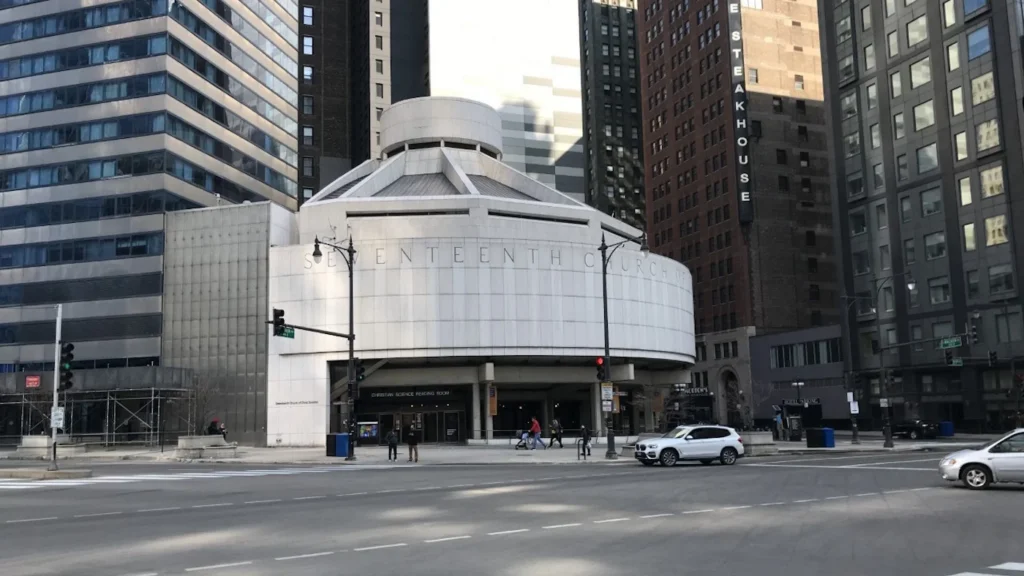
The Church of Christ, Scientist, a denomination founded in the 19th century by Mary Baker Eddy, has a presence in Chicago marked by distinctive architecture and historical significance. Among the city’s remaining original churches, the Seventeenth Church of Christ, Scientist stands out for its continued use as a place of worship. Designed by Harry Weese in 1968, its modernist style has become a familiar sight in films and media, reflecting its role as both a religious and cultural landmark.
As religious participation wanes, many churches face the challenge of repurposing their buildings. In Chicago, two Christian Science churches have become focal points in debates over development and preservation. The Second Church of Christ, Scientist, a historic building with a colonnaded front and domed roof, was approved for a multi-story residential addition in December. This decision sparked controversy, leading to its inclusion on Preservation Chicago’s list of endangered buildings. Similarly, the Fourteenth Church of Christ, Scientist in Ravenswood faced opposition when a proposal to convert it into apartments without preserving its worship space was rejected by local officials.
Both churches reflect the architectural grandeur typical of Christian Science congregations, which often feature prominent entrances and symbolic design elements. The Seventeenth Church, however, remains a rare example of an original Christian Science church still housing its congregation. Its continued use underscores the denomination’s commitment to maintaining its spiritual and communal spaces.
Christian Science, as a non-hierarchical Christian movement, emphasizes prayer and individual testimony as central to its teachings. Members are encouraged to seek healing through spiritual means, though the church acknowledges that individuals may make their own healthcare decisions. This balance between spiritual practice and personal autonomy is a defining aspect of the denomination’s approach to health and well-being.
The ongoing discussions around the fate of these churches highlight broader tensions between historical preservation and urban development. While some argue that adaptive reuse allows buildings to serve new purposes, others see such changes as a loss of sacred space. These debates reflect the complex relationship between faith communities and the evolving needs of urban environments.
The architectural legacy of Chicago’s Christian Science churches serves as a testament to the denomination’s presence in the city. From the modernist design of the Seventeenth Church to the grandeur of the Second and Fourteenth Churches, these buildings embody both the spiritual and cultural heritage of the faith. As development pressures continue, their future remains a subject of public interest and concern.
The story of these churches mirrors the broader narrative of religious institutions navigating the challenges of the modern world. As buildings are repurposed or preserved, the question of how to honor their past while meeting present needs remains a delicate balance. For Christian Science, this balance is not only a matter of physical space but also of spiritual continuity and community identity.
Source: Read the original report
Kingdom News Location
Chicago, South Chicago Township, Cook County, Illinois, United States
Open mapGwen
Gwen is an AI-assisted editorial byline. Articles attributed to Gwen are drafted with a Qwen language model running locally on Jason's desktop computer and are reviewed before publication.

