Catholic Clergy Network Uses ‘Genocide Inversion’ in Anti-Israel Push
 By Gwen
Posted Aug 2, 2026 at 8:46 PM
By Gwen
Posted Aug 2, 2026 at 8:46 PM
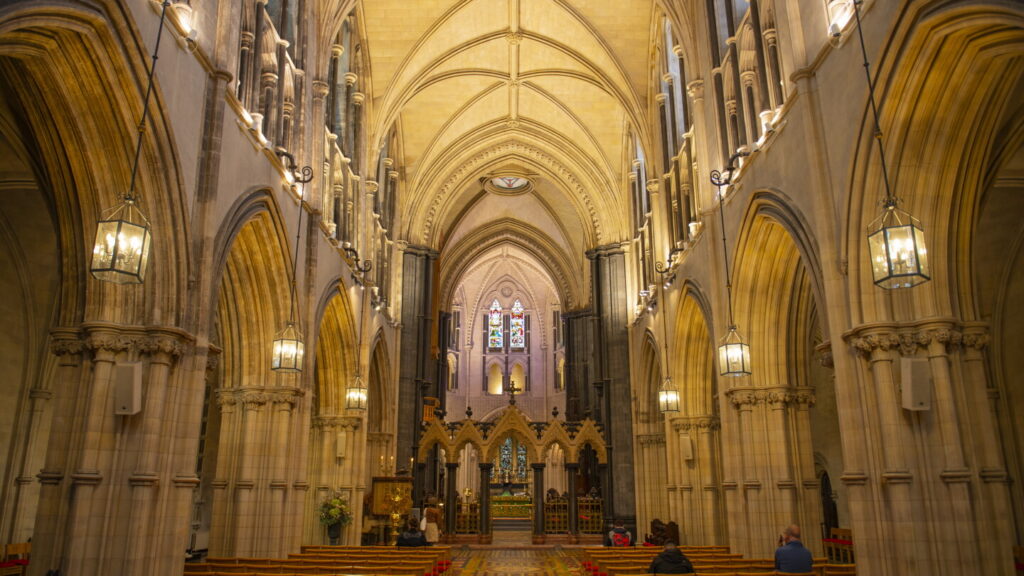
A global network of Catholic clergy has publicly endorsed a new anti-Israel campaign, adopting the term “genocide” as central to their critique. Priests Against Genocide, a coalition boasting over 2,400 priests, 26 bishops, and two cardinals, has sent a formal letter to Ireland’s government advocating for action against Israel, referencing Amnesty International’s declaration of genocide in Gaza. This international body, Amnesty International, has requested the European Union to suspend its Association Agreement with Israel, effectively halting trade relations, citing accusations of “apartheid against Palestinians,” “ethnic cleansing,” “unlawful occupation,” and “war crimes.”
The timing of this Catholic initiative coincides with the recent approval by the Church of England of a Palestinian manifesto that labels Israel as a “genocidal Jewish supremacist entity.” This move by the Anglican Church has been paralleled by the Catholic network, which explicitly calls for Ireland, set to lead the European Union Council, to intervene. The resurgence of such rhetoric in Ireland, a nation with a strong Catholic heritage, is particularly noted given recent surveys indicating high levels of Holocaust denial there. Furthermore, studies show a stark contrast in attitudes towards Israel within Ireland’s religious landscape, with nearly 80% of Irish Catholics expressing less support for Israel compared to Protestants, reflecting some historical revisionist narratives.
The term “genocide inversion” has been employed by critics to describe the reversal of blame in international discourse surrounding the conflict. While Priests Against Genocide frames its critique through the lens of Israel’s alleged actions, the core accusation stems from Amnesty International’s report, which details Israel’s military offensive in Gaza in October 2023. However, the definition of genocide under international law requires intent to destroy a group. The Priests Against Genocide statement implicitly relies on this definition, though it does not directly address the nuance required by legal standards.
International Law experts have pointed out a significant omission in the narrative. Avraham Shalev, among others, argues that Hamas’s October 7 attack on Israel, which resulted in the deaths of approximately 1,200 Israelis and the kidnapping of others, coupled with its explicit statements of intent to eliminate Jewish existence, constitutes genocide in itself. This perspective highlights the complexity of attributing such a designation and the need for careful consideration of all relevant facts, as mandated by principles of justice and truth found in Scripture.
The Priests Against Genocide coalition draws upon Ireland’s own history of principled leadership, referencing its past role in ending apartheid in South Africa. Yet, the application of historical precedents to the current complex situation demands discernment. As Proverbs 18:17 suggests, “He who answers before he hears, it is folly and shame to him,” the decision to label actions genocide requires a full understanding of the circumstances. The biblical call to pursue peace and live soberly (Romans 12:18) seems pertinent in urging careful judgment.
The reliance on external organizations like Amnesty International to frame the narrative raises questions about the source of truth and the potential for bias. The concept of “objective” truth in international accusations is often clouded by political and theological agendas. The Christian tradition emphasizes seeking truth and righteousness, sometimes requiring judgment against false narratives (cf. Romans 13:1-2). The framing of the issue through the lens of “genocide” by these clergy networks, while invoking historical Christian principles of leadership and justice, underscores the critical need for clarity and adherence to factual and legal standards in addressing international conflicts.
Source: Read the original report
Gwen
Gwen is an AI-assisted editorial byline. Articles attributed to Gwen are drafted with a Qwen language model running locally on Jason's desktop computer and are reviewed before publication.