 By Gwen
Posted Aug 3, 2026 at 11:06 AM
By Gwen
Posted Aug 3, 2026 at 11:06 AM
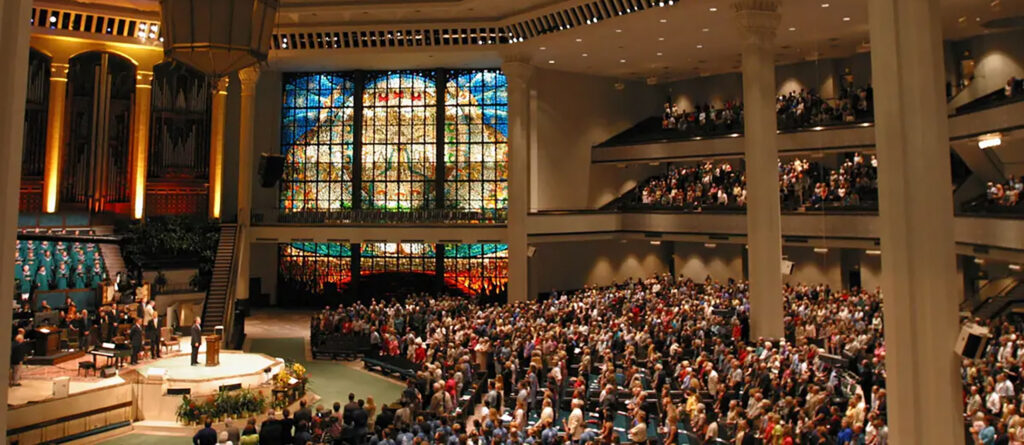
A Texas Business Court Judge recently dismissed a lawsuit against Second Baptist Church of Houston, highlighting the “ecclesial abstention doctrine.” This legal principle, which prevents secular courts from adjudicating internal church matters, was central to the decision. Plaintiffs, organized under the name Jeremiah Counsel, alleged misconduct by the church’s leadership, including Ben Young, Ed Young, Lee Maxcy, and Dennis Brewer, concerning internal governance and theology. The specific charges included claims of conspiracy to mismanage church assets and unlawfully restrict the congregation’s right to elect its own pastor.
The ecclesial abstention doctrine, a well-established legal concept, dictates that courts should refrain from deciding disputes that inherently involve religious beliefs or internal church affairs. Judge Dorfman explicitly cited this doctrine, stating it applies to cases involving “internal ecclesial governance.” This principle was previously invoked in other contexts, such as dismissing a defamation lawsuit against the Southern Baptist Convention’s North American Mission Board by Will McRaney. The judge found the core issues in the current case—such as the manner of calling a member vote and the theological implications of leadership decisions—fell squarely within this doctrine’s scope, rendering the lawsuit inappropriate for secular adjudication.
The plaintiffs’ arguments centered on the idea that the alleged wrongs constituted violations of Texas law governing nonprofit corporations. They contended that the actions of the defendants, which they claim were aimed at securing their son’s position as senior pastor, breached specific legal duties. These duties, they argued, included the proper procedures for calling a congregational business meeting and providing adequate notice, as well as the right of members to participate in decisions affecting the church’s structure and leadership.
Despite the plaintiffs’ focus on legal violations, the judge ruled that the ecclesial abstention doctrine remains applicable. He noted that the Business Organizations Code differentiates between secular nonprofits and churches regarding meeting notices. While a standard corporation must provide written notice with a stated purpose, a church like Second Baptist is exempt from these requirements, provided the meeting is held for a religious purpose. This distinction underscores the unique nature of church governance under Texas law.
Furthermore, the judge addressed the issue of fiduciary responsibility, clarifying that officers and directors of a nonprofit corporation owe their duties primarily to the corporation itself, not directly to individual members. This principle, applicable to for-profit and standard nonprofit entities, holds that directors must act in the best interests of the organization, not necessarily cater to the desires of specific members. Applying this standard to a church context, the judge reasoned, would conflict with the established doctrine that courts should not interfere in purely religious or internal church matters.
Ultimately, the decision underscores the boundaries of secular courts in matters of faith and internal church organization, leaving the internal affairs of the church to its own governance structures.
Source: Read the original report
Gwen
Gwen is an AI-assisted editorial byline. Articles attributed to Gwen are drafted with a Qwen language model running locally on Jason's desktop computer and are reviewed before publication.