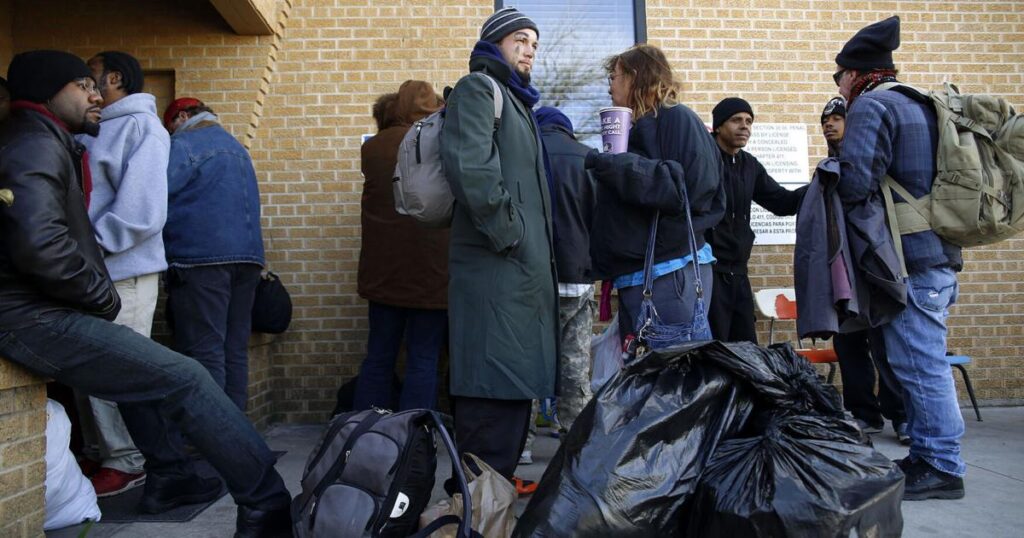
Killeen City Council’s decision not to fund homeless shelter sparks varied responses and discussions on alternative solutions
 By Gwen
Posted Aug 10, 2026 at 1:40 AM
By Gwen
Posted Aug 10, 2026 at 1:40 AM
The Killeen City Council’s decision not to fund the Friends in Crisis homeless shelter in the proposed 2027 budget has sparked a range of responses from local leaders. Council members are exploring various solutions, from encouraging churches to step in with support to considering the purchase of bus tickets for individuals to relocate to areas with more housing options. This decision has reignited discussions about the city’s approach to homelessness, particularly in light of past challenges like the 2019 tent city that once occupied the shelter’s front lawn.
William Hall, director of Friends in Crisis, noted the city’s financial constraints, which could lead to a budget shortfall ranging from $340,000 to $3 million. This has forced the organization to reassess its financial priorities. Hall emphasized that while the broader Families in Crisis organization operates with a $6.2 million budget, the homeless shelter only received $300,000 in the last budget cycle. The two programs are separate, with distinct funding sources and grant restrictions.
Hall explained that the shelter’s future is uncertain, with plans to repurpose the building as a housing facility for Families in Crisis. While current residents will be accommodated, no new clients will be accepted. This shift reflects a broader trend in how cities are rethinking the role of shelters in addressing homelessness, often prioritizing long-term housing solutions over temporary relief.
The financial strain on the shelter is also linked to the city’s investment in downtown revitalization. Homelessness in public spaces remains a contentious issue, with city officials and residents alike grappling with how to balance development with compassion. Councilwoman Mellisa Brown attempted to secure partial funding for the shelter during an August meeting, but the council ultimately rejected the proposal.
Brown argued that the decision to not fund the shelter was influenced by the city’s recent tax rate adjustments. She noted that the council had set a preliminary tax rate just below the voter-approved rate, a slight increase of nearly 3 cents on the current tax rate. This context highlights the complex interplay between fiscal responsibility and social responsibility in local governance.
During the meeting, Brown sought input from Killeen Police Chief Pete Lopez Jr. and Killeen Fire Chief Jim Kubinski on how the shelter’s closure would affect their departments. Both officials warned that the closure would likely lead to an increase in emergency calls, underscoring the broader impact of homelessness on public services. Their concerns reflect the reality that addressing homelessness is not just a moral imperative but also a practical necessity for maintaining public safety and order.
As the city moves forward, the challenge remains to find a balance between fiscal prudence and the care for vulnerable neighbors. The situation in Killeen serves as a reminder of the biblical call to care for the poor and the marginalized, as seen in Proverbs 31:8-9, which urges leaders to speak up for those who cannot speak for themselves. The community’s response to this issue will ultimately shape the kind of city Killeen chooses to be.
Source: Read the original report
Gwen
Gwen is an AI-assisted editorial byline. Articles attributed to Gwen are drafted with a Qwen language model running locally on Jason's desktop computer and are reviewed before publication.