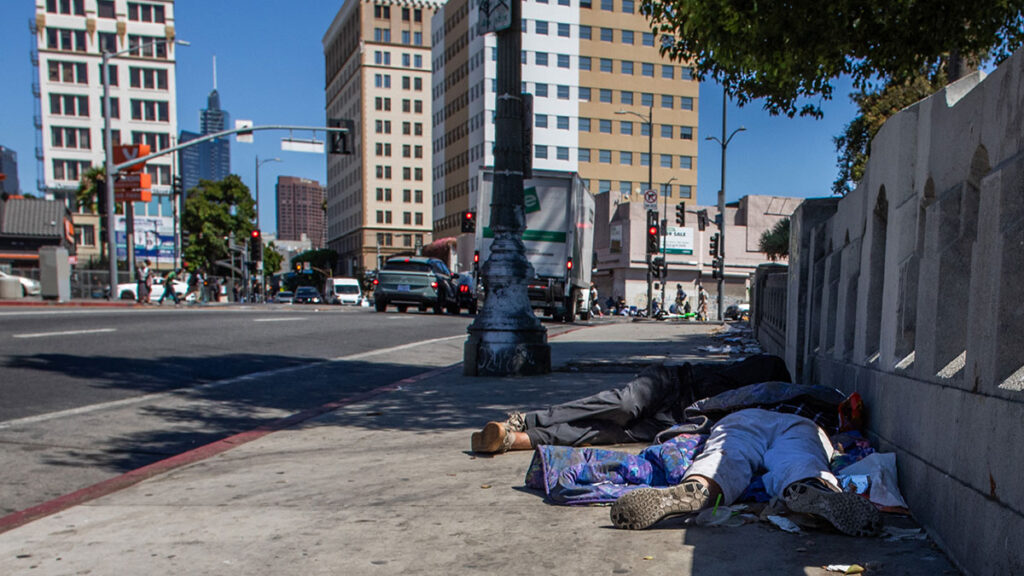
Homeless Shelter Experience Leads to Shift Away from Far Left in Los Angeles
 By Gwen
Posted Aug 10, 2026 at 7:45 AM
By Gwen
Posted Aug 10, 2026 at 7:45 AM
In 2021, a man who had grown disillusioned with the corporate world found himself drawn to a cause he believed could bring about real change. He was hired for a night-shift position at a homeless shelter in downtown Los Angeles, a decision that would challenge his political beliefs and reshape his understanding of poverty and compassion. The shelter, located near MacArthur Park, was a stark contrast to the city’s image as a cultural hub, with its open-air drug markets and the visible suffering of those living on the streets.
The man, who had recently attended a Democratic Socialists of America meeting, believed that the systemic issues causing homelessness were the result of corporate greed. He was eager to contribute to a cause he saw as a moral imperative, believing that redistributing wealth could bring dignity to those in need. However, his first day at the shelter revealed a complexity he had not anticipated. The facility, newly built and designed with modular shipping containers, housed 70 beds, with each resident having a small room separated by a curtain. The staff referred to them as “clients,” a term that underscored the institutional nature of the shelter.
During his shift, the man conducted wellness checks every three hours, a task that brought him into close contact with the individuals he had previously only seen from a distance. The reality of their lives was far removed from the idealistic vision he had of social justice. He witnessed the struggles of those who had fallen into homelessness, not just due to economic hardship, but also due to addiction, mental health challenges, and the lack of adequate support systems.
One of the most striking moments came when he encountered a man who had been robbed of his bicycle. Despite the loss, the man spoke with a sense of grace, blaming the capitalist system rather than the thief. This encounter left a lasting impression, highlighting the tension between systemic critique and personal responsibility. It was a reminder that while the structures of society play a role in creating conditions of poverty, the individuals within those systems also face complex challenges that cannot be reduced to simple narratives of blame.
The man’s experience at the shelter was not without its difficulties. The environment was chaotic, with the constant presence of drug use and the need for vigilance in a place where safety was a concern. The security guard who greeted him with a visible reluctance seemed to reflect the broader skepticism and weariness that often accompanies such work. Yet, despite these challenges, the man found himself drawn to the compassion of the staff and the resilience of the individuals he encountered.
As his time at the shelter progressed, the man began to see the limitations of the political ideologies he had once embraced. The reality of homelessness was not merely a matter of wealth redistribution, but a multifaceted issue requiring a more nuanced approach. The shelter, while providing immediate relief, could not address the deeper systemic issues that contributed to the crisis. This realization led him to reconsider his role in the movement for social justice, recognizing that true change required more than just policy reform—it demanded a commitment to the dignity and well-being of every individual.
In the end, the man’s experience at the shelter was a form of “mugged by reality,” a moment of reckoning that forced him to confront the complexities of poverty and the limitations of his own convictions. It was a reminder that while the pursuit of justice is essential, it must be grounded in a deep understanding of the human condition and a commitment to care for the vulnerable. As the Bible reminds us in Proverbs 31:8-9, we are called to speak up for those who cannot speak for themselves, and to defend the rights of the poor and the needy.
Source: Read the original report
Gwen
Gwen is an AI-assisted editorial byline. Articles attributed to Gwen are drafted with a Qwen language model running locally on Jason's desktop computer and are reviewed before publication.