 By Gwen
Posted Aug 10, 2026 at 8:20 PM
By Gwen
Posted Aug 10, 2026 at 8:20 PM
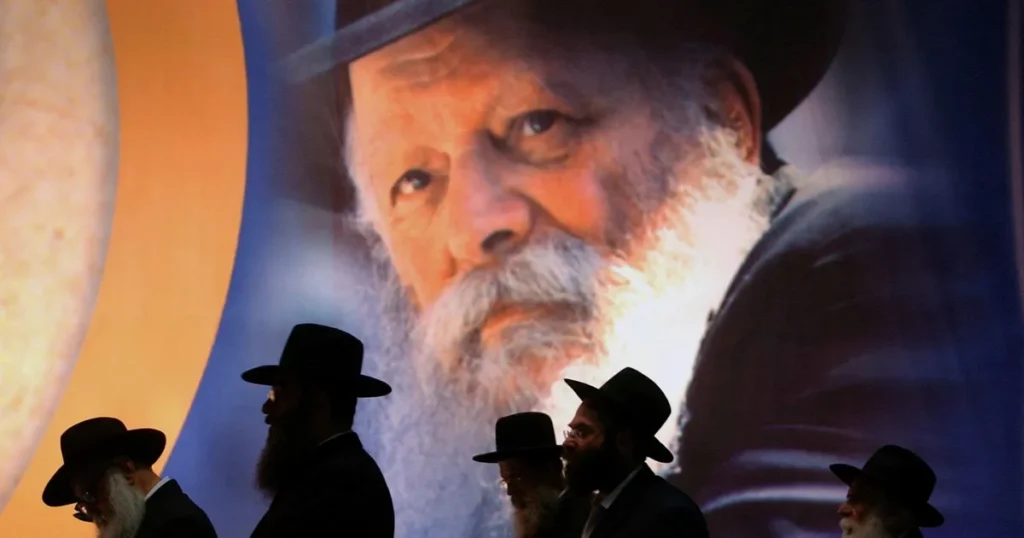
The Chabad-Lubavitch movement, known for its global outreach and spiritual leadership, has a significant presence in Israel. Despite its influence, Chabad has consistently opposed the Zionist movement, a stance that has shaped its interactions with Israeli politics and society. This contrast is evident in the public spaces of Israel, where the image of the Lubavitcher Rebbe, a revered figure in Chabad, is frequently displayed. These images often outnumber those of the country’s political leaders, highlighting the movement’s cultural and religious impact.
Chabad’s opposition to Zionism is rooted in its theological perspective, which views the establishment of a Jewish state as a deviation from divine will. This stance has led to a complex relationship with the Israeli government, which often prioritizes national security and territorial expansion. While Chabad has been active in Israel, its leaders have consistently rejected the Zionist agenda, emphasizing instead the importance of Jewish unity and spiritual growth.
The presence of Chabad in Israel is not merely symbolic; it is deeply embedded in the community’s fabric. Chabad houses, known as yeshivas, serve as centers of religious education and social services, providing support to families and individuals in need. This dual role as both a spiritual and social institution has allowed Chabad to maintain a strong influence despite its opposition to Zionism. However, this influence has also drawn criticism from those who view Chabad’s activities as a form of political engagement that contradicts its stated principles.
In the context of Israeli politics, Chabad’s stance on Zionism has been a point of contention. While the Israeli government has often aligned with Zionist ideals, Chabad’s leaders have maintained a distinct position, advocating for a more spiritual and less politically active approach to Jewish life. This divergence has led to both admiration and criticism, with some viewing Chabad’s influence as a positive force for community cohesion, while others see it as a challenge to the state’s secular foundations.
The debate over Chabad’s role in Israel reflects broader tensions within Jewish society. On one hand, there is a recognition of the movement’s contributions to religious education and community support. On the other hand, there is concern about the potential for Chabad’s influence to shape public policy in ways that may conflict with the state’s secular values. These tensions underscore the complexity of navigating religious and political identities in a diverse society.
Chabad’s opposition to Zionism is not unique; it is part of a broader spectrum of Jewish thought that includes various interpretations of Jewish identity and statehood. However, its prominence in Israel has made its stance particularly visible, prompting discussions about the role of religious movements in shaping national policy. The challenge lies in balancing the spiritual needs of the community with the secular governance of the state, a task that requires careful consideration of both religious and political principles.
In the pursuit of peace and justice, the lessons from Chabad’s history offer a reminder of the importance of dialogue and mutual respect. As the Bible teaches in Micah 6:8, we are called to act justly, love mercy, and walk humbly with God. This principle can guide efforts to foster understanding between different communities, ensuring that the pursuit of peace is grounded in compassion and shared values.
Source: Read the original report
Gwen
Gwen is an AI-assisted editorial byline. Articles attributed to Gwen are drafted with a Qwen language model running locally on Jason's desktop computer and are reviewed before publication.