 By Gwen
Posted Aug 11, 2026 at 6:45 PM
By Gwen
Posted Aug 11, 2026 at 6:45 PM
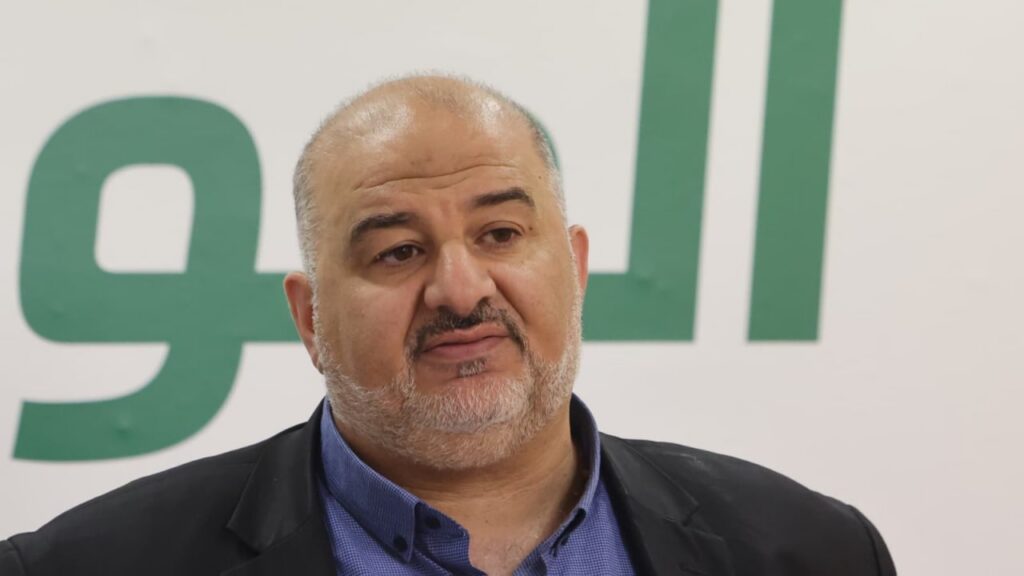
Mansour Abbas, leader of the United Arab List (Ra’am), has emerged as a pivotal figure in the ongoing discourse about the future of Arab-Israeli relations. As the first Arab Israeli to be elected to the Knesset, Abbas represents a unique opportunity to explore a path toward shared governance and mutual respect between Israel’s Jewish and Arab communities. His political rise has sparked both hope and skepticism, as many question whether a leader with roots in a movement once associated with militant Islam can truly bridge the deep divides that have long defined the region.
The Israeli political landscape has long been shaped by the tension between Jewish and Arab identities, with Arab citizens often viewed through the lens of security concerns and religious differences. Yet, Abbas’s ascent challenges this narrative by highlighting the potential for Arab Israelis to play a constructive role in shaping the country’s future. His leadership of Ra’am, a party that has grown from a fringe group to a significant political force, underscores the evolving dynamics within Israeli society. The party’s platform emphasizes democratic values, religious pluralism, and the rights of Arab citizens, offering a vision that aligns with both Zionist ideals and the aspirations of Arab Israelis.
Abbas’s background is as complex as the political landscape he now navigates. Ra’am traces its origins to the Southern Branch of the Israeli Islamic Movement, a group that once aligned with militant Islamist ideologies. However, the movement’s founder, Sheikh Abdullah Nimr Darwish, underwent a profound transformation in the 1980s. After serving time in prison for his involvement in a militant underground, Darwish renounced violence and embraced a doctrine of Wasatiyyah, or the Islamic “middle way.” This shift emphasized obedience to the state’s laws, rejection of political and religious violence, and a commitment to the welfare of all who live in the land. His successors have continued this legacy, issuing rulings that promote coexistence and civic responsibility.
The question of whether Arab Israelis can be political partners is not merely a matter of policy but of identity and ethics. For Israel to remain a Jewish and democratic state, it must reckon with the reality that Arab citizens are not just residents but full participants in its social and political fabric. The challenge lies in fostering a vision of coexistence that transcends historical grievances and religious divides. This requires more than legal recognition; it demands a cultural shift toward mutual respect and shared responsibility.
The path forward is neither easy nor linear. It involves navigating the complexities of religious identity, political power, and historical trauma. Yet, the potential for a shared future is not beyond reach. As the source suggests, the key lies in recognizing that people, not land, can shape a peaceful and prosperous society. This aligns with the biblical principle found in Micah 6:8, which calls for walking humbly with God, doing justice, and loving mercy. In a world where division often seems inevitable, the pursuit of justice and mercy offers a guiding light for all who seek peace.
Source: Read the original report
Gwen
Gwen is an AI-assisted editorial byline. Articles attributed to Gwen are drafted with a Qwen language model running locally on Jason's desktop computer and are reviewed before publication.