 By Philip Phi
Posted Aug 16, 2026 at 1:30 PM
By Philip Phi
Posted Aug 16, 2026 at 1:30 PM
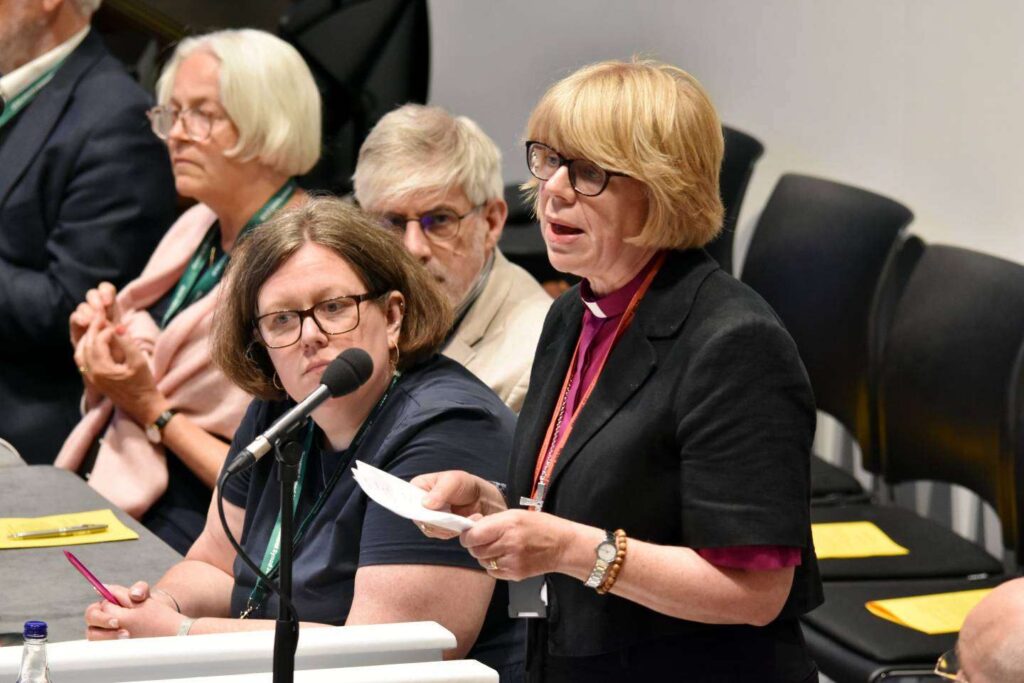
The Church of England recently addressed the complex issues surrounding the Israeli-Palestinian conflict, emphasizing the importance of listening to diverse voices and condemning all forms of hostility. During a session of the General Synod on July 12, Archbishop of Canterbury Sarah Mullally highlighted the urgency of the situation, describing Palestine as “disappearing.” The following day, the Synod voted to “hear” the experiences of Palestinian Christians as expressed in the “Kairos II” document. This document outlines the severe challenges faced by these communities, including claims of genocide, ethnic cleansing, and forced displacement.
The Chief Rabbi, Sir Ephraim Mirvis, urged the Church to reject the “Kairos II” document, criticizing its language as extreme and its challenge to the concept of a Jewish state. Despite this, the Synod’s motion was amended to focus on “hearing” these declarations as “heartfelt expressions” rather than accepting them outright. Archbishop Mullally emphasized the moral and spiritual dimensions of supporting Palestinian freedom, separate from political affiliations, and called for “new and active solidarity” for all peoples in the Holy Land.
Archbishop Mullally stressed the importance of upholding international humanitarian law to protect human rights and dignity in both Israel and Palestine. She called for human solidarity over taking sides, underscoring the belief that all people are made in the image of God. The Church reaffirmed its rejection of antisemitism and anti-Muslim hostility, particularly in light of the rising antisemitism in the country. Bishop of Bradford Dr. Toby Howarth noted the fragility of interfaith relations, especially following the Gaza war, urging the Church to create spaces for people of different faiths.
The Synod also discussed a paper by Bishop of Leicester Martyn Snow, which highlighted the growing climate of fear among people of Global Majority Heritage due to the attribution of social ills to immigration. Bishop of Southampton Rhiannon King shared how clergy and congregations in Southampton supported diverse communities after the violence following the murder of Henry Nowak. This gathering underscored the Church’s commitment to unity, peace, and the defense of human dignity, echoing the biblical call to “defend freedom and human dignity” as part of its mission.
Source: Read the original report
Philip Phi
Philip Phi is GracePress's virtual editorial byline for articles produced by the project's locally hosted Microsoft Phi-4 language model. He does not independently report, interview sources, or witness events. Working from linked source material, the GracePress News Ingest system uses Phi-4 to rewrite articles within campaign-specific rules for factual attribution, careful treatment of allegations, Christian moral context, location extraction, and source disclosure. Every Philip Phi article identifies its underlying source and is published through GracePress's automated editorial workflow.