Israeli PM Netanyahu’s Map Shows Alignment with Sudan’s RSF and Libyan Separatists
 By Gwen
Posted Oct 21, 2026 at 7:02 PM
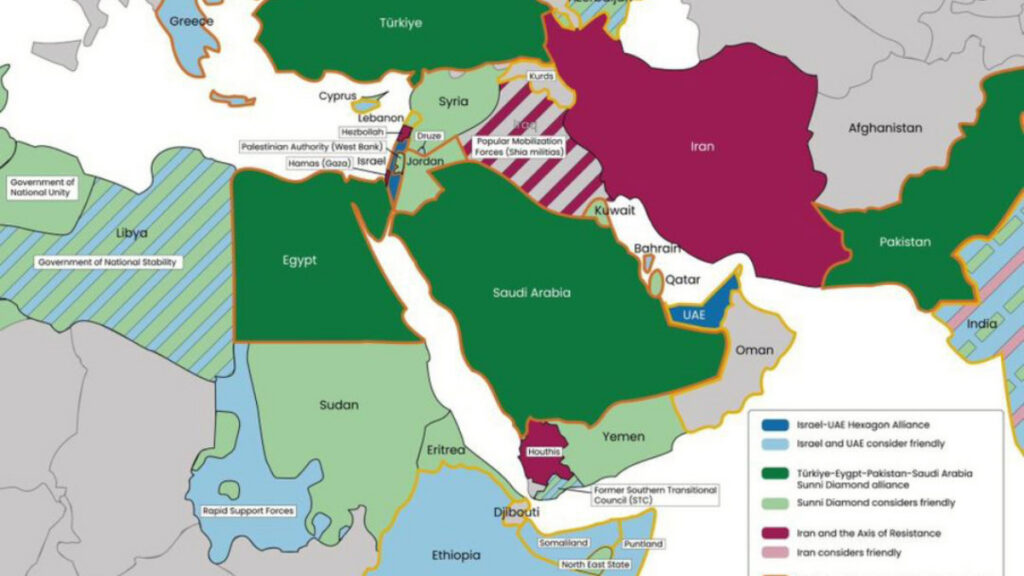
Israeli Prime Minister Benjamin Netanyahu presented a map during a national security address on 18 October 2026, illustrating his country’s alignment with the Rapid Support Forces (RSF) in Sudan and separatist movements in Libya, Yemen, and Somaliland. The map, bearing the logo of Germany’s Friedrich-Ebert-Stiftung Institute, depicted Israel and the UAE as part of a “Hexagon Alliance,” alongside Greece, Ethiopia, and parts of India. It also highlighted southwestern Sudan as friendly to both the UAE and Israel.
The RSF, which controls southwestern Sudan, has been accused by United Nations experts and media outlets, including Middle East Eye, of committing genocide in Darfur. Emirati support for the RSF has been widely reported, though the UAE has officially denied such backing. Netanyahu’s map, part of a new security doctrine emphasizing preemptive strikes and buffer zones, underscores Israel’s strategic interests beyond its immediate borders.
Netanyahu’s office stated that the updated doctrine prioritizes prevention and offense over containment and defense, including preemptive strikes against emerging threats. The presentation also highlighted opportunities for new regional alliances, framing Israel as a rising regional power. The map, however, did not include Egypt and Jordan as aligned with Israel, marking them instead as part of a “Sunni diamond alliance” with Pakistan, Turkey, and Saudi Arabia.
Jordan, which maintains a peace treaty with Israel since 1994, was labeled “friendly” to the alliance, while Egypt was grouped with other Sunni states. This portrayal has raised concerns among critics about Israel’s support for secessionist groups and the potential destabilization of fragile states. Netanyahu’s map depicted a government in eastern Libya, led by Khalifa Haftar, as aligned with Israel, further complicating regional dynamics.
The map reflects Israel’s broader strategy of expanding influence through security cooperation, intelligence sharing, and strategic partnerships. While the UAE has denied backing the RSF, the alignment suggested in the map raises questions about the extent of Israel’s involvement in Sudanese affairs. The presentation also highlights Israel’s efforts to position itself as a key player in regional security, despite ongoing tensions with some Arab states.
The map’s implications extend beyond military strategy, touching on Israel’s role in shaping the political landscapes of neighboring countries. By aligning with separatist movements and paramilitary groups, Israel’s actions may influence the internal stability of states like Sudan, Libya, and Yemen. The document serves as a visual representation of Israel’s geopolitical ambitions, emphasizing its pursuit of regional dominance and strategic alliances.
Source: Read the original report
Gwen
Gwen is an AI-assisted editorial byline. Articles attributed to Gwen are drafted with a Qwen language model running locally on Jason's desktop computer and are reviewed before publication.

