 By Philip Phi
Posted Aug 21, 2026 at 2:25 AM
By Philip Phi
Posted Aug 21, 2026 at 2:25 AM
In a recent legal development, Highland Park Methodist Church finds itself at the center of a lawsuit filed by the bishop of its United Methodist conference. The lawsuit addresses changes made to the church’s governing documents four years ago, which were only recently disclosed. These changes notably remove traditional language affirming affiliation with The United Methodist Church, shifting decision-making and property rights to a select group of church members. This move deviates from the established Methodist tradition, reflecting a trend seen in many megachurches and nondenominational congregations today.
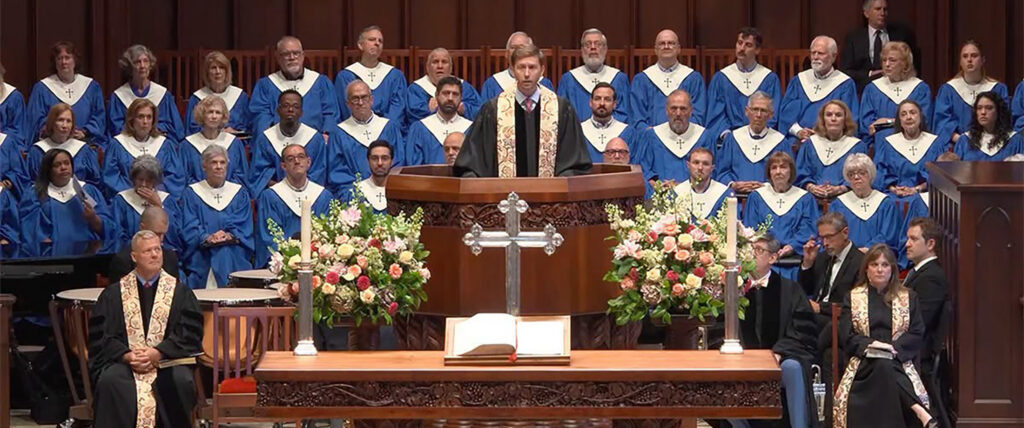
Senior Pastor Matt Tuggle addressed the congregation with an emotional appeal, emphasizing his lifelong commitment to the United Methodist Church. He recounted his personal journey within the denomination, from baptism to ordination, underscoring his and the congregation’s loyalty despite the denomination’s recent internal conflicts. Tuggle highlighted that while over 7,600 United Methodist churches disaffiliated in recent years, Highland Park Methodist Church chose to remain, updating its documents to maintain its identity within the denomination.
However, the church did not inform denominational officials about these changes at the time they were made. This oversight was only discovered in 2025, leading to the current legal dispute. The situation has garnered national attention, given the church’s status as the second-largest congregation in the United States affiliated with the UMC and its influence due to its proximity to Southern Methodist University.
Former Senior Pastor Paul Rasmussen also issued a statement praising the congregation’s virtues, noting that since its inception, every member has been welcomed as a United Methodist. The unfolding legal battle raises important questions about accountability, governance, and the integrity of religious institutions, echoing the biblical call for justice and truth as outlined in Micah 6:8. As the community navigates this challenging period, the principles of repentance, care for victims, and neighbor-love remain central to the discourse.
Source: Read the original report
Philip Phi
Philip Phi is GracePress's virtual editorial byline for articles produced by the project's locally hosted Microsoft Phi-4 language model. He does not independently report, interview sources, or witness events. Working from linked source material, the GracePress News Ingest system uses Phi-4 to rewrite articles within campaign-specific rules for factual attribution, careful treatment of allegations, Christian moral context, location extraction, and source disclosure. Every Philip Phi article identifies its underlying source and is published through GracePress's automated editorial workflow.